Call for supports to address Covid impact on mental health of most vulnerable
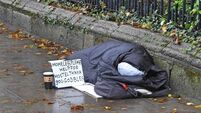
Merchants Quay Ireland, Dublin, says there is a clear need for ring-fenced mental health supports for the most vulnerable people in society. Picture: Gareth Chaney Collins
The long-term impact of the Covid-19 pandemic on vulnerable, drug-using clients of homeless and addiction services includes increased suicidal ideation and hospitalisation.
Merchants Quay Ireland (MQI) says there is a clear need for ring-fenced mental health supports at every level.Â
A new report being launched by MQI and the minister with responsibility for mental health, Mary Butler, looks at the experiences of 10 clients who were engaged in MQI and HSE ACCES (Assertive Community Care Evaluation Service) — two services that provide care to people experiencing mental ill-health, substance misuse, and homelessness in the Dublin area.
The longitudinal study found that at phase one, "all participants expressed feelings of abandonment, intense loneliness and social isolation".Â
All 10 participants had experienced homelessness in the past or were homeless at the time, and according to the latest findings: "By Phase 2 it became clear that the effects of the restrictions had greater implications for those with severe mental ill-health (linked into HSE ACCES), who reported greater levels of hospitalisation, suicidal ideation and paranoia. In total, four of the five had been hospitalised for their mental ill-health over the period of lockdown, even as in-patient admissions decreased in the general population."
It found that while one participant had reported increased depression at phase one, this had risen to four by phase two. Over both phases of the study, three reported suicidal ideation with planning.
However, while there were increases and relapses in alcohol and substance use as a reactive behaviour to the pandemic in phase one, by the follow-up interviews the general health situation had improved for some of the group.Â
"Of the four reporting alcohol use two were alcohol-free and one was reducing their alcohol intake," it said. "For those using illicit substances (four) one person was in a residential detox/rehabilitation unit and drug free, while another participant was drug free and on an MMT [methadone maintenance treatment] programme. Two had reduced their substance use and the latter was hoping to get onto an MMT programme."
Half of the group had a pre-existing severe mental health illness and the study found that the majority of those with more severe mental ill-health continued to report feeling socially isolated, while the other half of the group found their living situation had improved.
The research was conducted by independent research consultant Kathyan Kelly, who said "the extreme social isolation already faced by people with mental ill-health, substance or alcohol use disorder, and homelessness" had been exacerbated by restrictions, leading to increased suicidal ideation with planning, hospitalisation for mental ill-health, and "tenuous" recoveries for others.Â
"Six of the 10 participants remain insecurely housed," she said.
MQI chief executive Paula Byrne referred to the impact of the pandemic and added: "It is essential that supports are put in place to deal with what will evidently be the continued impact on the mental wellbeing of the most vulnerable people in our society."
- samaritans.org/116 123
- If you are affected by any of the issues raised in this article, please click here for a list of support services.