Obsolete laws on cattle rustling, riots and murders to be removed from statute books 
Obsolete laws on cattle rustling, riots and murders to be removed from statute books 

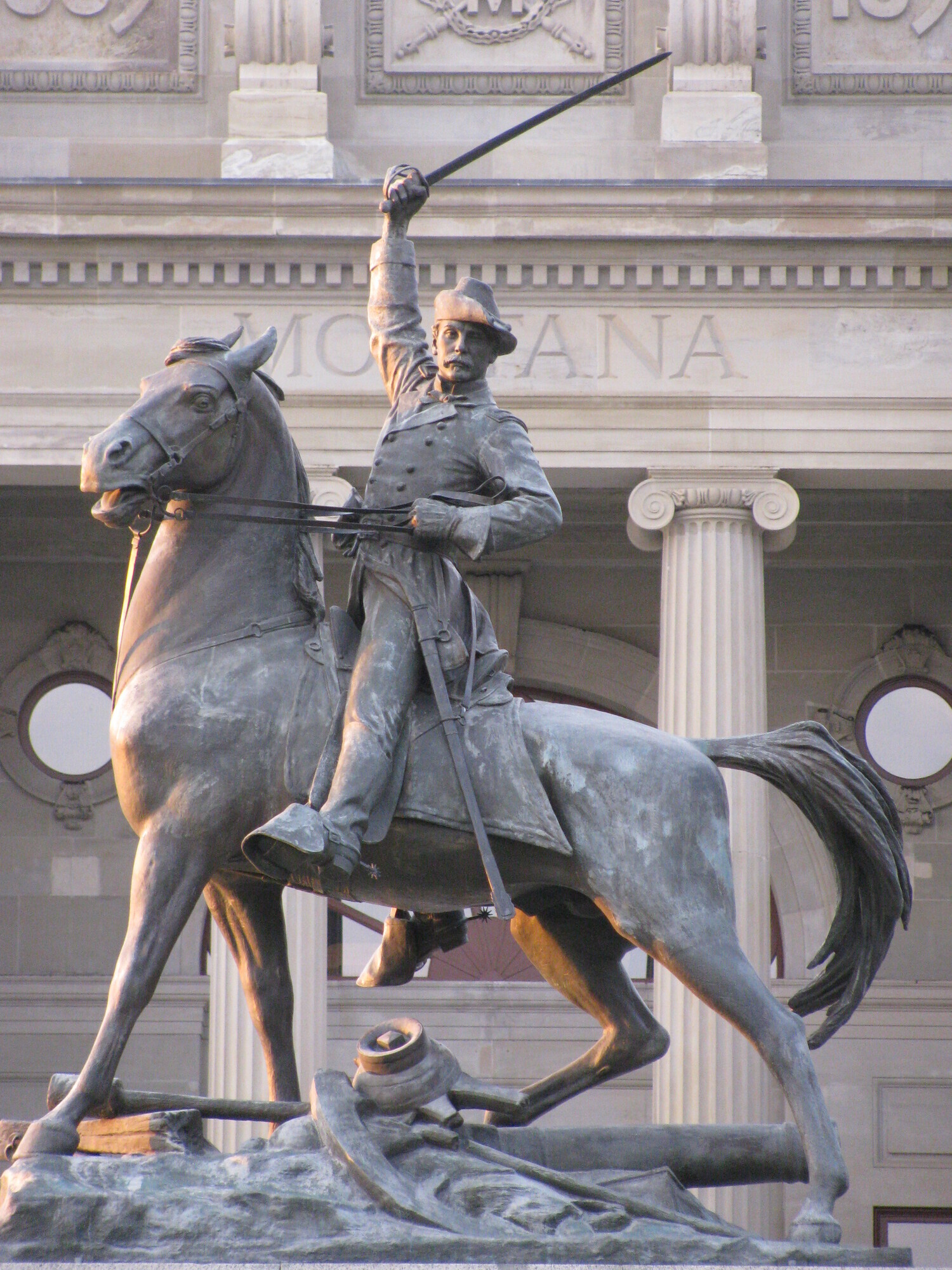
Statue of Thomas Francis Meagher: A proclamation for apprehending the Young Ireland 1848 Rebellion leader who it says was “guilty of treasonable practices” is to be removed from the statute books.

They were our version of the American Wild West’s ‘wanted posters’ — offering rewards of up to £2,000 for information leading to the arrest of suspects behind cattle rustling, jail breaks, arson attacks, beatings, riots, rapes, robberies, and murders.

Published in the Dublin Gazette and London Gazette during the Tithe War, Catholic Emancipation and Famine era, they related to all forms of criminal activity such as waylaying, robbing, attacking, and wounding, and also referenced severe, inhumane and unmerciful beatings, causing death by throwing stones or with blows to the head with a pitchfork, setting fire to houses, out-houses, cow-houses, hayricks, barns, and oat-mills, posting threatening notices regarding land, voting and potatoes, and beatings with sticks and stones and nettles.


They form the bulk of the estimated 3,000 statutory and prerogative instruments made between 1821 and 1860, which are now set to be revoked following a major trawl of the statute books.

They were identified for removal by the Law Reform Commission, through the Statute Law Revision Programme (SLRP) process, the national programme to identify and remove obsolete and spent primary and secondary legislation from Ireland’s legislative stock because they have ceased to have effect or have become unnecessary.

One of the proclamations slated to be removed is linked to an infamous trial during the tithe wars arising out of a bitter dispute with three notorious landlords in north Cork — Michael Creagh, Rear Admiral Evans, and George Bond Lowe — who were hated for their treatment of tenant farmers.

Plan to murder landlords

In 1828, a rumour went around the area where the secret society, the Whiteboys, were very active, that there were plans to murder the landlords.

But after a dinner party, the carriage of a local doctor was mistaken for that of one of the landlords and was fired upon. Two coachmen were injured.

A proclamation, published on January 24, 1829, sought information to apprehend two men who “fired at Dr Norcott and his daughter near Doneraile, Co Cork”.

Around 21 people were later arrested on the basis of evidence provided by paid informers. 

They were alleged to have been heard in a tent at the Doneraile Fair conspiring to kill the landlords in what became known locally as the Doneraile Conspiracy.

They were indicted, and brought to trial before a commission where some were defended successfully by Daniel O’Connell, a legal victory which helped cement his national and international reputation.

Also slated for removal are a raft of orders and proclamations, including one prohibiting Daniel O’Connell’s monster meeting in Clontarf, a proclamation for apprehending the Young Ireland 1848 Rebellion leaders, Thomas Francis Meagher and John B Dillon, as well as IRB founder Michael Doheny who it says were “guilty of treasonable practices”.

Prohibition of vice and immorality

Others facing removal encouraged piety and virtue and prohibited vice and immorality, with one published in the London Gazette on Monday, June 28, 1830, which reads:

“We do expect and require that all persons of honour or in place of authority shall give a good example by their own virtue and piety and do their utmost to contribute to the discountancy of persons of dissolute and debauched lives that they being reduced by that means to shame and contempt for their lucid, evil actions and behaviour may be thereby also enforced the sooner to reform their ill habits and practices.” 

Several request prayers and fasts for the abatement of cholera, relief from crop failure and to give thanks for abundant harvests, others call for prayers for Queen Victoria as she prepared to give birth, alongside some which amended county boundaries, changes which remain contested locally today.

There are orders suspending prohibitions on the importing foreign reprints of books first published in the then United Kingdom of Great Britain and Ireland into various British colonies, and a proclamation published on June 3, 1831, required the slaves in His Majesty's East India colonies to submit to the laws or to forfeit all claims to protection.

There is a recommendation to remove a category consisting of bylaws regulating slaughterhouses in Limerick made pursuant to the Limerick Improvement Act 1853, an act which remains in place.

The bylaws included a requirement that all slaughterhouses should be whitewashed monthly and they directed the removal every 24 hours of “all offensive matter of every kind including manure filth and cesspool”.

Hackney carriage licences

Another category of bylaws set to be revoked was published by Cork Corporation on October 23, 1854, to regulate hackney carriages. It required any operator plying for hire within five miles of the city’s general post office to pay a licence fee of two shillings and six pence.

There is also a proclamation published in 1850 offering rewards to “any party of any nationality who shall render efficient assistance to the crews of the Discovery ships under the command of Sir John Franklin, or who shall succeed in ascertaining their fate”.

Franklin, a British Royal Navy officer and Arctic explorer, died in 1847 during his third and final expedition to attempt to traverse the Northwest Passage when his ships became icebound off King William Island.

They were abandoned 10 months later and the entire crew died, from causes such as starvation, hypothermia, and scurvy.

Members of the Arctic expedition led by British explorer Sir John Franklin on their attempt to discover the Northwest Passage in 1847. The expedition was beleaguered by thick ice and Franklin died in June 1847 and most of the team died of starvation. Picture: Hulton Archive/Getty Images

But of particular interest to local and family historians will be the 2,503 proclamations offering rewards for apprehending suspected criminals here.

The county with the most recorded proclamations during this turbulent period is Tipperary, with 426, while the fewest were issued in Kerry, with 15.

The SLRP has recommended that just two instruments from this period be kept — both of which relate to notices fixing and determining the limits of the River Shannon over which the Shannon Commissioners may exercise their powers.

The instruments were made pursuant to section 39 of the Shannon Navigation Act 1839.

SLRP project manager, Fiona Carroll, referred to the common-law doctrine of desuetude — a concept which, even though it doesn’t apply in Ireland — means that bylaws lapse if they’re not used for a very long time.

“Because it is not at work in Ireland, we have to take action to repeal and revoke obsolete laws or laws that may seem spent or have served their purpose,” Ms Carroll said.

Nonetheless, we have to dig down, find those laws and remove them.

She described the instruments as a “treasure trove” which provide a remarkable insight into life in 19th century Ireland.

As well as contributing to legislative clarity in Ireland, the instruments will be a useful resource for historians and genealogists, contributing to our knowledge of our own history and development, she said.

She also paid tribute to the intensive research completed by full-time researchers Hazel Bergin, Méabh Smyth, Liam Dempsey, and Morgane Hervé over three years, and said they are pleased to bring this project to the public consultation stage.

The SLRP has concluded its consultation with government departments and other key stakeholders on the items earmarked for revocation and it has now invited submissions from the public until April 5.

The public feedback will be considered before the final version of a new Statute Law Revision Bill is published.

Modern and accessible statute book

Public Expenditure Minister Michael McGrath, who will sponsor this Bill through the Houses of the Oireachtas, said the revocation of the obsolete laws will ensure a modern and accessible statute book in Ireland.

“Since it began its work in 2005, the programme has repealed the vast majority of primary legislation made before the foundation of the State,” he said.

“I encourage all interested stakeholders to engage in this public consultation process which is a key element in developing the latest Statute Law Revision Bill which will repeal instruments made between 1821 and 1860.” 

It is planned that the Bill will be enacted this year, the centenary of the foundation of the State.

Since its establishment in 2005, the SLRP has produced six Statute Law Revision Acts leading to the removal of an estimated 60,000 statutory instruments.

Further work will be required to complete the review of statutory instruments from 1861 to 1922.

More in this section

Lunchtime News

Newsletter

Keep up with stories of the day with our lunchtime news wrap and important breaking news alerts.

Cookie Policy Privacy Policy Brand Safety FAQ Help Contact Us Terms and Conditions

© Examiner Echo Group Limited