Taoiseach: Sanctions 'will impact' EU citizens and Russia
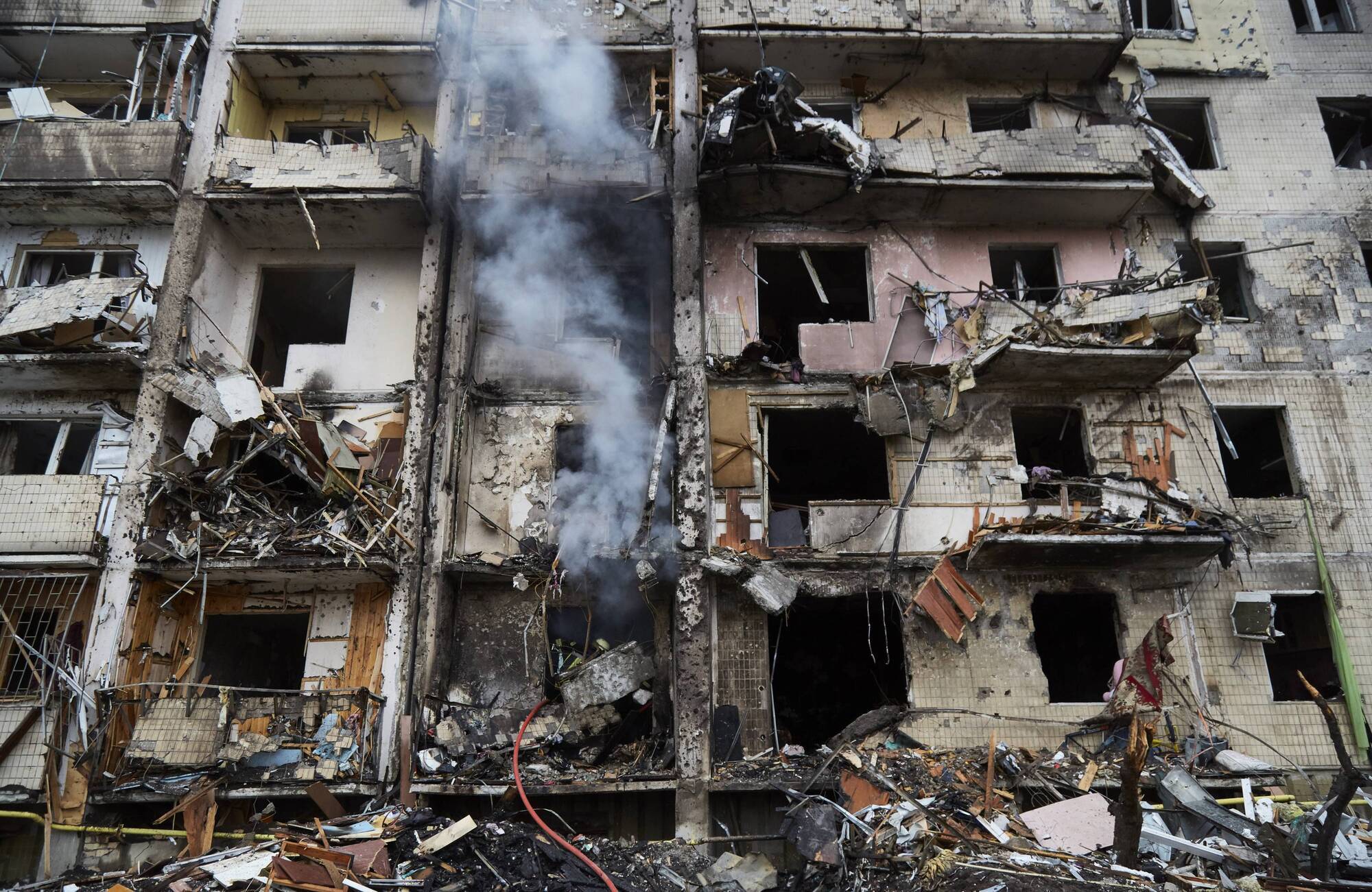
Firemen extinguish a fire inside a residential building that was hit by a missile today in Kyiv, Ukraine. Mr Martin said that Vladimir Putin has targeted the return of a Russian empire and said that what he is doing is "reckless, irresponsible and morally wrong". Photo: Pierre Crom/Getty Images
The sanctions imposed on Russia by the EU are the "largest and most severe" ever adopted, the Taoiseach has said.
The sanctions include five pillars relating to the financial sector, energy and transport sectors, a limitation on visas for Russian diplomats and service personnel, EU-wide export controls on goods from the EU’s tech sector that support the Russian economy. They also target individuals in Belarus.
Speaking in Brussels after EU leaders signed off on a package of sanctions, Micheál Martin said that the sanctions were unanimously agreed and that while they will not stop Russian aggression towards Ukraine, they "do hit hard".
He said that it was important to not solely focus on the Swift banking system, which Russia has been allowed to remain inside. He said that he favours Russian President Vladimir Putin and Foreign Minister Sergey Lavrov being put on sanctions lists later today.
"These sanctions will have impact. They won't halt what Russia is doing. But it does represent a fundamental shift in the European Union's attitude and approach to Russia from here on.
"So, for example, the shipping area, in the aircraft area, for example, in parts, in terms of ships, for example, electronics and so on. That will impact on Russia's capacities into the future."
Mr Martin said that sanctions would impact EU countries and citizens and that it was important to be "honest" about that.
"There will be a price to be paid for this, but that's a result of Mr Putin's actions."
Mr Martin said that Vladimir Putin has targeted the return of a Russian empire and said that what he is doing is "reckless, irresponsible and morally wrong".
"Europe now needs to strategically strengthen and fundamentally alter its approach to Russia.
"The fundamental vulnerability that democracies have is that we think rationally, balanced and try to solve conflict. Diplomacy was used to the eleventh hour but it's clear that President Putin had little use for that diplomacy.
"But we need to show our people that we believe in basic principles of the UN charter. But the irrational, unacceptable and unjustifiable behaviour of Mr Putin is not the failing of democracies, it's the fault of an authoritarian leader."
He said that the EU was in for a "long-haul" approach to its long-term relationship with Russia.

CONNECT WITH US TODAY



Be the first to know the latest news and updates