Mother says surrogacy means she is not recognised as daughter's legal parent
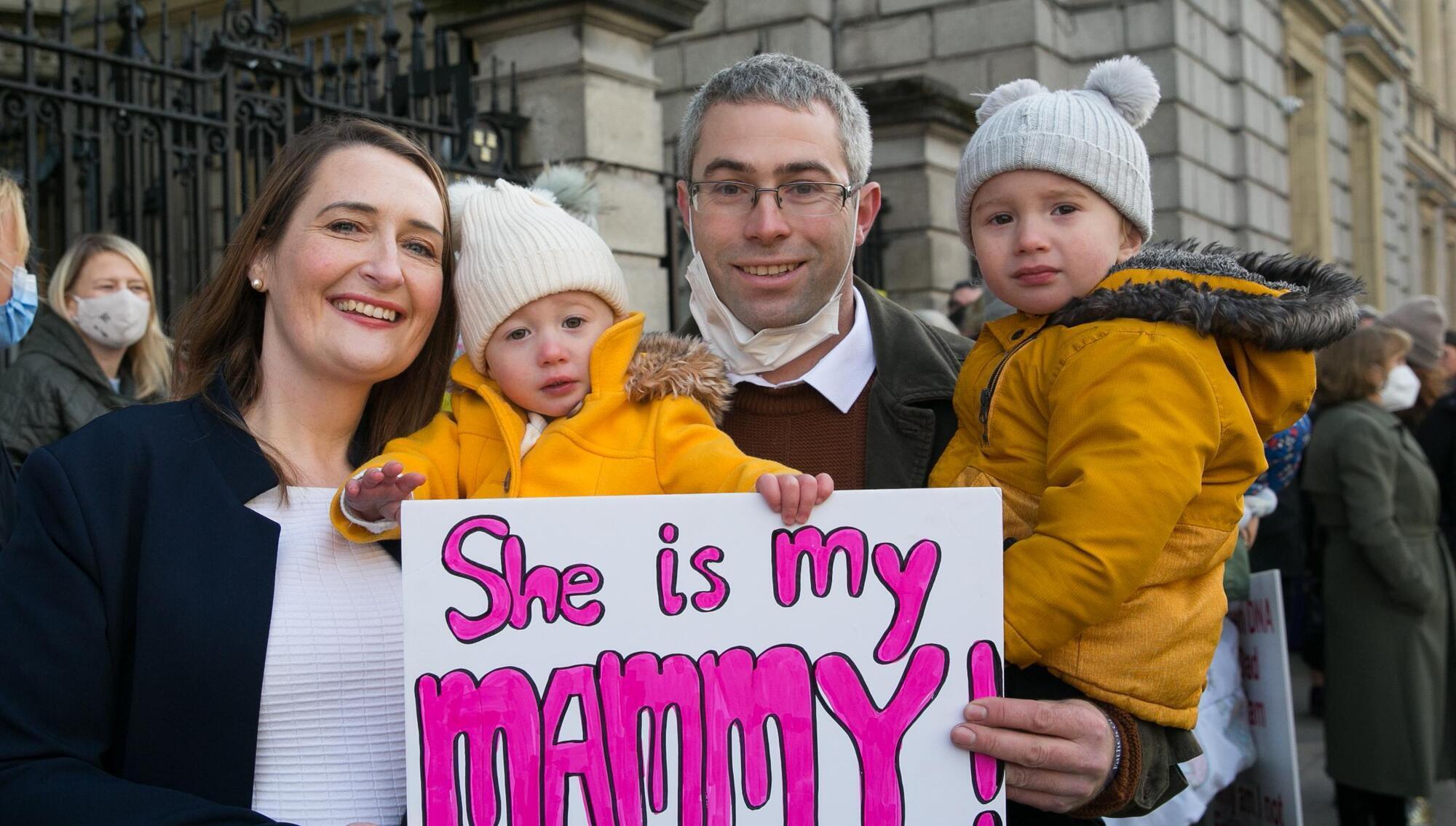
Cathy and Keith Wheatley with their twins Elsie and Ted protesting outside Leinster House last November about delays to assisted human reproduction legislation. Cathy was back on Kildare St yesterday, but this time inside, at a session of the Oireachtas committee for children. Picture: Gareth Chaney/Collins
The mother of a child born by surrogacy broke down as she told the Oireachtas how she had to sit in a car while her daughter was treated in hospital.
This was because while Cathy Wheatley's husband Kevin is recognised as little Elsie's legal parent, she is not. As a result, she was unable to be by her two-year-old daughter’s side when she had to be treated in hospital recently after contracting Covid-19.
Ms Wheatley told a joint Oireachtas committee for children hearing on surrogacy arrangements that: "We were very worried about her. She developed pneumonia, she was very sick, and we went to the hospital.
"My child is in the hospital with her much-loved daddy, and he's doing everything he can when she's crying for me, her mammy, and I'm on video chat trying to reassure her, trying to tell her that it'll all be OK.”
The committee also heard from the University of Limerick’s School of Law lecturer Lydia Bracken.
Ms Bracken said “a careful and nuanced conversation is needed” to “ensure surrogacy is ethical”.
At present, there are no laws governing surrogacy here. As a result, biological fathers of children born by surrogacy have more rights than the child’s intended mother or second parent, like Ms Wheatley, who is a spokesperson for the Irish Families Through Surrogacy advocacy group.
Currently, the mother or the second parent has to settle for guardianship — which they are only entitled to after two years, and which then expires when their child reaches 18.
This legal limbo means that, until the mother is granted guardianship rights, she cannot stay overnight with her child in hospital, cannot give consent for them to be vaccinated, and cannot even apply for their first passport.
And, once that child reaches 18, they would have no legal standing when it comes to making important health decisions for their parents.
Father-of-three Gearóid Kenny Moore, who is part of one of the 132 LGBTQ+ families across Ireland represented by Equality For Children, also broke down during the hearing.
He said the current situation is a “slap in the face” to parents like him, who have little or no standing in law in relation to their children, who are currently considered to be "inferior" to other children in Ireland. He said:
“I can't participate in any medical decisions, and it's a pretty big slap in the face," he said.
CONNECT WITH US TODAY



Be the first to know the latest news and updates