Almost 20,000 Croke Park pitches worth of peatland 'rehabilitated'
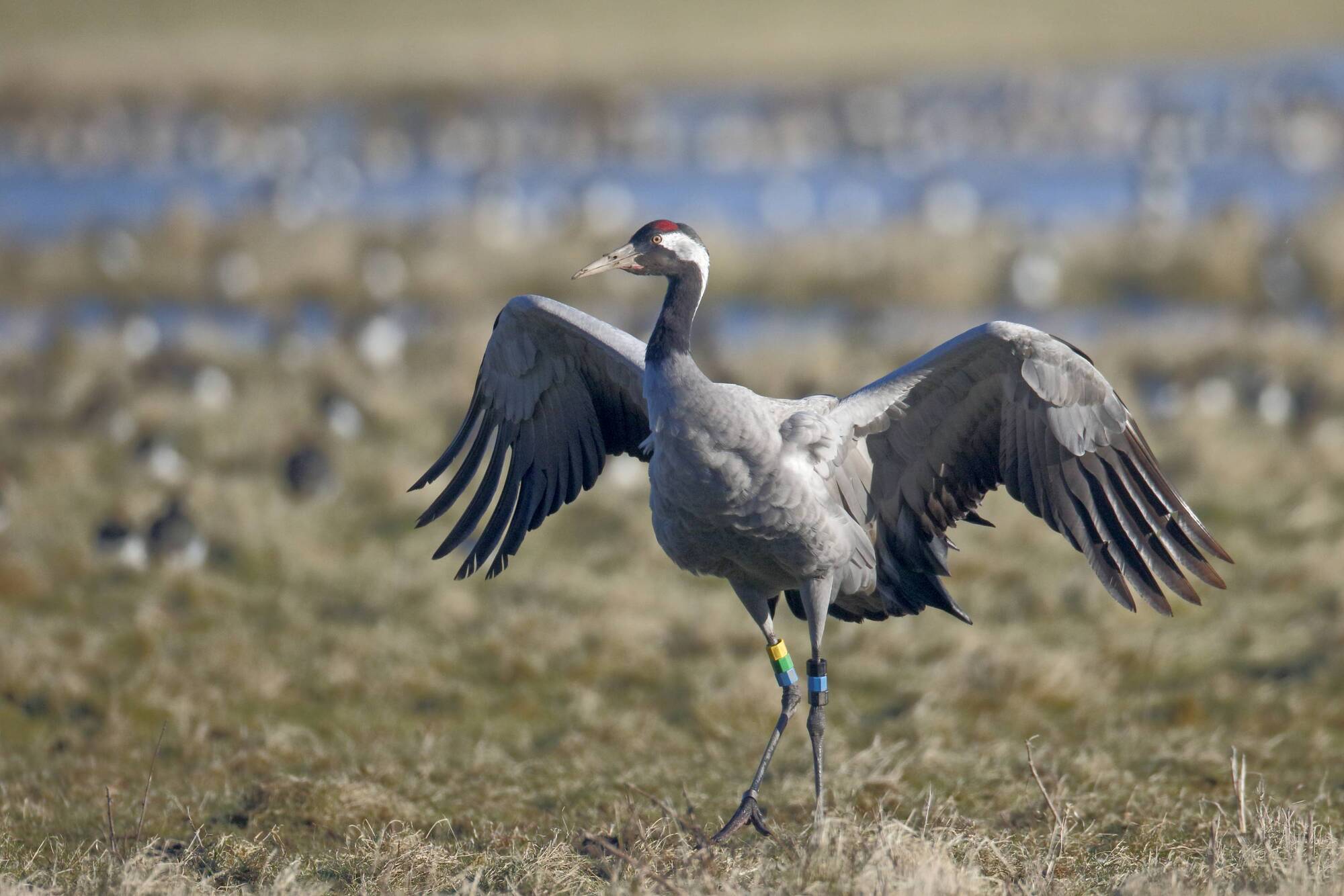
The return of nesting cranes to a Bord na Móna peatland after 300 years 'show the enormous future potential for nature to renew and restore itself', the firm said.
More than 25,000 hectares of peatland, or the same as 19,600 Croke Park pitches, have been "rehabilitated", with more than 5,000 done in the last year alone, Bord na Móna has said.
To coincide with World Wetlands Day, the semi-state peatlands firm said that the restoration plan that began last year to revive carbon capture and storage has seen “upwards of 7.5m tonnes” secured over the past year.
According to the International Union for Conservation of Nature (IUCN), peatlands are the largest natural terrestrial carbon store, with more carbon than all other vegetation types in the world combined. At the same time, damaged peatlands are a major source of greenhouse gas emissions, responsible for almost 5% of global human-led carbon emissions, the IUCN says.
To put it in perspective, although there are 5% emissions, damaged peatlands cover just 0.3% of landmass, according to the IUCN.
Bord na Móna said it is using a range of enhanced rehabilitation measures to transform extensive areas of peatlands in the Midlands.
The total amount now rehabilitated and restored is more than 25,000 hectares, an area equivalent of about 19,600 Croke Park pitches, or the distance from Dublin to Moscow if lined up end to end, Bord na Móna said.

Another vital aspect to restoring peatlands has been the positive effect on biodiversity, which is suffering a global crisis as flora and fauna are displaced from their natural environments.
Bord na Móna said that “extensive areas of restored and rehabilitated bogs are increasing biodiversity and providing new habitats for thousands of native plant and animal species”.
The return of nesting cranes to a Bord na Móna peatland after 300 years “shows the enormous future potential for nature to renew and restore itself”, it said, adding that “ecologists are confident that the rewetting and rehabilitation programme will deliver similar wins in the future”.
In 2021, the plan focused on 18 bogs, mostly in Offaly and the east of Galway, as well as smaller areas in Longford, Roscommon, and Kildare.
Bord na Móna employs almost 300 people in its peatland rehabilitation projects.
“Many of these new roles have been taken up by people who were previously employed in the extraction and transport of mostly peat-based fossil fuels,” the company said.
“The company has also recruited engineers, ecologists, surveyors to deliver in the design and implementation of this highly significant environmental scheme.”