Mismanagement of State property led to waste of 'hundreds of millions'
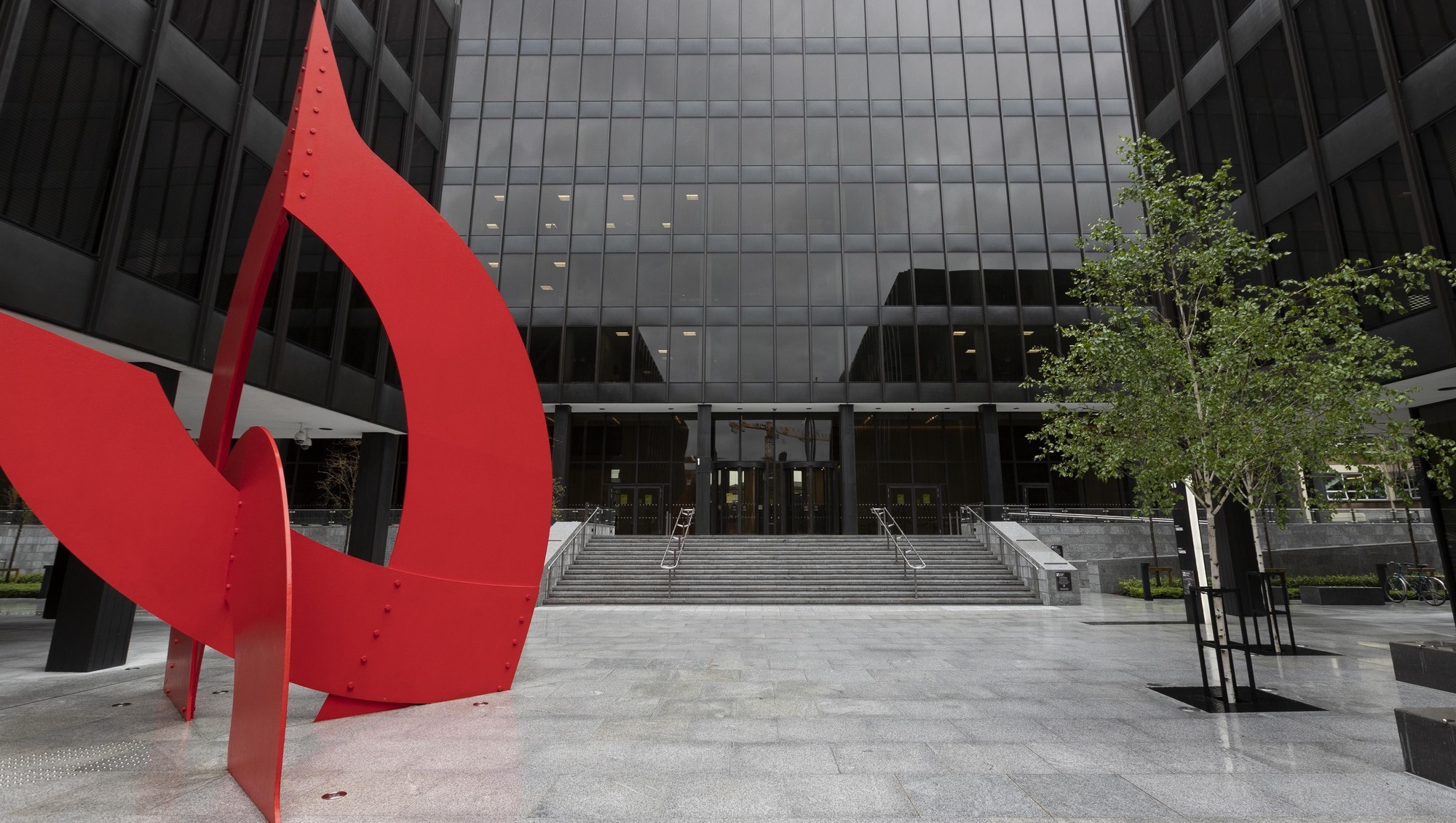
The Department of Health at Miesian Plaza, Dublin. Picture: Colin Keegan, Collins Dublin
Managing the State’s property portfolio on a commercial basis is the only way to do away with its public service managers’ culture of wasting money, a former senior civil servant has claimed.
Allen Morgan, a former senior valuer with the OPW - which manages the State’s property assets - has written to each of Ireland’s political party leaders calling for an end to the culture of "budgets matter but money does not" which he perceives as being endemic to the public service.
Mr Morgan, who retired in 2017, describes in his letter - seen by the - the “dysfunctional and wasteful” system currently employed for managing those properties, but states that the “exposure of persistent gross mismanagement” of that portfolio in recent years “has achieved nothing in the way of change”.
He states that in his career, he was privy to the waste of likely “hundreds of millions of taxpayers’ money” due to the civil service’s preoccupation with spending budgets exactly rather than achieving value for money.
He adds that previous attempts at reform, including the issuance of a new public spending code by the Department of Public Expenditure and Reform, “do not address the matter of maximising return on the billions already invested in property”.
Multiple examples of perceived wasted money are outlined in the letter, including the overpayment of €10m by the State for the rental of the Department of Health headquarters at Miesian Plaza in Dublin, and the series of missed opportunities which saw the gardaí miss out on, and being forced to vacate, its current command headquarters at Harcourt Square in Dublin at a loss of potentially over €100m.
The letter elaborates on apparently “un-utilised investment” - notably a Georgian office complex on Merrion Square in Dublin purchased for €23m in 2007 and left vacant for seven years, and the Hammond Lane site in north Dublin, first purchased in the late 1990s and recently earmarked as a site for a much-delayed new family courts complex, which has never been used.
Also criticised is a €33m court award against the OPW regarding the failure to vacate Harcourt Terrace Garda Station as part of a land swap deal, and the “inexplicable” way in which the OPW became involved in the abortive Children’s Science Museum project on Earlsfort Terrace in central Dublin.
“There is only one lesson which needs to be learned from these debacles and many others like them - money must be made matter more than budgets,” Mr Morgan writes, adding that that means “removing State property management from annual budgets” and staffing a new, commercially-focused agency “with appropriately skilled cost numerate professionals”, akin to comparable entities operating with a commercial remit and culture in countries like Finland and Austria.
Such an outcome is necessary in order to recognise “that money and return on investment matters”, he states.
“I am addressing this letter to all Oireachtas parties in the hope that they will get behind their representatives on the (Public Accounts and Finance Committees) and finally commence a reform process which will stop waste on public property and lead to a situation where millions already invested are deployed for the benefit of the country’s citizens.”
Catherine Murphy, co-leader of the Social Democrats and a frequent critic of State property transaction such as the Military Road build, said in reaction to her party receiving the letter that it is “important to recognise that some things the OPW does very well”, such as the maintenance of high profile heritage sites.
“But in terms of the sites they own, some of which should have been sold or moved on, there is no doubt that there are things which there are significant problems with,” she said.
“There have been things like Miesian Plaza where the calculations were wrong, or the Garda HQ on Harcourt Square where the State really should have purchased the property before it was sold. There are too many examples like that,” she said.

CONNECT WITH US TODAY



Be the first to know the latest news and updates