Dr Mike Ryan: 'If we can’t get vaccine equity right, how are we going to get climate justice right?'
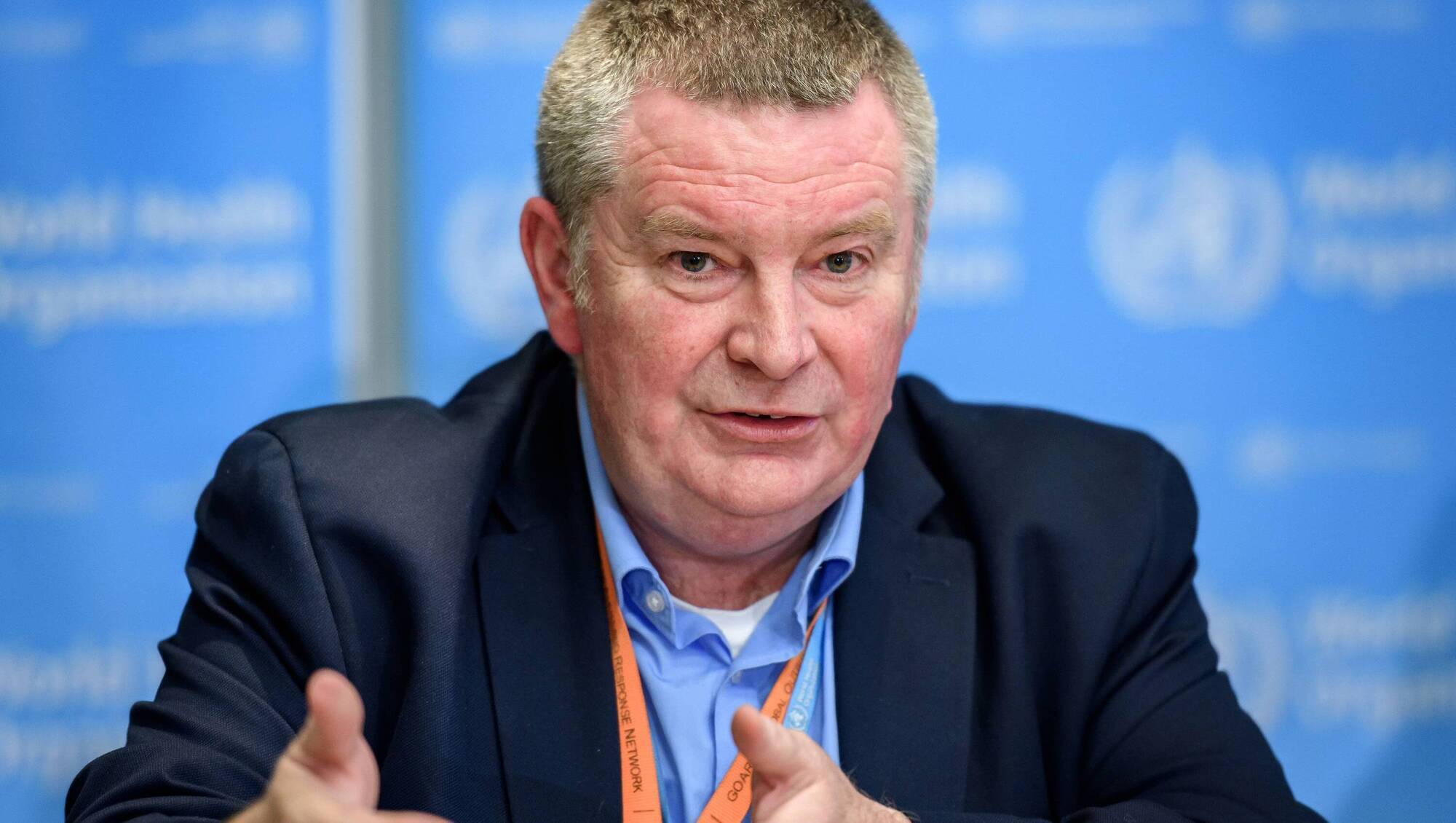
Dr Michael Ryan said Omicron remains 'a massive threat' to unvaccinated people. File picture: Fabrice Coffrini/AFP via Getty Images
Unless the world can solve the problem of vaccine inequity, there is little chance for climate change and other global issues, Dr Mike Ryan from the World Health Organisation has warned.
The WHO has confirmed 15m new Covid-19 cases around the world in the first week of January, with 7m of those in Europe.
During a briefing on Tuesday, Dr Ryan, the Sligo man heading the WHO’s emergency response, said Omicron remains “a massive threat” to unvaccinated people.
He said there was some movement towards providing developing countries with the ability to buy or make vaccines, but this is not going fast enough.
“If we can’t get vaccine equity right, how are we going to get climate justice right,” he said.
About 3bn people have not yet received their first vaccines, the WHO’s Covid-19 technical lead Dr Maria Van Kerkhove said.
She urged the public to “write to your leaders” to urge for vaccine equity. She warned the figure of 15m new cases is understood to be an “underestimate” due to the lack of testing capacity in many countries.
The WHO hopes to have 70% of the world’s population vaccinated by the middle of this year, however, Dr Ryan noted many countries have less than 10% done.
Both cautioned against seeing Omicron as mild, although mortality figures are lower than feared. In the first week of January, the WHO recorded more than 43,000 deaths globally, Dr Van Kerkhove said.
“We do see a lower proportion of cases are dying. But every single one of those deaths is a tragedy because we have tools in hand [to prevent illness],” she said.
Meanwhile, the WHO’s Europe director Hans Kluge warned of the impact of a “tidal wave” of cases.
“At this rate, the Institute for Health Metrics and Evaluation forecasts that more than 50% of the population in the region will be infected with Omicron in the next six to eight weeks,” he told a separate press conference yesterday.
Up to Monday, 26 of the 53 countries and territories reported over 1% of their populations infected with Covid-19 every week, he said.
"We still have a huge amount of uncertainty and a virus that is evolving quite quickly, imposing new challenges. We are certainly not at the point where we are able to call it endemic,” WHO's senior emergency officer for Europe, Catherine Smallwood, said at the same briefing.
The organisation's Technical Advisory Group on Covid-19 Vaccine Composition has called for new vaccines to be “long-lasting in order to reduce the need for successive booster doses”.
They urged these should have a “high impact on prevention of infection and transmission” as well as preventing severe illness, as is currently the case.
In a statement, they said “a vaccination strategy based on repeated booster doses of the original vaccine composition is unlikely to be appropriate or sustainable”.


CONNECT WITH US TODAY



Be the first to know the latest news and updates