Requirement for confirmatory PCR tests to be scrapped for people with positive antigens
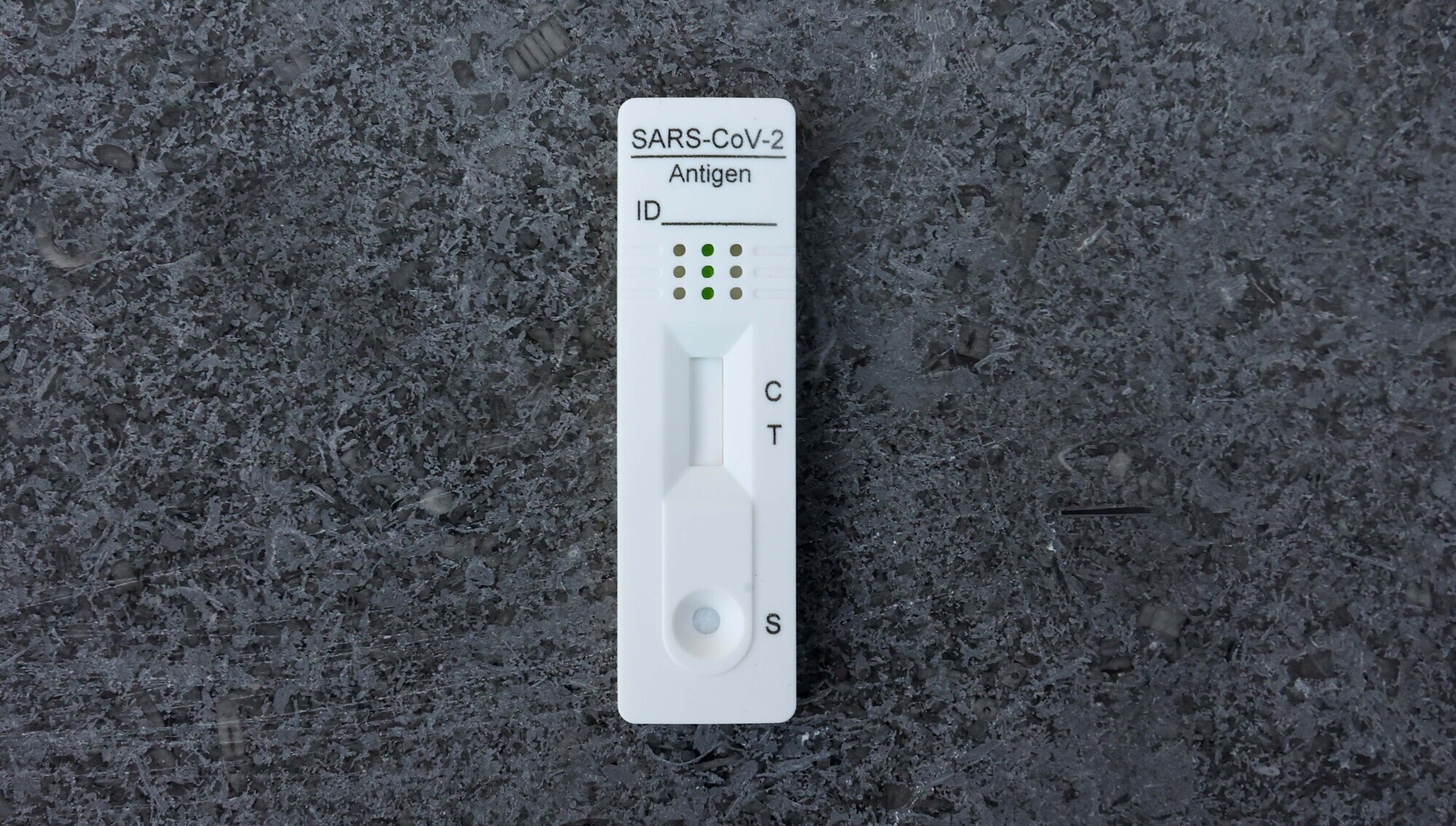
People who record a positive antigen test will no longer need a confirmatory PCR test under new changes. Photograph: Sam Boal / RollingNews.ie
People who receive a positive antigen test result will not have to get a further confirmatory PCR test, under new rules being considered by the government, according to Stephen Donnelly.
Updated public health advice has been sent to government this afternoon ahead of a full cabinet meeting tomorrow morning, regarding the country's fight against the Omicron variant.
It was sent shortly before the announcement of a further 19,290 cases of the virus, with the 14-day incidence rate at its highest since the pandemic began.
The Minister for Health described the move to recognise antigen test results as "very positive". A new portal will be opened for the public to upload their positive antigen results online.
"It makes it easier for people they don't have to go and get a second test, and it frees up some of the pressure on the PCR system as well because obviously, we want people to be able to get those PCR tests as quickly as possible," he said.
The Minister for Health also confirmed on Tuesday anyone with a positive test will have to isolate for seven days. However, asymptomatic, boosted close contacts won't have to isolate.
"If you test positive, currently, for those who are boosted, the recommendation is they isolate for seven days and unboosted for 10 days and the new recommendation is that it just becomes seven days for everybody," he said.
"The next one is around the close contacts and I think this is the one that will affect most people and will do so again, in a very positive way, because we really want to try and ease the burden on people. We're very, very aware of how difficult it is for people themselves, for their employers, for their communities, with so many people have been asked to restrict their movements if they're in close contact.
"The main recommendation here is that if you have boosted immunity currently you're asked to restrict your movements for five days, that requirement would go completely so no restricted movements.
"Now, the recommendation is still that there is regular antigen testing for several days, and during that period, people wear the higher grade masks."
Cabinet is set to discuss the new recommendations tomorrow, however, it is widely expected they will be accepted.
"I know that government is very keenly aware of the burden on people we know there are people who want to get back to work," Mr Donnelly added.
"We know there's employers who want people to get back to work.
"We want to balance that, obviously against making sure it's done right. It's done safely."
While the country has notified more than 20,000 positive cases of Covid-19 on several days recently, advice to government suggests the reality is far higher.
"It's maybe 60,000, maybe 70,000 a day, which is 400 to 500,000 a week," Mr Donnelly said, adding 12.5% of healthcare staff are out sick with Covid-19 or are close contacts.
The minister added that he does not foresee the 8pm closing time for pubs and other entertainment venues being lifted before the end of January.
"Those rules are in place until the end of this month, they'll be looked at by public health and government in that context," he said.
"We can't do everything at the same time."
Earlier, Tánaiste Leo Varadkar had flagged that Nphet was examining changes to the close contact rules.
He said they should be eased to allow boosted, non-symptomatic people "get on with their normal lives".
"We do have a problem at the moment where for the first time since the pandemic began some supermarkets have to close because staff are out because they are close contacts, some childcare facilities are closing and people are being denied healthcare in some instances, not because of Covid but because crucial staff are at home because they are close contacts."
He said this is also having a serious practical impact on families.
Mr Varadkar said the Cabinet will act on any proposals from Dr Holohan at their meeting tomorrow.
The Tánaiste added that Covid supports for businesses will remain in place for as long as is necessary. However, he said the Government recognises that there are "two economies" at the moment, with some sectors growing while others are still struggling.
While the lifting of financial supports would be linked to the easing of restrictions, he said there will be no cliff-edge for businesses.
Mr Varadkar said there is now a reason for "cautious optimism" and he expects a phased easing of the restrictions on hospitality and other areas in the medium term.
"When it comes to easing the restrictions across the spring and summer we shouldn't be outliers, we should keep pace with the reopening that we see across Europe.
"I wouldn't like this to be the third summer in which Ireland has strictest rules in Europe, that was justifiable when people weren't vaccinated when we didn't have vaccines, that wouldn't be justifiable in my view this summer," Mr Varadkar told RTE radio.


CONNECT WITH US TODAY



Be the first to know the latest news and updates