Rolling class closures likely as schools report 'incredibly difficult' first day back
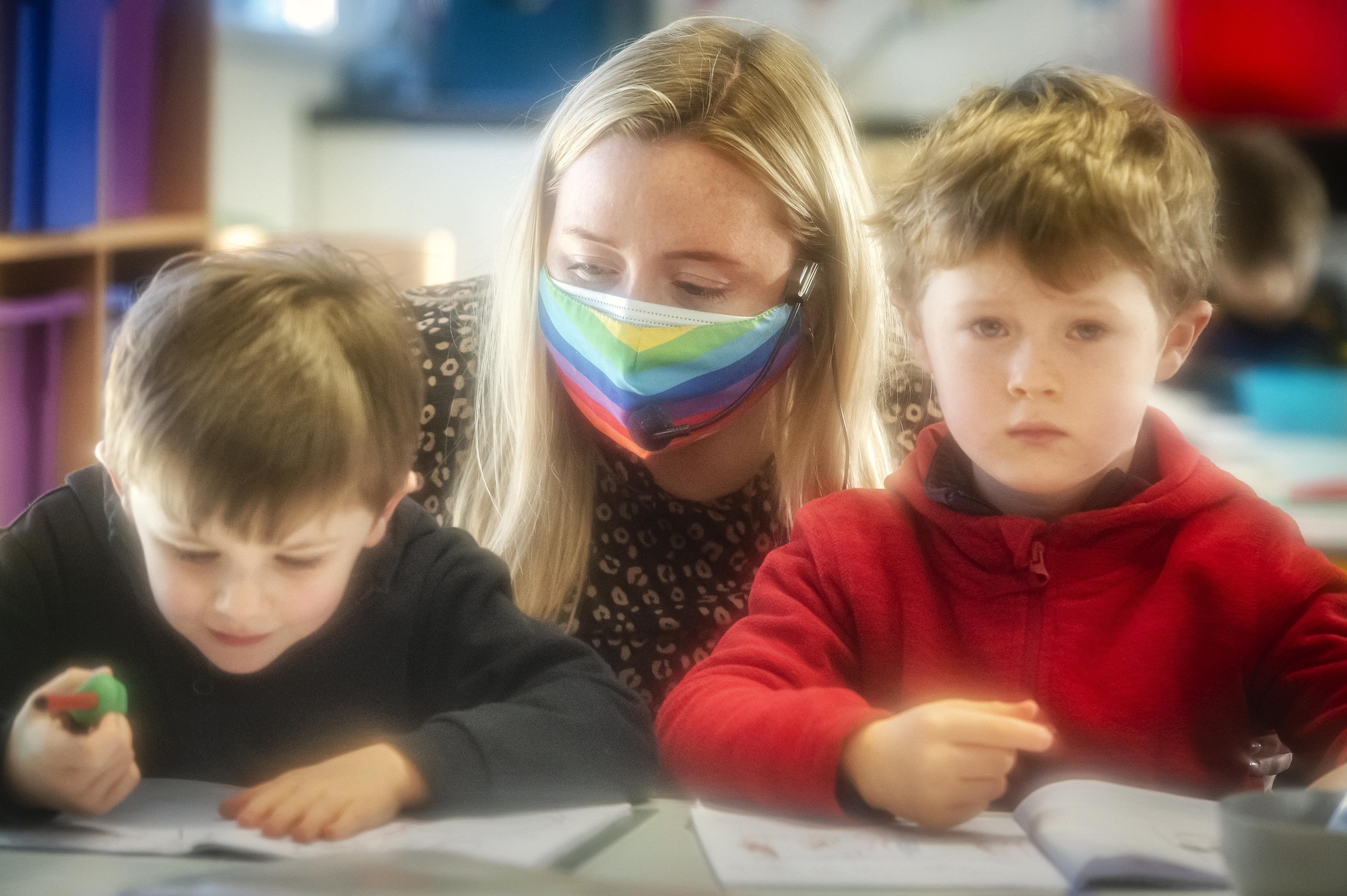
Teacher Aisha Heffernan with Cole Rixon and Oisín O’Dea at Scoil Clíodhna Community National School in Carrigtwohill, Co Cork.
School principals have revealed record low student attendances and severe staff shortages as the country reported its highest ever Covid-19 case numbers.
Schools reopened yesterday after the Christmas break, with many principals reporting that 30% to 40% of children did not turn up for class.
The absences are linked to the recording-breaking Omicron wave of the virus, with 23,817 cases confirmed by the Department of Health yesterday — the worst daily figure since the pandemic began.
There are now 941 Covid patients in hospital, an increase of 13, and 90 in intensive care, down four.
The rising case numbers have not, however, led to calls for new public health restrictions.
The National Public Health Emergency Team (Nphet) met last night to discuss the ongoing situation, recommending a continuation of the current regime until the end of January.
Any changes to rules around isolation for close contacts, which had been sought by the Government, will not be made until Nphet is satisfied the peak of the Omicron wave has passed, which could happen as early as next week.
Nphet has told the Government that more data is needed to fully assess the impact of the current wave on intensive care units (ICU), fearing a time lag between case numbers and ICU presentations.
The letter from Nphet to Government confirmed that case numbers are still a concern, but ICU capacity and deaths are relatively stable so far.
The team has recommended a new focus on wearing medical-grade face masks for vulnerable people.
The reopening of schools immediately led to renewed calls for greater supports for the education sector, with thousands of staff and students absent yesterday.
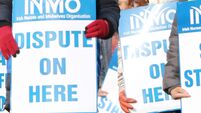
The Irish National Teachers Organisation (INTO) said it was an “incredibly difficult first day back”, as pupils and staff members restrict movement due to contracting the virus or being close contacts.
“In order to maximise our chances of providing in-person teaching and learning throughout this term, we again call on the Government to reinstate contact tracing in schools,” said INTO general secretary John Boyle.
The Association of Secondary Teachers in Ireland estimated that 15% to 30% of staff were absent while the Irish Primary Principals' Network reported that schools were down 20% to 25% of staff.
Catríona Hand, principal of Citywest Educate Together National School in Dublin, was down 27% of her staff and had to close three classes.
“It is the first time in over a year that we've had to close a class due to Covid-19, and we hated doing it.
"Unfortunately, it seems that in the coming weeks it will be a case of classes taking their turns being closed, and that's not something that we've ever done, or that we would do lightly,” she said.
Ms Hand said pupil attendance was the lowest in the school’s 20-year history, at 69.5%.
The impact of isolation is also being felt in healthcare, with 8,500 HSE staff out of work because of Covid-19.
Some sites have lost as many as 20% of their staff, the HSE has said.
This is linked to the rising positivity rate in the community which stands at 60.5%, HSE chief Paul Reid said.
“Our judgement is there could be at least a 12.5% impact on staffing levels, but it could be double the number,” Mr Reid said, adding that some sites have a much higher than average absence rate.
The absences include over 3,000 nurses and midwives, and 1,500 health and social care professionals, many of whom work outside hospitals.
The impact for patients is immediate with 230 beds closed around the country directly because of staff shortages, HSE chief operations officer Anne O’Connor said.
There were just 122 beds available nationally yesterday morning.


CONNECT WITH US TODAY



Be the first to know the latest news and updates