Crisis of supply in housing laid bare by stark new figures
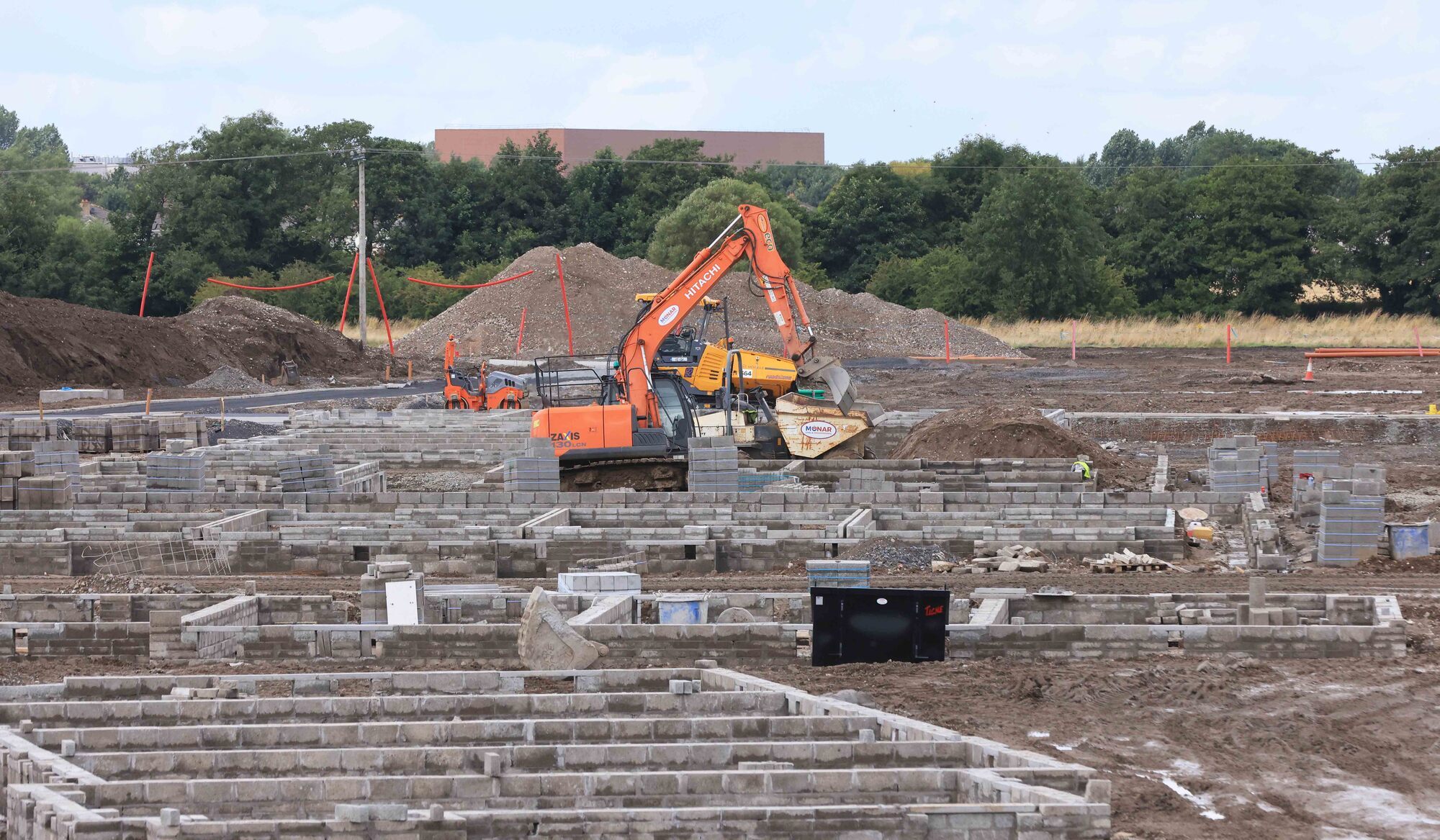
Plans for thousands of new homes were lodged by developers before Christmas in a four-day scramble, ahead of a key date that sees the ending of fast-tracking of planning for strategic housing developments. Picture: Eamonn Farrell
Fewer than 11,500 homes were listed for sale last month on property website Daft.ie - the lowest number since the height of the Celtic Tiger, when online advertising was in its infancy.
The latest property report from Daft.ie shows that house prices rose by 7.7% on average during 2021, with the average price nationwide at €290,998 in the last three months of this year.
The total number of properties available to buy on the site on December 1 was just 11,483, down by almost 4,000 from the same period last year and the lowest on record in a series dating back to January 2007, Daft.ie said.
The report’s author, Trinity College Dublin economist Ronan Lyons, said: “Inflation in listed prices continues to cool from its mid-year peak. Nonetheless, at nearly 8% for the year, it remains stubbornly high.
“This reflects a combination of unusually strong demand and ongoing weak supply. Demand for homes to buy, which had been strong anyway from the mid-2010s, has received an unexpected boost during the Covid-19 pandemic, with prospective buyers able to tap into ‘accidental’ savings, as expenditure fell during the lockdowns,” he said.
However, the supply of both new and second-hand homes remains weaker than expected before the pandemic, Mr Lyons said.
However, Pat Davitt, head of property industry body the Institution of Professional Auctioneers and Valuers [IPAV] believes that the low numbers are partially down to a change in vendor behaviour.
He said agents were reporting more stock coming on the market in the second half of 2021 but much of it was not being advertised for sale due to a stockpile of buyers with mortgage approval who are known to agents.
He predicted that 2022 would see a further increase in 'off market' sales, adding that many agents have moved to social media channels for advertising, rather than dedicated property websites.
“In the current market vendors know they can sell their homes without having to wait on those who have not been vetted as buyers as ready to go by agents and some of whom who may not be intending to buy but are perhaps researching the market," he said.
The Daft.ie report shows that rural prices are shooting up compared to urban homes.
“There is a marked difference in price increases between the urban and rural markets, however. In all markets outside the five main cities, price rises are on average 12.5% year-on-year, while prices in cities are on average 4% higher," says the report.
Galway, Mayo, Leitrim and Wexford saw the largest price rises over the last year.
In Cork county, prices rose by 7.6% to just over €255,500 on average, while in the city, they were up 5.5% to more than €313,400.
In Munster as a whole, price inflation is “stabilising somewhat” at (9.2%) after a record level of annual inflation in the first quarter of 2021, Daft.ie said.
There were just over 3,400 properties on the market in Munster on December 1, down from 4,568 on the same date a year ago.
Mr Lyons said: “It seems somehow fitting that – in a year that was determinedly far too like its predecessor despite everyone’s hope things would move on – the measured annual change in prices contained in this year-end report for 2021 is at 7.7%, the same as in 2020.
“Indeed, the rate is – uncannily – almost exactly the same as the average for the four-year period 2015-2018 (7.8%). So, nothing but the same old story, you might say, about the sales market in Ireland this year.”
It was revealed this week that plans for thousands of new homes were lodged by developers before Christmas in a four-day scramble, ahead of a key date that sees the ending of fast-tracking of planning for strategic housing developments (SHDs).
The current SHD system is to be phased out next year and replaced with the Large-Scale Residential Developments (LSRD) system.
That will mean planning decisions on large residential developments will rest with local authorities, as opposed to An Bord Pleanála in the first instance.