Omicron hospitalisations could exceed January wave
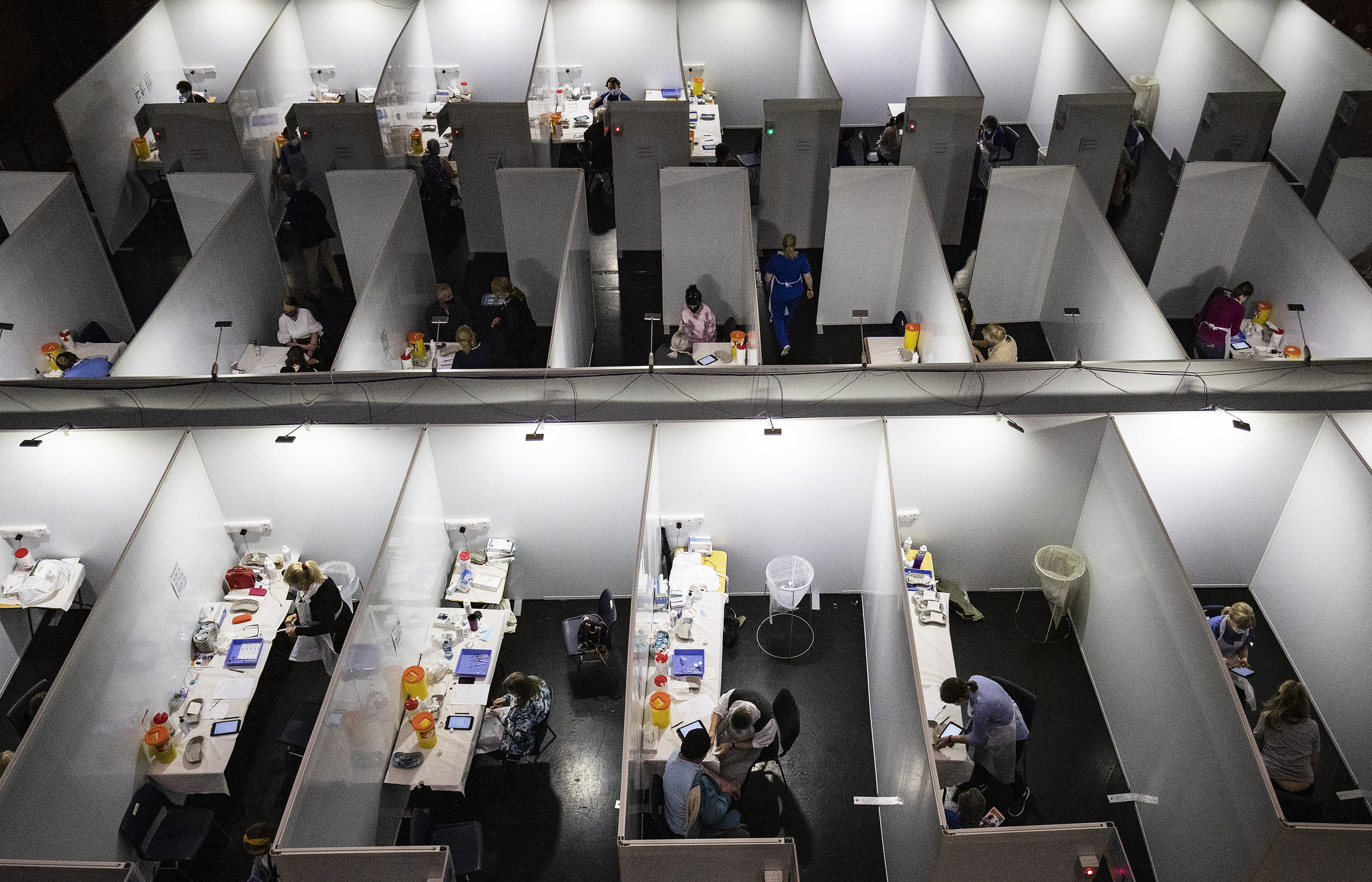
Vaccinations under way at the mass vaccination centre in the Helix, DCU. File picture
Health Minister Stephen Donnelly has said hospitalisations due to the Omicron variant could match or even exceed the spike seen last January.
Speaking at Government Buildings as he announced changes to the vaccine booster campaign, Mr Donnelly made clear the high number of cases in the UK poses a big risk to this country.
“In terms of the number of cases, yes, it could well be it could be more in terms of the number of hospitalizations [compared to January of this year]. Yes, that that is entirely possible,” Mr Donnelly said.
Responding to the potential of new added restrictions, Mr Donnelly said: “We've got to do now is assess the situation in the context of this new variation. Unfortunately, we have a new variant. It's much more transmissible. And so we have to, you know, we have to respond to that,” he said.
He said that based on what we're seeing in the UK, it's reasonable to assume that we are looking at a very high case numbers in the coming weeks.
“And then with regard to tomorrow, I know people will be watching closely in terms of public health advice, but it wouldn't be helpful for me to speculate. Now we need to let the public health team do their thing. And then government will consider the advice,” he said.
When asked about the range of possible cases given by Nphet, Mr Donnelly said the range was “very wide” but he did not have the numbers to hand.
Mr Donnelly said that Omicron is so much more transmissible, and though it's a smaller, individual risk as long as people are vaccinated, because so many people are likely to become infected with it, it still has a serious implication for hospital numbers.
“We got some very serious emerging evidence on a Friday evening, which we're all aware of. And we've been learning more and more as we've been going so Omicron at this point, that constitutes a very significant risk for the country. We've seen the UK has just reported its highest COVID cases ever. So what we're doing now is further accelerating the programme,” he said.
In terms of booster shots, Mr Donnelly said so far about 1.3 million doses of the third jab have so far been administered, which is one of the highest rates internationally. “What we want to do now is increase that so in excess of 300,000 per week,” he said.
Earlier, he said that GPs have been asked to stop all less urgent work to prioritise the rollout of Covid-19 boosters.
The 15-minute wait period after a person has been vaccinated has now been waived by Niac to help pharmacies and GP surgeries administer as many vaccines as possible.
Health Minister Stephen Donnelly has said all those over the age of 50, those in at-risk groups and pregnant people will be offered a booster vaccine by the end of the year, and those over 40 will get appointments from next week.
Detailing the ramping-up of the booster campaign, Mr Donnelly said: "The aim is the current groups – that's everyone aged 50 and above, anyone with an underlying condition, healthcare workers, nursing home residents and pregnant women – that all of those will have either had a booster or will have been offered an appointment for a booster or the ability to go into a walk-in clinic by the end of the year, which obviously is just two weeks away."
"I want to really thank the GP population across the country, they were already doing incredible work, three every four GP clinics involved.
"Now, the vast majority of the 1,300 GP clinics are going to be involved. They're going to have to stop doing some of the less urgent work for their own patients, it's not an easy thing for the GPs to do, but we've really asked them to get on board with this national push and they have stepped up.
Mr Donnelly added: "On top of that, starting next week, those in their 40s will begin to receive appointments from vaccine centres for their booster dose, with the doses commencing the following week."
He called on people not to contact their GPs, as doctors will contact their own patients to make appointments.
He said paediatric hospitals would also begin administering vaccines to high-risk children from next week.
Mr Donnelly said the number of pharmacies administering the booster vaccine will increase from 550 outlets to about 1,000.
"What we know about this variant so far is very sobering, we know it is far more transmissible than Delta," Mr Donnelly told RTÉ news.
Mr Donnelly spoke after it earlier emerged that an instruction to pharmacies to begin boosting all over-16s was sent in error.
CONNECT WITH US TODAY



Be the first to know the latest news and updates