'Dereliction is a pollutant in Irish society... a social crime'
'The most common dereliction myth is that we need new legislation to tackle it. Although it’s not perfect, the simple fact is the Derelict Sites Act 1990 is not fully enforced,' the Oireachtas Housing Committee heard.
The “social crime” of derelict and vacant housing can be tackled with existing and new policies but many available tools, such as levies, are not currently being enforced, the Oireachtas Housing Committee heard.
Accurate data on dereliction is also needed so the State can better understand and respond to the problems, the committee heard.

Frank O’Connor and Jude Sherry of Anois, who campaign against dereliction, said that solutions such as ‘meanwhile use’ exist which could re-energise communities by allowing empty premises to be used for creative and other endeavours to avoid vacant property taxes.
Mr O’Connor said that the State now needs to prioritise communities, not ‘poor owners’.
“Dereliction is a pollutant that visually reflects the inequalities in Irish society,” said Mr O’Connor.
“When many people are struggling to find a secure and affordable home or dying on our streets, others are allowed to leave homes empty with no repercussions. This is a social crime.”
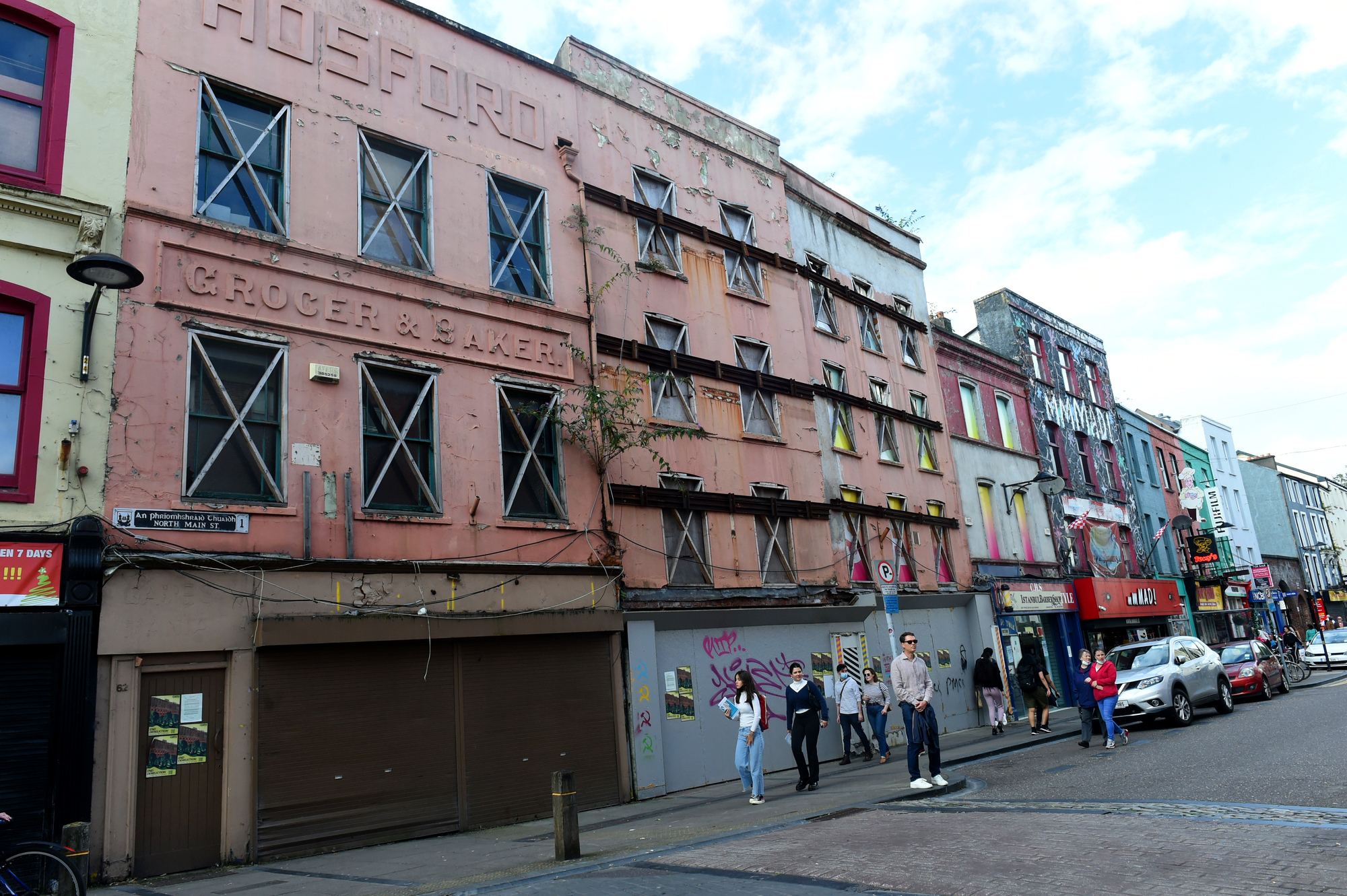
Ms Sherry said that dereliction has become so bad in Cork that she has considered wearing a hard hat to protect against any falling masonry and that the city more closely resembles Havana than Amsterdam.
“The most common dereliction myth is that we need new legislation to tackle it," she said. "Although it’s not perfect, the simple fact is the Derelict Sites Act 1990 is not fully enforced.
Orla Murphy, assistant professor at UCD School of Architecture, Planning and Environmental Policy, also said that despite having ample legislation and policy, there is “a curious lack of action and accountability”.
She said that existing levy powers and compulsory purchase orders (CPOs) should be actively implemented. She also called for better data collection.
"There is still no single department or agency responsible for comprehensively co-ordinating a programme of mapping, documenting, and understanding vacancy and land use patterns at the national, regional, and local scale."
She said that vacancy and dereliction are symptoms rather than causes of unequal housing, property, and development regimes. Less visible forms of vacancy include short-term lets, she said.
“At the date of writing, Westport in Co Mayo has only two available dwellings to rent listed on Daft.ie, despite there being 252 available short-term let Airbnb options. This is under-the-radar vacancy, but it is vacancy that has a significant impact on the sustainability of the town,” she said.
Waterford City and County Council had successfully used a scheme called Repair and Lease which invites owners of derelict or vacant sites to have renovations paid for upfront by the local authority or housing association so that they can then lease them for a period of time, the committee heard.
Around 320 homes are currently in the Repair and Lease scheme pipeline in Waterford, including 140 homes that have been returned to use.
More than 70 homes are to be built in a vacant former convent which is also a protected structure through the scheme and vacant pubs have also been transformed into multiple homes.
There are a further 50 homes currently in the Buy and Renew scheme pipeline in Waterford.
Waterford Council has undertaken CPOs on around 49 vacant dwellings.
However, the committee heard that CPOs were expensive and time-consuming and that local authorities preferred to work with landowners where possible.
Sinn Féin TD Thomas Gould said that it was “a scandal” that some €1m in derelict site taxes had not been collected despite the housing crisis.
He said that the main problems were people hoarding land to maximise profit and limited funds being allocated to local authorities to tackle the issue.
"It's being allowed to happen," he said. "Government, the department [of housing], and local authorities will not tackle homeowners who are hoarding land.
"13 local authorities don't apply any levies and 21 of them won't collect a cent [from dereliction levies]. How is the Government allowing this when there are sites lying empty?"
Sinn Féin spokesperson on housing Eoin Ó Broin said that “allowing homes to remain vacant in the middle of a housing crisis is like hoarding food during a famine."
"It is simply unacceptable. Neither this Government nor the last are serious about delivering on this matter," he said.
“The previous government had a vacant homes strategy that was an abject failure.
"For example, the Repair and Lease scheme had a target of returning 3,500 vacant homes back into use by 2020. Only 273 homes were delivered via this scheme, just 8% of the overall target.
"While no targets were set for the Buy and Renew scheme, just 670 homes have been delivered over five years. This is hard to understand.
“The current Government has also failed to tackle the vacant homes issue and is continuing with the same poorly resourced schemes, which aim to return 2,500 vacant homes to use by 2026. That is just 500 a year.
“The GeoDirectories has confirmed that there are 92,000 vacant homes across the State. Returning even a fraction of these homes back into use via a scheme like Buy and Renew is cheaper, quicker, more environmentally sustainable, and leads to good placemaking.
“To achieve this, we need accurate data on dereliction, and we need to see a dedicated vacant homes officer in each local authority, with specific targets to return a set number of vacant homes into use.
“We also need to see up to 20% of all publicly funded social and affordable homes to be delivered from existing derelict and vacant stock."