Q&A What parents need to know about vaccines for young kids
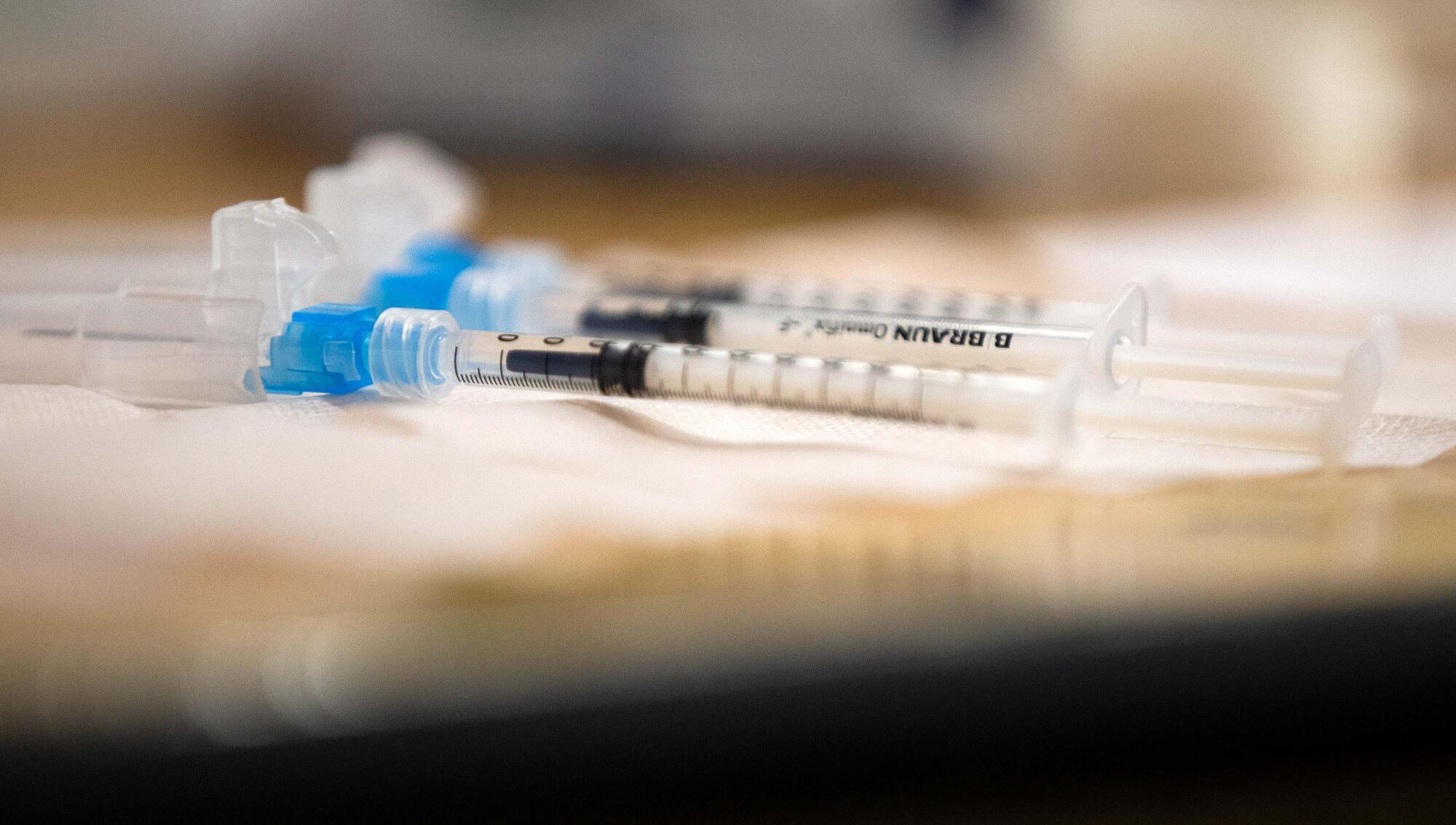
The European Medicines Agency has authorised the Pfizer Covid vaccine for children aged five to 11. Picture: Sam Boal / RollingNews.ie
With the news the European Medicines Agency (EMA) has approved the Pfizer/BioNTech Covid-19 vaccine for those aged five to 11, the HSE will now be planning how to roll out the jabs.
Taoiseach Micheál Martin had signalled Covid-19 vaccines will be given to that age cohort once the green light was given by Ireland's National Immunisation Advisory Committee (Niac).
Parents may be wondering if the vaccines are necessary, how they will work and what the side-effects may be.
Children in the group will be given two injections, three weeks apart, into the muscle of the upper arm. They are expected to receive a lower dose of the vaccine than teenagers and adults.
Dr Anne Moore, a vaccines expert at University College Cork, told RTÉ it will be about a third of the adult dose given to teenagers and adults.
“That lower dose works really well in children and they produce immune responses that are equivalent to adults, even with that lower dose. And also that allows us to use much less vaccine across that child cohort,” Dr Moore said.
According to the EMA, of the 1,305 children receiving the vaccine, three developed Covid-19 compared with 16 out of the 663 children who received a placebo.
"This means that, in this study, the vaccine was 90.7% effective at preventing symptomatic Covid-19 (although the true rate could be between 67.7% and 98.3%),” it said in a statement.
According to Dr Moore, the vaccine is "very safe". "At the moment, the similar side-effects that are seen in adults, which are local transient effects, [such as] a sore arm for a day or so, and rarely, kind of flu-like effects.”
She added that myocarditis, a condition that causes heart inflammation and has been seen as a “very, very rare” side effect in 12 to 18-year-old has not been seen in the five to 11-year-olds so far.
Side-effects noted in the trial include fatigue, muscle pain, headaches, or fever.
“These effects are usually mild or moderate and improve within a few days of vaccination,” the EMA said.
It is understood that more than 140,000 doses of the shots for children will be delivered to Ireland around December 20. However, the Niac deliberations can take a number of weeks, meaning it will probably be January before the rollout starts.
“Well, there are some children who do get quite ill,” Dr Moore said. “If you look at the statistics in the last two weeks, 15 children under the age of 11 have been hospitalised because of Covid.
“It's not impossible. It's rare, but one of the reasons for vaccinating is to induce that immune response. So a child will be protected both now [and later],” she added.


CONNECT WITH US TODAY



Be the first to know the latest news and updates