Call for Irish cities to look to European parking measures to reduce congestion
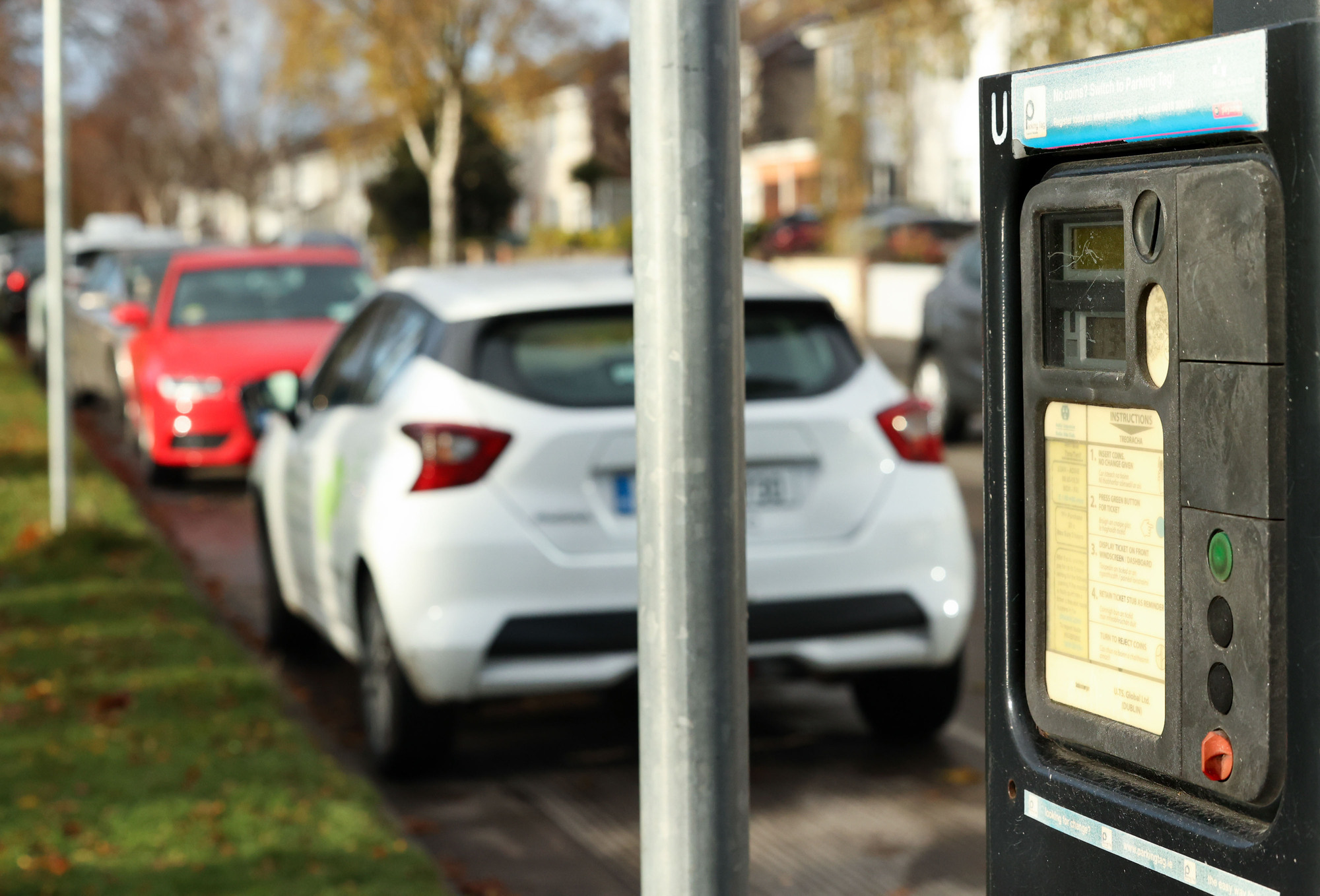
Public parking controls include pay parking, multistorey car parks, permits, and other measures aimed at controlling the number of vehicles in city centres. File picture: Sam Boal / RollingNews.ie
Irish cities can look to public parking measures in European counterparts such as Barcelona and Copenhagen in a bid to reduce pollution and congestion.
That is according to a report presented to the Department of Transport on how to encourage more sustainable and healthier forms of travel in Cork, Dublin, Waterford, Limerick, and Galway.

Although congestion charges of up to €10 were presented as an option for Cork and Dublin, better so-called "public parking controls" are believed to be measures the department will look at more closely.
Public parking controls include pay parking, multistorey car parks, permits, and other measures aimed at controlling the number of vehicles in city centres like Cork, Dublin, Waterford, Limerick, and Galway, which all have been strangled at various times in recent years due to the sheer volume.
"Parking controls and pricing is the most widely used transport demand management measure and is applied in most cities across Europe and beyond," the report by public transport expert consultants Systra said.
Barcelona and Strasbourg were hailed by the consultants as prime examples of good practice.
"Barcelona uses the surplus revenue from on-street parking charges to finance a public bicycle sharing scheme. In Strasbourg, there has been significant success with park and ride sites.
"As the city expanded its tram network, parking control zones were expanded, and parking spaces were reallocated to sustainable modes. The parking removed from the city was relocated to park and ride sites at the end of the tram lines.
"Combined, these measures resulted in a 28% decrease in the number of cars entering the city over an 18-year period up to 2011," it said.
Copenhagen was also hailed as a model for success, stripping out parking space in favour of bikes and paths.
"Copenhagen removed hundreds of parking spaces in the city centre and created high-quality pedestrian districts and cycle facilities. The city has also designed play-streets with traffic calming measures and, for example, former parking spaces replaced by wooden picnic tables or cargo bike parking.
"Parking charges applied to the remaining spaces vary by location and time of day, with the highest charges applied during peak hours and the lowest charges applying overnight and free parking only from Saturday afternoon to Monday morning," Systra said.
Carbon emissions-based parking controls in Amsterdam and London were also examined, while cities such as Hamburg and Zurich place a limit on the total number of parking spaces through a fixed cap.
In Amsterdam, parking permits are not issued for diesel cars registered before 2004 and other cars registered before 1992, while electric vehicle owners are given priority on waiting lists.
In Hamburg and Zurich, when a new space is built off-street, an on-street space has to be removed and repurposed, for example to widen pavements or provide cycle spaces, the report said.
In relation to Limerick, the report said there were issues with congestion, particularly around the city centre, University of Limerick, the Technology Park and close to schools. Although congestion is less of an issue in Waterford in comparison to the other cities, it has a high car mode share, Systra added.