'Restricting children's activities outside school not the answer to Covid surge'
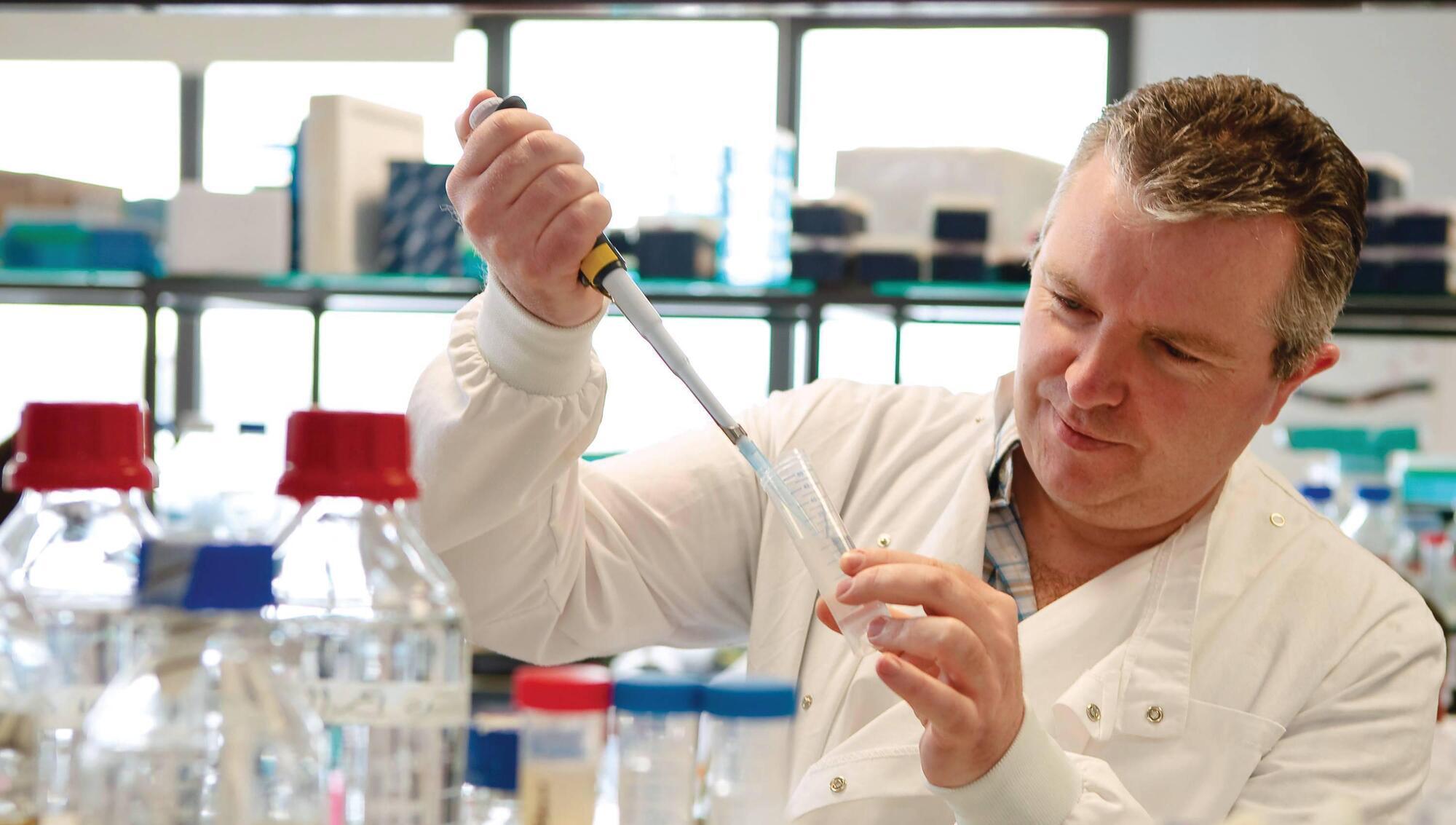
NUI Maynooth Professor Paul Moynagh says after-school activities, many of which are outdoor, are low risk compared to being in classrooms.
A leading immunologist has expressed "surprise" at Nphet's call for parents to limit children's activities to prevent the spread of Covid-19, saying the focus should instead be on making schools safer.
NUI Maynooth Professor Paul Moynagh said after-school activities, many of which are outdoor, are low risk compared to being in classrooms with 30 other children.
Deputy chief medical officer Dr Ronan Glynn this week called on parents to restrict the number of after-school activities for children to help reduce transmission of the virus.
Children in the five to 12 age category are currently being infected with the virus at a higher rate than the rest of the population.
The incidence rate of infection per 100,000 children aged five to 12 now stands at 436 cases.
Professor Moynagh described children's activities outside school as generally low risk.
"We seem to be saying that the activities outside of school are higher risk than the risk in school where there are thirty children in a room for five hours. I absolutely agree that schools should be open but that to me probably poses a higher risk," he told radio.
Professor Moynagh says we should be increasing our emphasis on issues such as ventilation, portable air filtration and antigen testing rather than zoning in on low-risk outdoor activities.
"We should be looking, in my view, at where the higher risks are."
Where children become close contacts of a confirmed case, Mr Moynagh said the parents should be sent antigen tests and can then test the children every second day for a week.
"Supplement that with more focus on ventilation, complementing that with portable air filtration. We need to be more proactive around the areas of high risk. "
Professor Moynagh says that the messaging around antigen testing has been inconsistent. However, he has welcomed suggestions that vaccinated asymptomatic close contacts will now potentially receive antigen tests in school.
"I think it is a good idea. We have spoken a lot about antigen testing and the use of them and they haven't really been enthusiastically received by public health here in Ireland. I think that it is interesting that they are being used now for vaccinated close contacts or asymptomatic (persons)."
Mr Moynagh also responded to calls from the Irish National Teachers Organisation for contact tracing to return to schools.
He says instead of going down that route we should ramp up antigen testing.
"This is the perfect example where antigen tests could be used.
"If we go down the contact tracing close contacts in school and again get parents to use antigen tests and each day they test negative I would suggest allowing the children to go to school. These antigen tests are picking up most of the infectious cases. "
CONNECT WITH US TODAY



Be the first to know the latest news and updates