Catherine Corless: I won't stop 'until the babies are taken out of the ground'
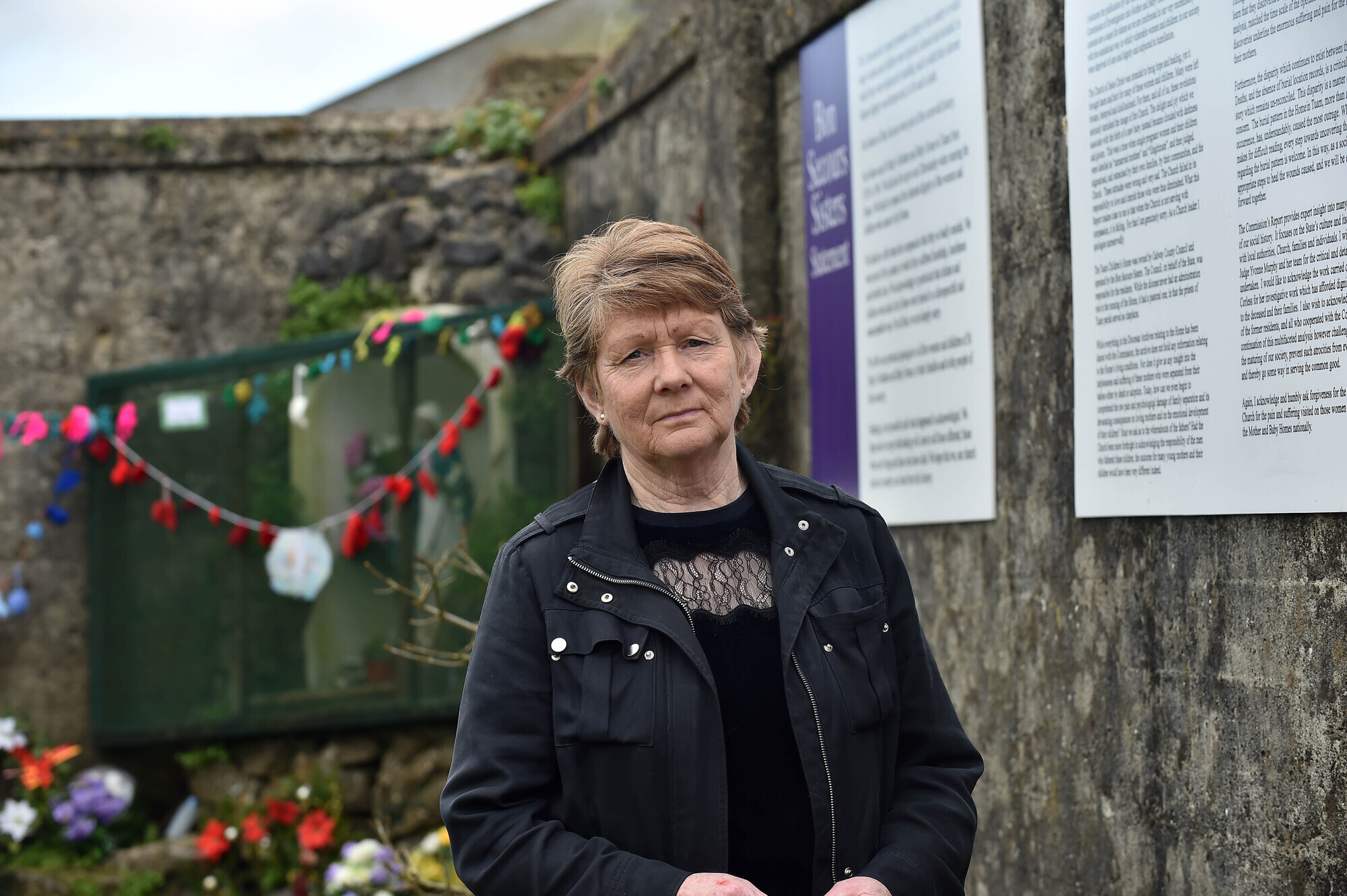
Catherine Corless, historian and mother and baby home campaigner, has released her memoir 'Belonging'. Picture: Ray Ryan
Historian Catherine Corless, whose work revealed the truth about the deaths and burials of hundreds of children on the former mother and baby home site in Tuam, Co Galway, is no stranger to fighting for answers about Ireland’s past.
Her memoir , published last week, is just another step in that battle.
“It’s been sort of a rollercoaster with everything. Will I do it? Won't I? [Publisher] Hachette contacted me a few times and so did other publishers when I wasn't keen at all to write a book,” she said.
“Eventually, when I saw it was just going on and on, I just said 'maybe this will just bring it to life again' and put a bit of more pressure on the government and get people talking.”
The historian describes her uncovering the true history of the Galway mother and baby home as “accidental”.
She was writing an essay for a local historical journal, , 'Journal of Old Tuam Society' at the time.
“I started out to write a very simple essay about the history of the Bons Secours and the history of the home, going back to the workhouse,” she said.
“And it's only as I got talking to people, and started researching, I just realised what really went on and it just took a whole different course altogether from what I had set out.”
Mrs Corless said she had to question herself throughout her research.
"Is it possible that most of them are buried in an unmarked area where there's absolutely nothing, no signposts?”
She didn’t know the answers at the time, and instead posed a question at the end of her essay.
“Is it possible that these babies are buried in a disused sewage facility?”
She expected a backlash — but the essay was met with silence.
“I was here asking if it was possible 200 — that was the figure I had at the time — children had been buried in a sewage facility?
"And the fact that no one came after me? Or questioned me? The fact that it fell silent, really had me asking more questions.”
And so she continued her work, which was then published in the before the international press picked it up. And then, in 2015, a Commission of Investigation into mother and baby homes was set up.
She thought that would be the end of her efforts.
“And finally this year would be the year when I could just let things go. I could let the people who should be handling things to handle it.”
However, when the commission’s final report was published last January, she realised that wouldn’t be the case.
“The blame was nearly put on the society, and families, who threw out their daughters, and that the nuns were there for refuge and there was nowhere else to go,” she said. "It was devastating. And I do hope that final report will be amended.”
That report, combined with the lack of progress around the burials bill, the adoptee rights bill, and the redress scheme, are why she decided to finally publish a book.
“My own book is the truth and that would be out there as well. That’ll be somewhere in the archives as well and that’s all I can hope for.”
And now that survivors’ stories have been published in full, is she ready to stop fighting?
No, she said: “Not until the babies are taken out of the ground.”


CONNECT WITH US TODAY



Be the first to know the latest news and updates