Q&A: What has gone wrong with Sláintecare?
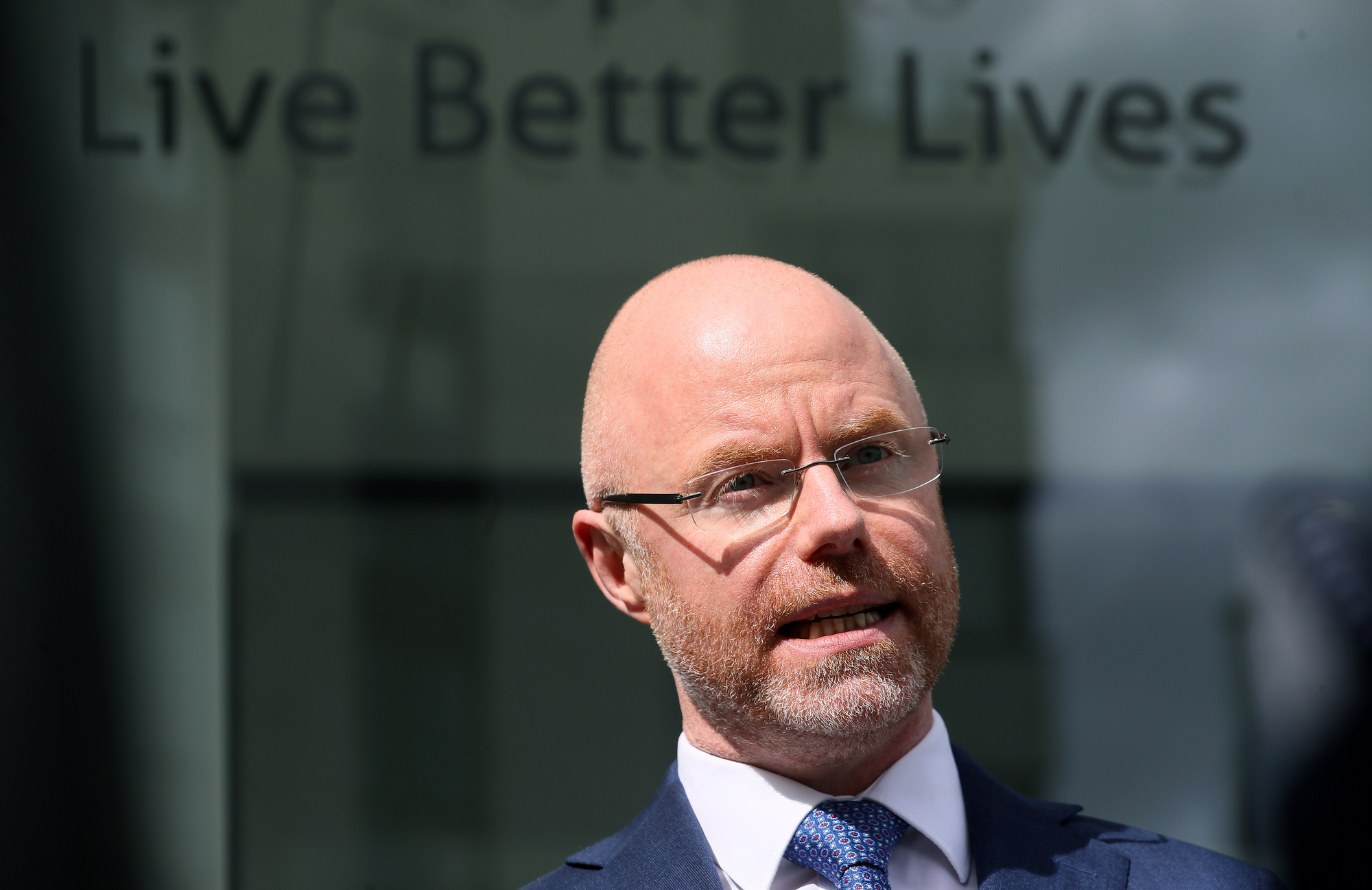
Health Minister Stephen Donnelly must get the implementation of the Sláintecare plan back on track.
In 2017, a cross-party Oireachtas Committee published the Sláintecare report which set out a revolutionary 10-year plan for the entire health system.
Among the radical changes is a move to a single-tier healthcare system of free GP care and a shift of many services out of hospitals to community and primary care settings.
Sláintecare also commits to provide people with waiting-time guarantees for hospital care. Over the lifetime of the plan hospital capacity will increase and there will be a phased elimination of private care in public hospitals.
Launching the final report, Committee chair Roisín Shortall said: “We hope that today will prove to be a historic day because we hope that from today on, health and issues in health will cease to be a political football."
Earlier this month the director of the Sláintecare programme Laura Magahy and the chair of the Sláintecare advisory council Dr Tom Keane both resigned.
In a pointed resignation letter, Dr Keane said the “requirements for implementing this unprecedented programme for change are seriously lacking.”
Just days later Professor Geraldine McCarthy, chair of the South/Southwest Hospital Group also stood down.
Their unexpected departures came as a progress report on Sláintecare revealed a “significant challenge” in tackling hospital waiting lists, because nobody will take “ownership of actions and implementation oversight".
It is understood that at the heart of the problem is a power struggle between the HSE, Department of Health and Sláintecare around the implementation of the plan.
Liam Doran, former general secretary of the Irish Nurses and Midwives Organisation (INMO) and a member of the Sláintecare implementation group cited "bureaucratic resistance and lack of political will" as a significant frustration.
This was echoed by another member and patient advocate Brendan Courtney, who said "a willingness to change is at the core of the problem".
The fact that Sláintecare is not under the Department of the Taoiseach, as originally planned, is also a source of annoyance for those trying to drive reform.
However, the stalling of plans to decentralise the HSE and create six new regional health areas with more autonomy is understood to have been the most significant issue.
Taoiseach Micheál Martin has denied that the Sláintecare plan has slipped back and claimed "the opposite is the case". He told the Dáil that €1.2bn was allocated in the last budget, however, Sinn Féin's health spokesperson David Cullinane maintains that €300m of this will remain unspent.
Health Minister Stephen Donnelly stressed that the Government is committed to the decentralisation element of the plan. However, he said that trying to engage in a reorganisation of the health service during a pandemic would not have been appropriate.
Obtaining buy-in from across the political spectrum for the Sláintecare blueprint was hailed as a significant feat, allowing it to fail would be catastrophic for any Government and Mr Donnelly must get the implementation of the plan back on track.
He must also regain the trust of the remaining members of the implementation group.