WHO: Boost vulnerable people, but share spare vaccine doses with poorer countries
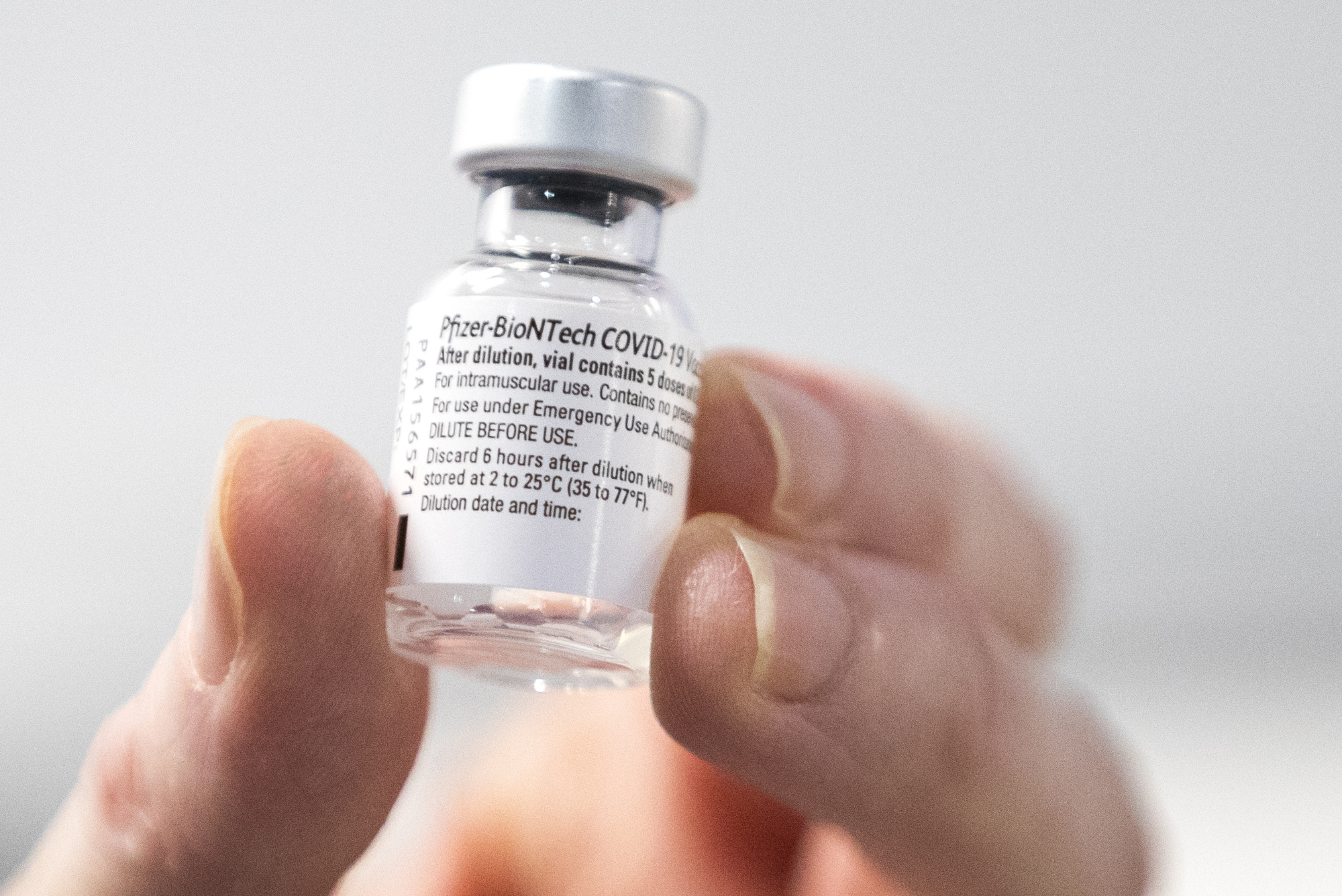
The WHO warned that, while booster shots would protect the most vulnerable, wealthy countries ought not pursue a generalised booster shot regime and would be better off sharing excess vaccines with less wealthy countries. File picture: PA
European countries with excess vaccine doses should share them while keeping the option of a third dose for vulnerable people, the World Health Organization (WHO) has said.
Hans Kluge, head of WHO Europe said yesterday that a third dose booster shot is a way to keep the most vulnerable safe and "not a luxury".
Earlier this month, the WHO said data does not indicate a need for booster shots, while topping up fully-vaccinated healthy people would further widen the vaccine gap between rich and lower-income countries.
Mr Kluge told a press briefing: “A third dose of vaccine is not a luxury booster [that is] taken away from someone who is still waiting for a first jab. It's basically a way to keep the most vulnerable safe.”
He said: “We have to be a little bit careful with the booster shot, because there is not yet enough evidence. But more and more studies show that a third dose keeps vulnerable people safe, and this is done by more and more countries in our region.”
Mr Kluge urged European countries with excess vaccines to share them, particularly with Eastern Europe and African countries:
An increase in Covid-19 transmission rates across Europe, combined with low levels of vaccination in some countries, was "deeply worrying", he said.

Executive director of the European Medicines Agency, Emer Cooke, has said the EMA will not make a decision on vaccine boosters.
Ms Cooke, who trained as a pharmacist in Dublin, said: “The four vaccines we have authorised in Europe remain effective against the Delta variant — there is a reduction, but it is not significant.”
She said: “We work very closely on the European Centre for Disease Control, also in the context of the need for a booster dose. This is something that will be very much driven by the experiences of the vaccine effectiveness across the EU.”
Speaking on a podcast with , she said: “This is not something the EMA will make a decision on. What we need to do, as EMA, is make sure the companies are ready. We have evaluated the data and the data delivers what it is meant to do.”
A decision on an Irish booster campaign is expected this week. A spokeswoman for the department of health said they are examining “options for how any surplus vaccine thereafter could be redistributed".
Pharmacists in Ireland have raised concerns that “thousands of doses” of Janssen vaccines expiring this week here will be thrown out.
This is a growing problem internationally as wealthy countries ordered a range of vaccines, often well in excess of need. Malawi burned vaccines when the country received a large delivery with an expiry date just two weeks out. The has, however, cautioned that donating surplus vaccines is not straightforward.
Unlike many other medicines, the four main Covid-19 vaccines have a short approved shelf-life of six months, arising from receiving emergency authorisation during the pandemic.
The Pfizer vaccine now has an extended validity in America, but no such decision has yet been taken by the EU.


CONNECT WITH US TODAY



Be the first to know the latest news and updates