'He turned up at my house': Threats of sexual violence against female TDs
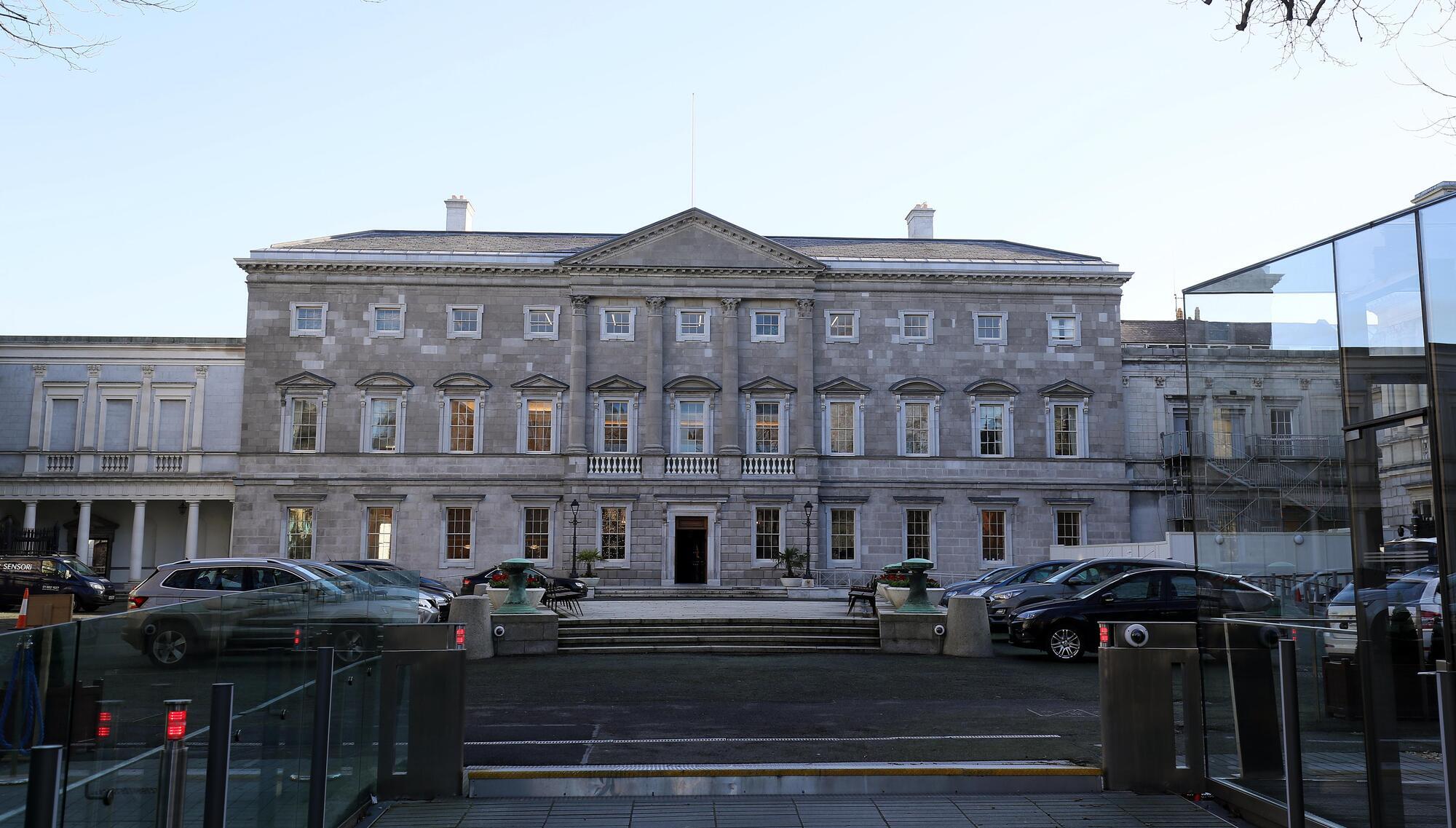
Leinster House.
"It changed the way I lived, I wished I never went into politics, I didn't want to go on TV."
These are the words of a female TD who was left terrorised after being repeatedly harassed by a stranger. The harassment included a sexually violent explicit letter with references to rape and incest, sent to her home.
She is one of at least two female politicians forced to contact gardaí after they were subjected to sustained harassment, the can reveal.
The female TD, who spoke to the on condition of anonymity, told of her terrifying ordeal which involved the man repeatedly turning up uninvited at her home.
"It began with odd messages after the election, asking to meet up and go on walks, which I responded to saying they were inappropriate and I was only to be contacted about constituency issues," she said.
She said: "I got new locks and blinds installed, I was so paranoid, looking out the window all the time during lockdown.
"One day I came downstairs, and he was standing at the front door again.
"I panicked and told him to get off the property.
On another occasion, while the TD was at the Dáil, the man sent a message saying he was outside her house asking to be let in, after which she phoned gardaí.
"The guards spoke to him, they were pushing for a charge, but I refused to press charges," she said.
"I would if I wasn't a public representative, but then I'd get abuse for being a victim, and I didn't want to be named, the guards didn't even put it on the Pulse system in case it was leaked. They were really understanding.”
A sexually violent explicit letter to this TD's home address referencing rape and incest has been seen by the .
Another female TD has told the how she has had men turn up repeatedly at her home.
Gardaí told her to update her home security with cameras and reinforced doors, at a personal cost of over €10,000, after a threat was sent about her to a charity.
"I have had men turn up at my home repeatedly, at one point, a man wouldn't leave my constituency office and I had to phone my husband to come down and walk me home," she said.
"I won't go to the guards, I don't think I'll receive sympathy, I actually think it would be used against me in the public and media."

Separately, last week, a man was ordered to stay away from Fine Gael TD Jennifer Carroll MacNeill after being charged with harassing her on dates between January 13 and March 26 last year.
As part of his bail conditions, the man has been ordered to have no contact, directly, indirectly, or on social media, with the Dún Laoghaire TD.
Chairwoman of the Oireachtas Women's Caucus and Fianna Fáil senator Fiona O'Loughlin says a discussion on security is needed when the Dáil returns next month.

"We now live in a society where there is a lot of toxicity about public representatives," she said.
"It is clear that there is a need for more supports around security where women feel they are being endangered because they are in public life. There needs to be an in-depth discussion and debate within the Oireachtas about security requirements. We in the women’s caucus will be part of that conversation.
"I would be concerned that this would put women off entering politics."
Political academic and scholar Claire McGing said that violence against women in politics is a "global phenomenon".
"Harassment and violence against women in politics is becoming an increasing problem in Ireland.
Studies show that the impact of harassment and violence on women’s representation is two-fold; victims may decide not to run for election again, while other women may be reluctant to go forward as candidates when they see what elected women are experiencing. I am aware of women councillors who have decided they will not contest for their seats in the 2024 local elections because of online abuse.
"Gender-based targeting or intimidation of women politicians is a major problem for the functioning of our democracy, and it needs to be tackled proactively by all stakeholders.
"Women candidates and politicians who experience violence or harassment should be offered full supports, including legal, security, and counselling supports as required, while the Ggardaí need to be fully trained and resourced to respond to reports."