Propaganda 'rife' around NI Protocol with many confused rather than opposed, Westminister MPs told

People take part in a Loyalist protest in Newtownards, County Down, against the Northern Ireland Protocol.
Community propaganda is “rife” around the Northern Ireland Protocol and many people don’t even understand it, a Westminister Committee heard this evening.
Elaine Crory, from the Women’s Resource and Development Centre told the Northern Ireland Affairs Committee people are telling them they don't understand the Protocol, not that they oppose it.
“We’re not implying in any way these people are lacking in intelligence … it (the Protocol) is being propagandised, people are claiming it is all kinds of things and it is in fact not.
Demonstrations have been held in parts of Northern Ireland against the protocol, while legal challenges have also been taken.
As part of the committee’s NI Protocol Inquiry, MPs in May heard from the Loyalist Communities Council (LCC), that the Protocol could lead to violence in the North.
Eileen Weir, a veteran community worker at the heart of the loyalist Shankill area of Belfast said of all those she spoke to, nobody felt the LCC spoke on their behalf, and she emphasised that there are many different points of view among loyalists.
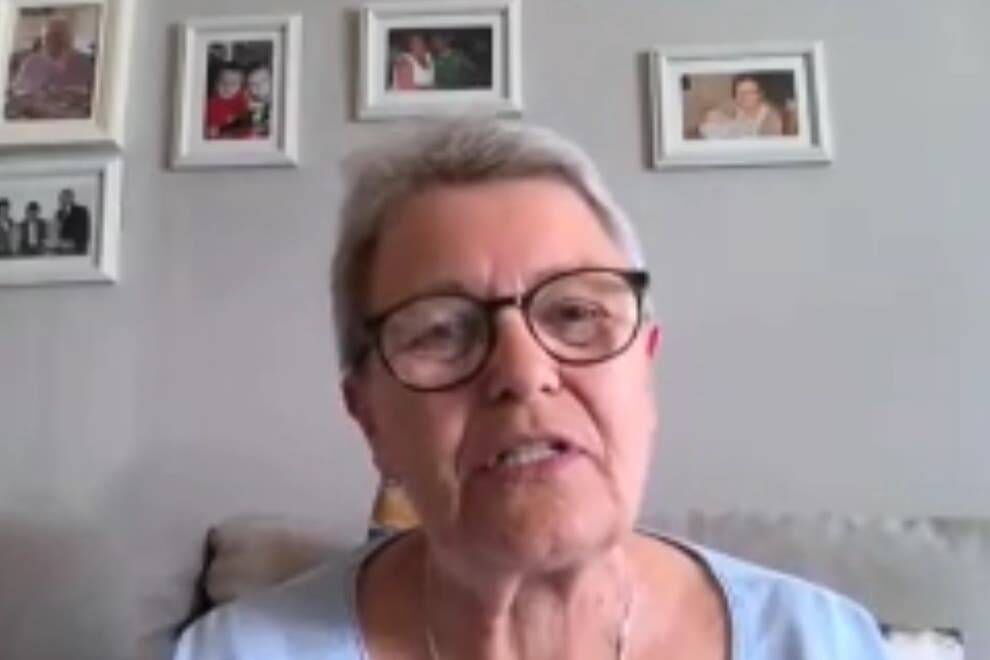
Ms Weir said the post-Brexit mechanism “needs (to be) fixed” but also said many are “only hearing the negative” and warned propaganda is “rife” in the community.
“[The Protocol] is not good in parts of it but we’re only hearing the negative and we’re not hearing the positive and our communities need to have some positive language coming out, we can’t keep being doom and gloom, we need to have that positive message that comes along with it – and continue working on the bits that aren’t working,” she said.
“I’m not saying forget about it, I’m saying fix it but just don’t dwell on the hardship of it, let’s dwell on some of the good parts of it because a lot of businesses are thriving here within Northern Ireland because people can’t get their supplies in from Great Britain.”
Ms Weir said fear in the loyalist community started in 2012 when Belfast City Council voted to fly the Union flag only on statutory days instead of all year round, and an unfounded fear around Irish language legislation for some that their Britishness is being taken away from them.
Meanwhile, Kate Clifford, director of the Rural Community Network, said there was a “perfect storm” – coming out of the coronavirus pandemic – with paramilitarism on the rise, the threat of a return to violence, along with patriarchy, poverty, political instability, posturing, parades and propaganda.
“We have political posturing. I think we have an imbalance in Northern Ireland in terms of our political agendas at present and I think there is a lot of posturing about the whole talk of a united Ireland at the moment which is unhelpful in the current circumstances where there is already instability and insecurity,” she said.
“There is a talk about winners and losers. I think there is very, very difficult dialogue coming from our political classes, when we have a Secretary of State who stands up and says he is willing to break international law and we as peacemakers are trying to promote lawfulness within communities for whom lawlessness has been a rule of thumb.
“I think it is really unhelpful and people are afraid to stand up and say that’s not how it is for me or that’s not how it is for our community.”
The difficulty is when the language of Parliament and the language of governments is one of brinkmanship, posturing and almost testosterone-driven, she said.
"That then plays out in our communities who are uncertain and unsure, and whose default mechanism very often is a return to the known, which is the status quo, which is violence."
“My plea to everybody is that while it makes great headlines to talk about the Great British banger and all of that, the reality is that there are lives at stake on the ground in Northern Ireland," she said.

CONNECT WITH US TODAY



Be the first to know the latest news and updates