Holidaying abroad 'as complex as a Rubik's cube' for unvaccinated
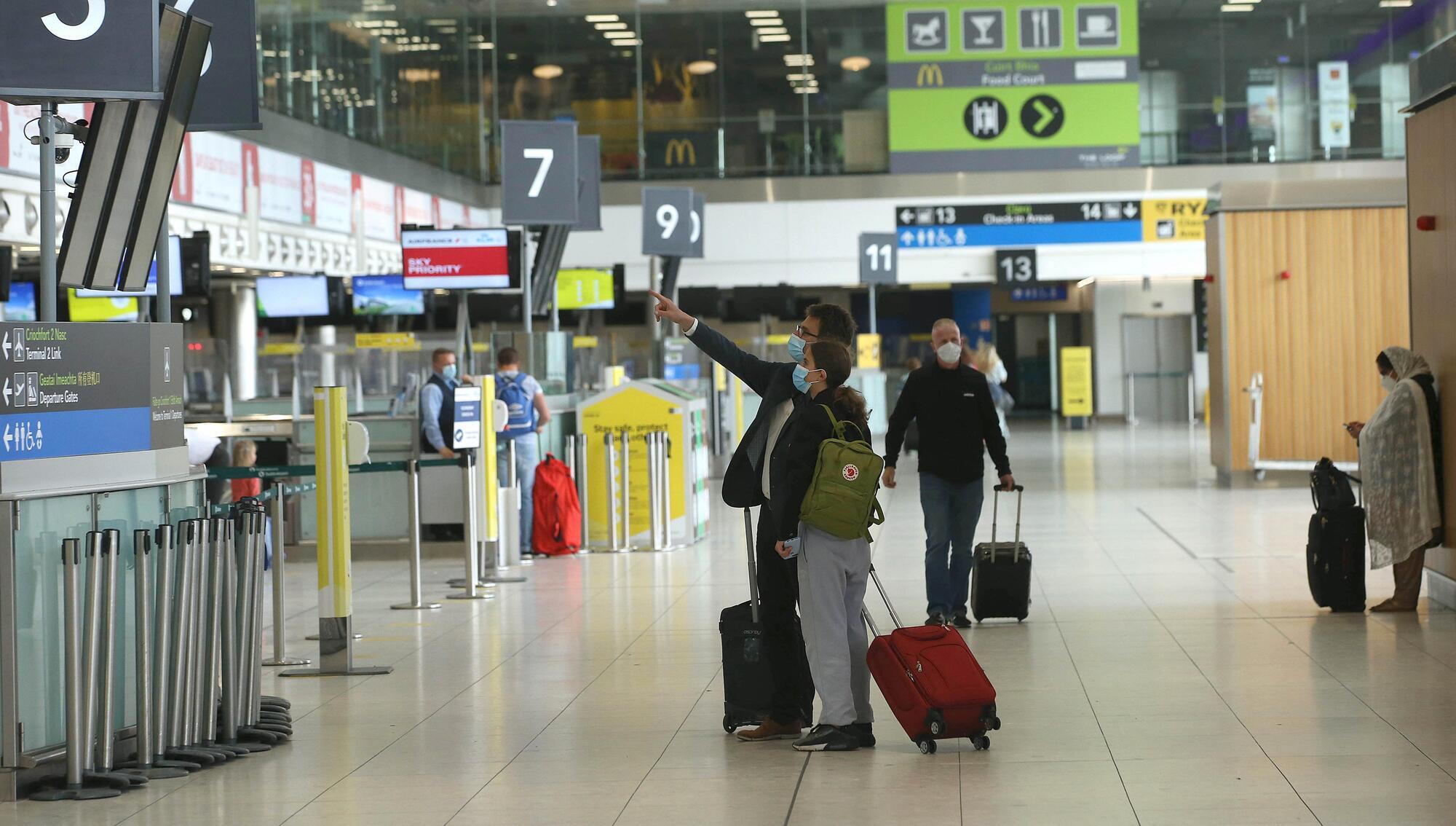
Non-essential foreign travel is scheduled to resume from July 19, but journalist Eoghan Corry warns that unvaccinated people will have to plan their journey carefully. Picture: Stephen Collins/ Collins
As Ireland prepares to lift the ban on non-essential travel from July 19, restrictions on holidaying abroad remain as complicated as “a Rubik’s cube”, an expert has warned.
Eoghan Corry, journalist, author and broadcaster, said that although the EU’s Digital Covid Certificate (DCC) will allow unrestricted travel within Europe for the fully vaccinated, going abroad remains more complex for the young and those still waiting for a vaccine.
Fully vaccinated people are due to receive their digital Covid certificates for unrestricted travel within Europe from Monday.
“The idea is that everybody’s rules will be the same now. Everyone who is fully vaccinated and has this cert can travel freely throughout Europe without restriction," Mr Corry said. “But, while this sorts out the fully vaccinated cohort, the Rubik’s cube is still in place for the unvaccinated, those aged over six."
With one of the lowest rates of Covid-19 infections in Europe, the Mediterranean island of Malta has less onerous entry requirements than elsewhere, Mr Corry said. Only those aged over 12 who are unvaccinated must provide a negative test for the virus before entering the country.
Malta also has more hospital beds per resident than Ireland or the UK.
"Malta is one of the safest countries in terms of Covid infection rates," Mr Corry said.
Romania has the lowest Covid-19 infection rate according to the latest figures from the European Centre for Disease Prevention and Control (ECDC), followed by Poland, then Malta, then Iceland, Mr Corry said.
Germany, Austria, Italy, Croatia, and France also have lower infection rates, with a 14-day incidence rate of less than 50 cases per 100,000 people according to the ECDC.
Greece has just over 50 notified cases per 100,000 people.
The Canary Islands and the Balearic Islands also have low infection rates at the moment, Mr Corry said.
But Ireland, Spain, Portugal, and Cyprus are at the other end of the table with more than 100 cases per 100,000 people.
"There is a worrying rise in both Spain and Portugal which could affect people’s holiday plans," Mr Corry said.
"How that impacts on the Irish holidaymaker is that the vaccinated will be free to go but they’re unlikely to lift restrictions for the unvaccinated."
And returning to Ireland is another concern as the country remains "one of the most restrictive" in terms of Covid restrictions:
"And anyone over the age of six without a vaccination will need a negative Covid test coming to Ireland.
"In Spain, Portugal, and Malta, only people over the age of 12 need to show a negative Covid test to get into the country if unvaccinated."
Antigen tests are becoming the standard accepted test for the unvaccinated in countries across Europe now, he said.
"Both Portugal and Spain insisted on a PCR test until a month ago but both changed to antigen. Germany and France were always antigen countries," Mr Corry said.
The new EU Covid travel certs should standardise a testing regime for travel within Europe for the unvaccinated too, Mr Corry said.
"The idea is to bring one set of rules across the whole of Europe to bring an end to the Rubik’s Cube," he said.
"They [the EU] are determined to get something in place that brings a bit of shape back to travel policy across the union because for the last 15 months it’s been going in 27 different directions."
He said that almost every country has now agreed that if your cumulative 14-day incidence rate is below 25, as a significant number of countries currently are, there will be no requirement to provide a negative test, even if unvaccinated and entering another country.

CONNECT WITH US TODAY



Be the first to know the latest news and updates