Iarnród Éireann told to review all rail carriages after crack discovered in locomotive
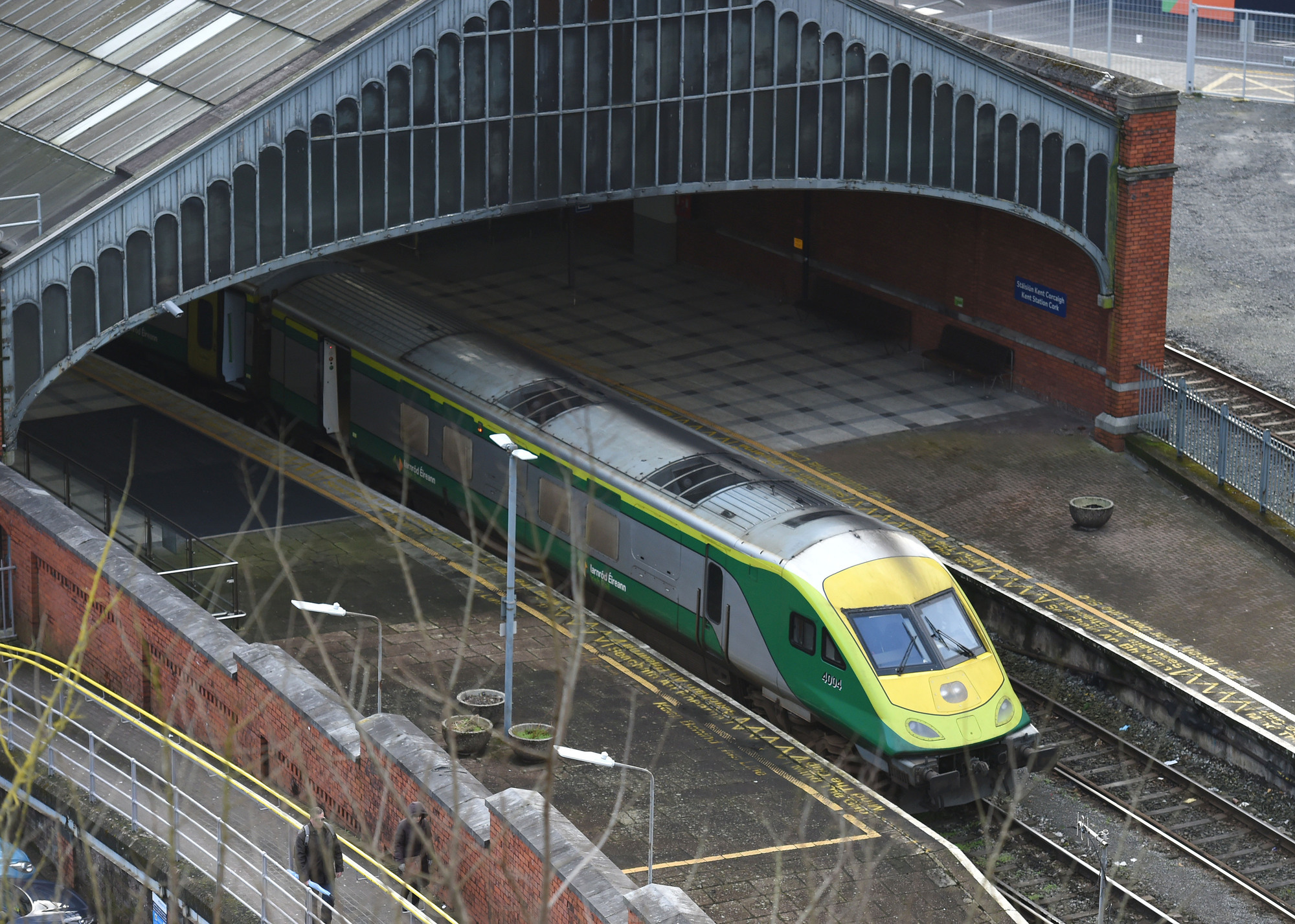
Railway safety inspectors said the structural failure discovered in the chassis of the locomotive could “under slightly different circumstances” have resulted in a serious accident with the potential for fatalities or serious injuries due to the risk of a derailment. Picture: Larry Cummins
Iarnród Éireann has been advised to carry out a review of all weld repairs carried out on train engines and carriages after a large crack was discovered in a locomotive in use on passenger services between Cork and Dublin last year.
Railway safety inspectors said the structural failure discovered in the chassis of the locomotive could “under slightly different circumstances” have resulted in a serious accident with the potential for fatalities or serious injuries due to the risk of a derailment.
An investigation by the Railway Accident Investigation Unit found the crack was caused by poor weld repairs carried out during maintenance on the locomotive either in 2010 or 2019.
The RAIU, which hired a metallurgical specialist to assist with its inquiry, said Iarnród Éireann had carried out weld repairs that did not conform with recognised international standards, although it acknowledged that the standards were not mandatory.
It said the company had also not followed guidance issued by the locomotive’s manufacturer, General Motors, in 2008 on a process for repairing cracks.
Investigators claimed there was an overreliance by Iarnród Éireann on the knowledge of the welder to carry out repairs without any formal instruction or supervision.
The Class 201 locomotive, which entered service in 1994, was in use at the rear of a Cork-Dublin Heuston passenger service on July 6, 2020, when it developed a coolant leak and electrical fault that caused it to shut down as the train approached Limerick Junction.
The locomotive had already been in use on two services on the Cork-Dublin line earlier that day without incident, although the RAIU said a review of CCTV from stations on the route showed a slight sag in the middle of the locomotive which became more visible as the day progressed.
Following the breakdown at Limerick Junction, the train was taken out of service before being hauled to Heuston Station.
While it was in the station awaiting transfer to the Irish Rail workshop in Inchicore the following day, a train driver noticed there was sagging in the centre of the locomotive.
A further inspection established there was a mainframe crack in the locomotive’s chassis.
The RAIU said a coolant pipe had been disturbed as a result of the crack and the subsequent leak combined with the misalignment of the generator had led to the electrical shutdown.
Investigators said it also appeared that the locomotive’s specified axle load may have been exceeded.
A report by the RAIU said it was not aware of any previous structural failure with Iarnród Éireann vehicles, while General Motors had no record of any structural failure on the chassis plate of its locomotives.
Iarnród Éireann said it carried out a visual check on all its Class 201 locomotives within 24 hours of the original crack having been noticed.
The company said it was now carrying out a detailed check to examine the structure of every Class 201 locomotive in service.
It has also introduced weld repair history books to record the location and detail of every new weld as well as adopting the recognised standard for welds.
The RAIU noted that an internal Iarnród Éireann report on the incident has not been published.