'Masks may have to be worn until winter', warns Donnelly as 345 Covid cases confirmed
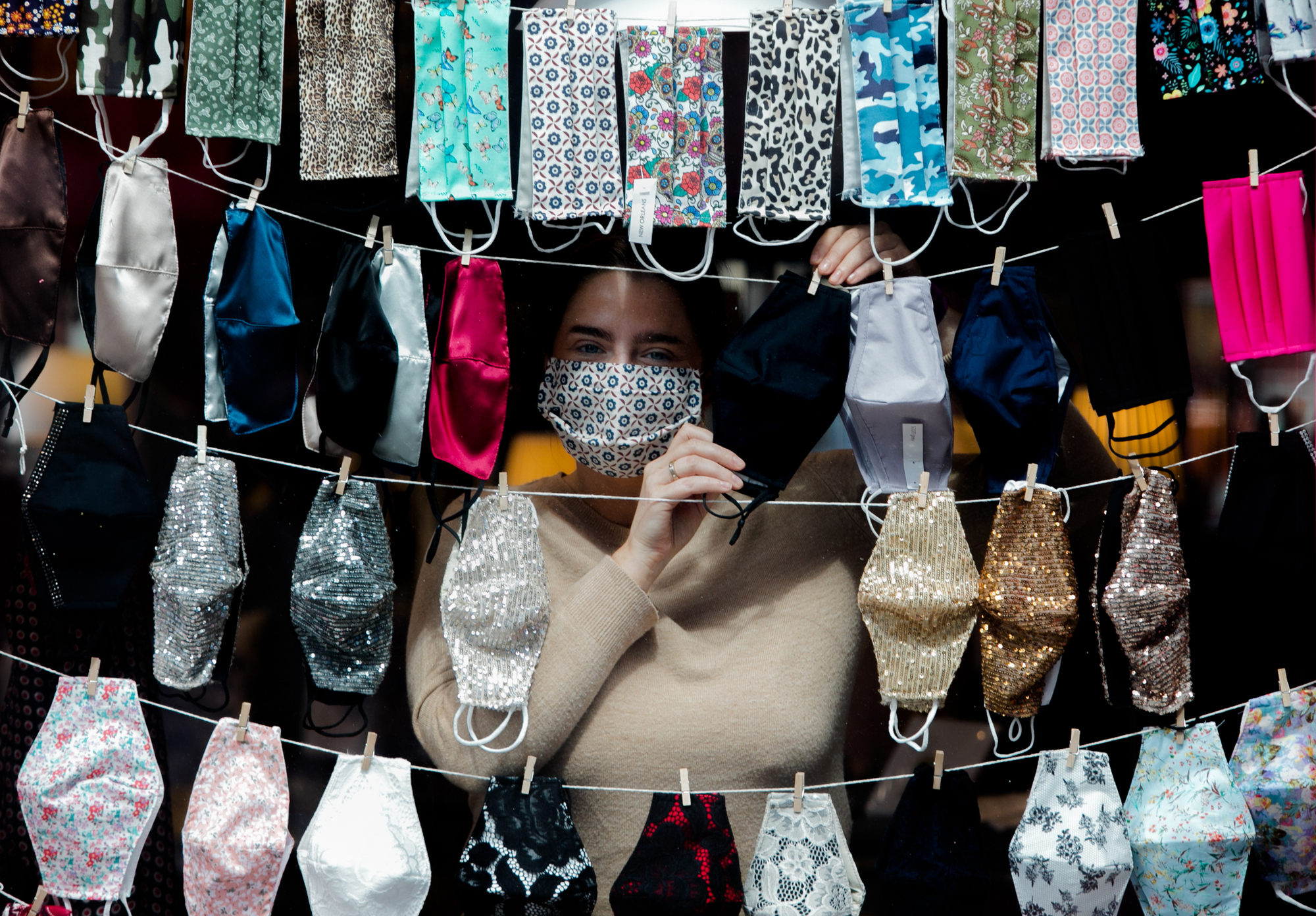
Health Minister Stephen Donnelly has said face masks may be required until early winter to protect against Covid-19. Picture: Gareth Chaney/Collins
Health Minister Stephen Donnelly has said face masks may have to be worn until autumn or early winter in high-risk environments or if there is a local Covid-19 outbreak.
Mr Donnelly's comments come as Nphet reported a further 345 Covid-19 cases. It has also reported there are currently 127 Covid patients in hospital, of which 44 are in ICU.
Speaking in the Seanad during a debate to extend emergency public health powers until November 9, Mr Donnelly said he agreed the measures are draconian but are necessary.
"The public interest is best served by having the provisions in these acts available for times when they are required for the protection of public health," said Mr Donnelly.
"Vaccinations offer significant protection at an individual and population level but it will be some time yet before there is a sufficient level of the entire population fully vaccinated."
The Cabinet last week approved the extension of the emergency powers “on the nod” and the matter was approved by the Seanad ahead of a vote in the Dáil this week.
Under the emergency powers, State authorities can detain people to prevent the spread of Covid-19, restrict travel, require people to stay in their homes and require the wearing of face coverings.
During the debate, Mr Donnelly was criticised for limiting debate on the extension.
Former Justice Minister and Independent Senator Michael McDowell said the lack of time given to debate the emergency legislation was a scandal.

Mr Donnelly said measures such as the wearing of masks may be needed in higher risk environments or if there are local outbreaks or variants and there may be more variants coming.
He said: “There may be more variants that vaccines don't work on, that’s the big question, we’re always asking in terms of these variants.” Mr Donnelly said he understood how difficult the pandemic has been on everyone particularly for people who have not been able to grieve properly having lost a loved one.
He said this has been brutal for people, informing senators that he very recently buried his 102 year-old grandmother.
Taoiseach Micheál Martin said the Government will lay out plans this week for re-opening a number of sectors including hospitality, live events and the arts.
Mr Martin said some live events may be tested in June.
They will look at the progress of the vaccination programme and how efforts to keep the rate of disease down have impacted the number of hospitalisations and severe illnesses.
Under plans being considered, foreign holidays could return by the end of July.
Ireland will sign up to the EU's Digital Green Certificate on travel by July 1st and will then have six weeks to implement it.
The move will likely see the end of mandatory hotel quarantine for most EU countries, but it will be kept for other areas of concern.

Over 10,800 claims were made under the Government's Stay and Spend scheme, which was designed to boost the domestic tourism market between October and April.
Latest figures from Revenue show just over 10,800 people availed of tax credits worth €791,000 under the scheme.
However, the Government had expected it would cost €270 million.
While the protracted lockdown is being blamed, it was also considered a complex way of boosting the sector and not user friendly.
The Government has indicated that the scheme will not be necessary this year due to pent up demand while the CEO of the Irish Tourism Industry Confederation has said a new Stay and Spend scheme is badly needed.
Eoghan O’Mara Walsh said there are large parts of the country that won't be busy this summer.
"Crucially, when the schools go back at the end of August, the domestic market falls off a cliff," said Mr O'Meara Walsh.
"We are not going to get the international tourists into the country in the numbers that we need so we do need to lengthen and stretch the domestic season.
He said the scheme has not worked and there needs to be a more simplified approach.
"To our mind, it was always poorly designed. Sort of a complicated tax rebate scheme, you have to pay upfront and claim it back through your tax credits via Revenue," said Mr O'Meara Walsh.
"You have to be employed so it didn't apply to lots of people. It was limited to just accommodation and food."
Tourism industry representatives have called on the Government to introduce a voucher scheme to encourage staycations this year.

Unemployment levels after the pandemic are set to be higher than at any point in the last recession.
Social Justice Ireland has warned that over 390,000 people may be out of work once restrictions are fully lifted.
Its analysis shows 72,322 people aged between 60 and 64 lost their jobs due to the crisis.
SJI Social Policy Analyst Suzanne Rogers fears many of them may remain out of work until they reach retirement age.
She said that more than one-in-five of those aged 60-64 are not expected to return to work.
"That is quite troubling because if you are between 50 and 54, it is unlikely that you will be unemployed for the rest of your working life but if you are between 60 and 64, it is very difficult to reskill or retrain or find work," said Ms Rogers.
Meanwhile, students are calling on the Government to protect them against an anticipated "explosion in youth unemployment".
Data shows over 111,000 of 15 to 34-year-olds who were laid off over the past year, do not expect to return to their previous job.
Union of Students in Ireland (USI) President Lorna Fitzpatrick says the Government needs to step up immediately to help younger people as emigration is not an option as countries such as Australia have closed their borders.
"Ireland has never had to take care of their young people because other countries did that for them," said Ms Fitzpatrick.
"We have exported young people as a response to past recessions and now we need to do something for our young people because that emigration option may not be there in the way that it has in the past."

There have been no additional Covid-related deaths in Northern Ireland as restrictions eased further today.
Indoor hospitality and indoor visitor and cultural attractions reopened today, and people can meet inside private homes again, limited to six people from no more than two households.
Meanwhile, the limit on the size of outdoor gatherings has increased to 500 – a figure that will also apply to the number of spectators able to attend sporting fixtures.
Non-essential travel is permitted to the rest of the UK, and a traffic light system is in place for foreign travel.
Post-wedding and civil partnership receptions can also take place.
There will be no limit on the numbers at the top table, with a limit of 10 for other tables. Dancing will be restricted to a couple’s first dance.
Schools can resume extra-curricular activities, indoor extra-curricular sports, outdoor inter-school sports and day educational visits.
Today, the Department of Health reported 53 people tested positive for Covid-19 in the last 24 hours.
There are 29 patients being treated for the disease in hospital in Northern Ireland, with 2 in ICU.