Patients warned of long delays in emergency departments over cyberattack fallout
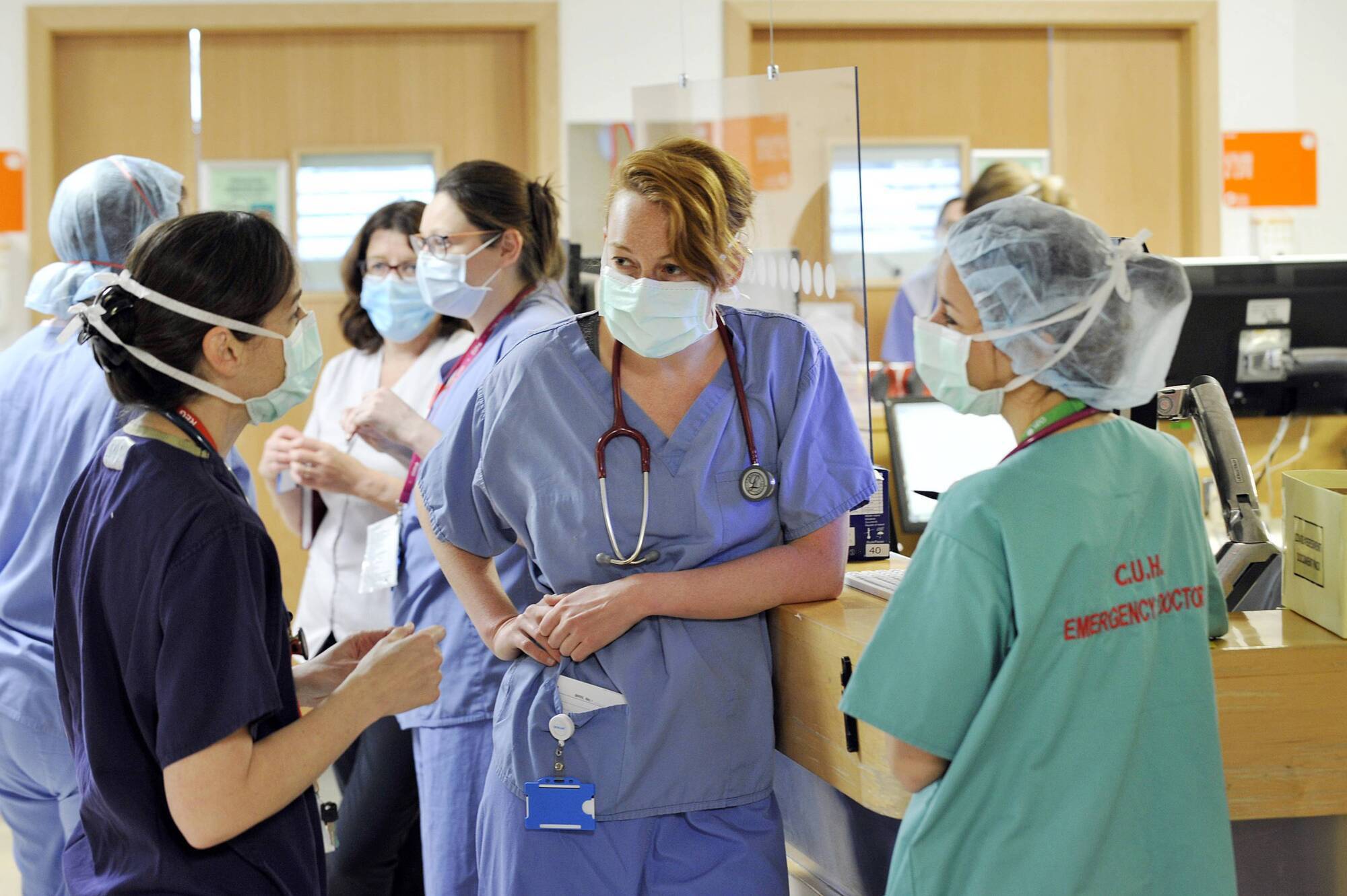
To the critically ill and injured, the message was “we are open,” said Dr Emily O’Connor. Picture: Daragh Mc Sweeney/Provision
Two emergency medicine consultants have warned that emergency departments are facing continued delays because of the cyberattack.
Anyone who needs to go to an emergency department should bring any previous prescriptions or details of medication with them, they told RTÉ radio’s Today with Claire Byrne show.
Consultant at Sligo hospital, Dr Fergal Hickey also called for a unique patient identifier number system which would mean that in the current situation the patient’s paper file could be found easily.
“We’re flying blind here, we don’t have a patient’s previous information.”
An electronic identification number should have been developed before now, no progress has been made in the last decade, he said.
Dr Emily O’Connor, emergency medicine consultant at Connolly Hospital in Dublin, said that the challenge for the HSE was that any patient identification system would have to be user friendly.
She warned that if any system had too many firewalls it would not be efficient for medics who were not computer literate.
The emergency department in Connolly hospital had dealt with 150 patients in the last 24 hours, she said, all of whom had to be manually registered and triaged before being seen by a clinician.
A whiteboard was being used to coordinate treatment of patients, she explained.
Dr O’Connor said that every critically ill patient was being treated, but the process was “unbearably slow” for some patients.
“We’re like canaries in the mine.” Emergency Departments were the first group to feel the impact of a situation like the cyberattack, she said.
Dr Hickey added that every effort was being made to minimise risk to patients, but that a unique identifying number would help enormously.
At present a patient was given a number for every hospital they attended while if they had the one number it would make it easier to find their details no matter which hospital they attended for treatment.
Data protection concerns had been previously raised, he said when it was suggested that the PPS number could be used as the unique patient number.
“Doing nothing isn’t an option. We are now seeing the impact of not having that.” If a patient had a common name that would cause problems in accessing files and details, he said.
Dr O’Connor agreed, pointing out that a unique patient identifier could be of benefit when it came to cross border treatment as well.
Dr Hickey said it was technically possible for every patient to have a card (similar to a credit card) and when scanned it would provide access to all their medical history and could be used anywhere.
Part of the difficulty was that the HSE was built on “legacy architecture” which was no longer relevant and dated back to the regional health boards.
No consideration had been given to what could happen if the entire system went down as had happened following the cyberattack.
“The current situation is unsafe. We need to make sure that we don’t end up in this situation again and there will be further attacks.” Dr Hickey acknowledged that no system was 100 percent secure, but said that the lack of investment was an issue that had been raised repeatedly.
Both doctors urged anyone who was experiencing a medical emergency not to hesitate to go to an emergency department.
To the critically ill and injured, the message was “we are open,” said Dr O’Connor.

CONNECT WITH US TODAY



Be the first to know the latest news and updates