Transparency watchdog stands over index findings on private firms' openness

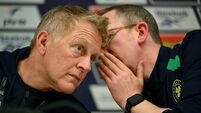
Airline CityJet, which was given a score of zero, said it had not engaged with the study. File picture: Piaras Ó Mídheach/Sportsfile
Transparency International (TI) Ireland has said it “stands over” a new study showing that private companies must improve their openness and transparency on how they operate, how they are financed, and how they interact with political systems.
On Thursday, TI Ireland published a National Integrity Index assessing how transparent private firms are in terms of making information publicly available on a range of corporate issues, from anti-corruption policies to political engagement, to whistleblowing procedures and responses.
The transparency watchdog assessed company policies and procedures in 30 leading private companies in Ireland and found none scored more than 70% and the average index score was 51%.
The companies assessed included Google, Facebook, Apple, Microsoft, banking groups AIB and Bank of Ireland, and airlines, manufacturing, and media companies among others.
The AIB Group performed best out of the companies assessed, scoring 68%, followed by sales and marketing company DCC on 63% and five companies achieved the third-highest overall score of 62% – Bank of Ireland Group, Irish Life Group, Kerry Group, Trane Technologies and Tullow Oil.
One third of companies scored full marks in the anti-corruption category and almost half scored more than 60% for transparency around whistleblowing but overall scores were low for organisational transparency and political engagement – 35% and 26% respectively.
On foot of the findings, TI Ireland made nine recommendations to improve corporate transparency, including publishing more information about company structures, subsidiaries, and finances, charitable donations and community contributions, policies on gifts, hospitality and expenses, political engagement and lobbying activities, and the number of whistleblowing reports received and actions taken.
The index, however, is not without its critics, with the lowest scoring company questioning how the study was carried out.
Airline CityJet fared worst with a score of zero and told the it had not engaged in the study.
A spokesperson for the airline confirmed CityJet has written to TI Ireland in relation to the assessment, which was “doing damage to our reputation without confirming the facts”.
“CityJet is compliant with its obligations in a similar manner to other companies, indeed the TI report notes ‘most companies have additional policies and procedures that are not publicly accessible’. Transparency Ireland chose to assume CityJet did not fit this group,” they added.
TI Ireland said the study was based on information made publicly available through company websites, annual reports and other company publications, as well as direct engagement with companies, although it acknowledged that some “didn’t respond” or engage.
Catherine Lawlor, who co-edited the report, said each firm was contacted on several occasions, provided preliminary scores prior to publication, and invited to provide feedback and take part in two workshops as part of the process.
TI Ireland, she said, stood over the process and report findings: “Companies did have ample opportunity to engage with us on this. They were notified several times about the research being carried out, about the opportunity for feedback, the workshops, and ultimately about the launch of the report.”
A similar assessment of local authorities in 2018 led to a 9% improvement in the number of county and city councils publishing information on anti-corruption and ethics policies and procedures.
An assessment is being carried out in the semi-state sector and will be published later this year.
CONNECT WITH US TODAY



Be the first to know the latest news and updates