Maynooth professor challenges university president's handling of academic row
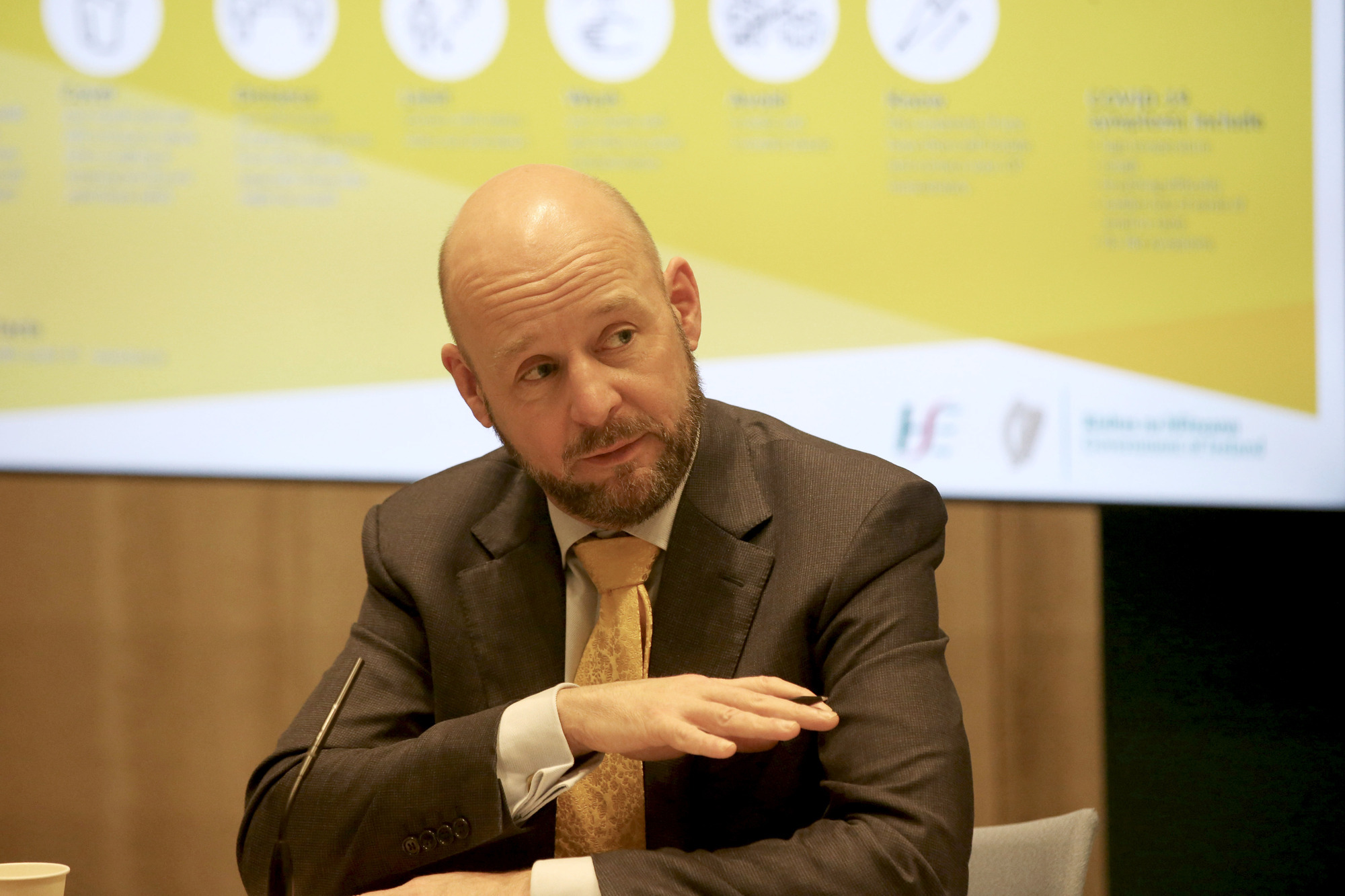
Prof. Nolan, who has a high public profile through his current role as chair of Nphet’s modelling group, is due to stand down as president of Maynooth University in the autumn.
A former professor at Maynooth University said he "strongly disagreed" with the conclusion of the college’s president, Philip Nolan, that the professional relationship between two senior academics had broken down and the need to move one of the parties to a different role where they had no teaching or research work.
Paul Donovan, emeritus associate professor at the Maynooth University’s School of Business, told a hearing of the Labour Court that he also disagreed with Prof Nolan’s view that a row between the two academics, Robert Galavan and Peter McNamara, was affecting the work of the school.
Prof Donovan criticised the president’s decision to move Prof Galavan to a role where he had no expertise in a bid to resolve the dispute.
He said a situation where a university professor was removed from daily contact with students and other staff would lead to the “decay” of their skills and knowledge.
Prof Galavan, who holds the chair in strategic management in the college’s School of Business, is appealing a ruling by the Workplace Relations Commission that he had not made a protected disclosure under the terms of the relevant legislation. The academic claims he is being penalised for making protected disclosures in 2014 in which he raised concerns about the handling of governance and health and safety issues by Prof McNamara.
He maintains he has had no effective work since 2016 while retaining his €154,000 annual salary, after being placed on secondment by Prof Nolan to the Kennedy Institute for Conflict Intervention, despite having no expertise in mediation.
It followed a complaint made by Prof McNamara in 2014 that Prof Galavan was undermining his role as head of the School of Business.
In earlier evidence this week, Prof Galavan claimed the university’s president had acted as “judge, jury and executioner,” in what he claimed was an unfair process.
On Friday, Prof Donovan said his former colleagues had different styles with Prof McNamara being a “decision-maker” while Prof Galavan was a “consensus seeker.” However, he said he had seen the interaction between his colleagues over two years after Prof McNamara had made a formal complaint about Prof Galavan and insisted they were “functioning as two professionals” and the School of Business had thrived over the period.
Prof Donovan said he would have been traumatised if he had been moved to an area of the university where he had no expertise.
He doubted that Prof Galavan could have carved out a role in the Kennedy Institute that would have been meaningful as his network and expertise were no longer relevant while his resources were questionable.
While he accepted that Prof Nolan had the discretion to do what he did, Prof Donovan said he disagreed with the process.
Prof Donovan rejected the suggestion by Labour Court member Peter Murphy that the concerns raised by Prof Galavan about marking systems and overcrowding were “small potatoes” as they were “very serious issues in academia”.
Maynooth’s deputy president and registrar, Aidan Mulkeen, said the approach adopted by Prof McNamara in relation to marking and assessment was perfectly allowable under the college’s rules and was followed by two-thirds of courses at the university.
Prof Mulkeen said the two academics in the case were “two strong characters, one of whom had been in the driving seat for a number of years and a new person coming in and tension between the two of them.”
Under cross-examination by counsel for the claimant, Kiwana Ennis, Prof Mulkeen admitted it was rare that university staff were reassigned to a role against their wishes.
The case was adjourned until a later date.
Prof Nolan, who has a high public profile through his current role as chair of Nphet’s modelling group, is due to stand down as president of Maynooth University in the autumn.