Most imports passing Dublin and Rosslare checks but full impact of Brexit not yet clear
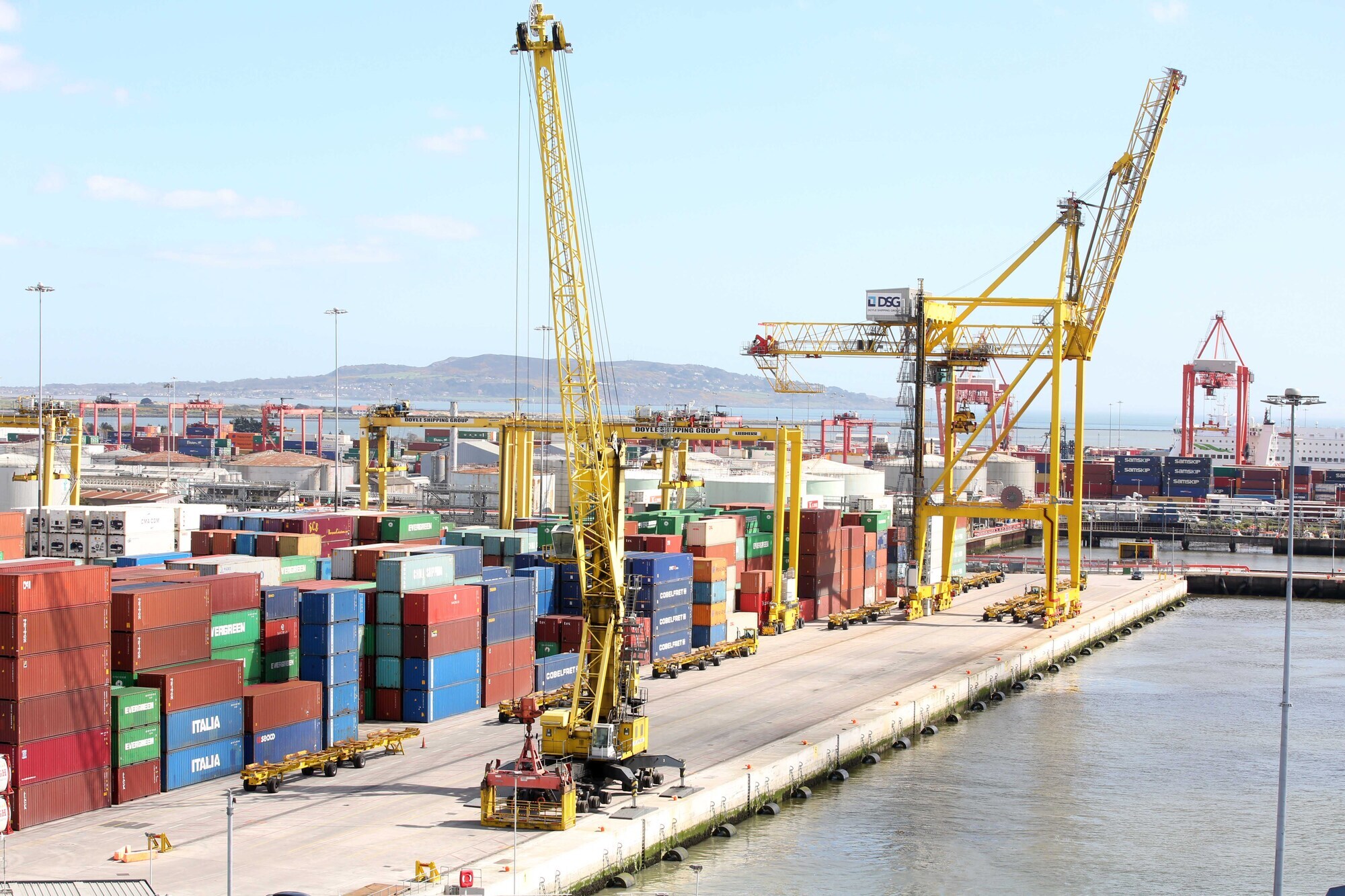
The Department of Agriculture said staff carried out more than 13,000 checks at Dublin Port and 670 checks at Rosslare Europort in the first 15 weeks of 2021 and the “vast majority” of consignments were cleared for release. File Photo
Most goods and freight coming through Dublin and Rosslare ports are passing new EU customs, agricultural, and public health checks but the full impact of Brexit may not yet be clear, senior civil servants have said.
Officials from Revenue, the Department of Agriculture, and the HSE told the Seanad’s Brexit Committee that many businesses were well prepared for the new Brexit arrangements, but that some will face challenges in the months ahead. New UK import rules will apply from October onwards.
Under the EU-UK trade agreement all goods from Britain require a customs declaration and some goods will require extra checks on documents or physical checks on goods when arriving in Ireland.
Revenue confirmed that since 1 January, 82% of more than 100,000 freight movements into Dublin Port and 85% of freight into Rosslare Port were ‘green-routed’ on arrival and did not require additional checks.
The Department of Agriculture said staff carried out more than 13,000 checks at Dublin Port and 670 checks at Rosslare Europort in the first 15 weeks of 2021 and the “vast majority” of consignments were cleared for release.
HSE environmental health officers carried out checks on almost 14,000 consignments between Dublin and Rosslare in the first three months of 2021 – this compared to checks on less than 1,000 consignments in the first quarter of 2020 before the new rules took effect. The “vast majority” of consignments were cleared for release.
While there were technical issues with the ‘automated import system’ that caused delays and frustration initially, director general of customs, Gerry Harrihill, said the system was “highly performant” since mid-March.
He added that some businesses that were closed during the pandemic have yet to experience the new Brexit arrangements.
“There are many businesses, starting today, next week and the following week, that are re-opening after Covid and that have not been open in a post-Brexit environment at all. Some of those businesses will probably be facing the challenge of dealing with the realities of Brexit and how they will cope with it in the coming weeks and months,” Mr Harrihill said.
He added that Irish businesses will need to prepare for new UK import controls to be rolled out later in the year.
Hazel Sheridan, who heads up the Department of Agriculture Import Controls Division, pointed out that the agrifood requirements were “incredibly complex” and that errors on certification had been a “big problem” and resulted in trucks being delayed, especially at night or at weekends.
“If I could send any message to businesses, it would be to give attention to the detail on the certification. If there are problems with it, that will cause trucks to be delayed at the port.
"If that happens during the night or at weekends when there is not ready access to the customs agents or to the businesses on the UK side, it can cause substantial delays,” she said.
Detailed Trade Statistics February 2021https://t.co/MH8tGvIXEa #CSOIreland #Ireland #Trade #IrishTrade #Exports #Imports #Businessstatistics #IrishBusiness #BusinessNews #Brexit pic.twitter.com/6oVLhucVNj
— Central Statistics Office Ireland (@CSOIreland) April 21, 2021
The latest figures from the Central Statistics Office show that imports from Britain fell by more than half in the first two months of 2021 when the practical realities of the new trade agreement kicked in but that Irish exports were not as badly affected.
The value of imports from Britain in January and February 2021 was €1.2bn, a decrease of 57% compared to the same period last year, while Irish exports to Britain fell by 12% or €249m.