Decision on Covid-19 vaccine for children by end of May
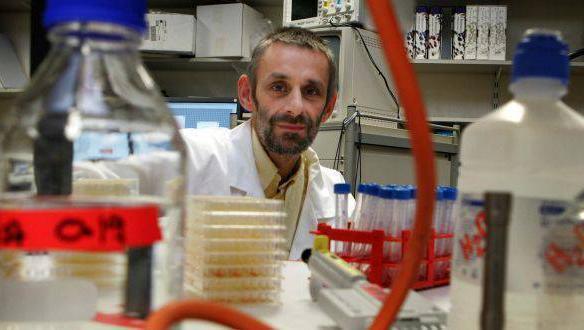
Kingston Mills, professor of experimental immunology at Trinity College Dublin, says there is evidence to support extending the interval between the first and second doses of the Pfizer and Moderna vaccines.
A Covid-19 vaccine for children aged 12 to 15 could be approved for use in Ireland by the end of this month.
The US Food and Drug Agency (FDA) on Tuesday permitted the use of the Pfizer-BioNTech Covid vaccine for teenagers aged under 16.
The European Medicines Agency (EMA) is currently evaluating the application to extend the use of the jab in children in this age bracket.
"Originally [the] EMA aimed to give an opinion in June, but due to the progress of the evaluation, we are now looking at speeding up the timeline with a view to concluding the review before the end of this month," a spokeswoman for the EMA said.
In Europe, the Pfizer vaccine is currently only approved for use in adults. However, a phase three clinical trial conducted by the pharmaceutical company among 2,260 young people in that age group showed the vaccine to be 100% effective against the virus, producing robust antibody responses.
If approved by the EMA for use in this cohort, the National Immunisation Advisory Committee will examine the data and issue guidance on how it could be administered in the State.
Meanwhile, a leading professor of immunology has said there is "lots of science" to support extending the interval between the first and second doses of the Pfizer and Moderna vaccines in adults.
The gap for the two vaccines is currently 28 days, however, immunologists have suggested this could be extended to up to 12 weeks.
Kingston Mills, professor of experimental immunology at Trinity College Dublin, said recent studies from the US showed both the Pfizer and Moderna vaccines have around 95% efficacy against infection of Sars-CoV-2 with two doses, but a single dose can give 80% efficacy.
“That tells us that a single dose of either of those vaccines confers a significant level of protection against infection, not to mention against disease. That’s in the shortish term, a couple of months, maybe three months,” he said.
“All of the immunology of what we know tells us that the longer the gap between the primary and secondary dose, up to a level, is beneficial because the immune response matures."
He added that it should not delay the completion of the vaccination programme, as there was still “the same number of vaccines into the same number of people”.
Christine Loscher, professor of immunology at Dublin City University, said there are “loads of advantages” to extending the interval, but said there was a lack of data around how long immunity after the first dose lasts.
“If you’re trying to roll out the vaccine as quickly as possible, we’re kind of acknowledging that you have a degree of safety with one and then more safety with two,” she said.
“But what I’m worried about is because of the lack of understanding in a layperson about how their antibody response is high for a while and then it starts to lower, that they may not realise that once that starts to lower, they are at risk of potentially getting Covid."
Over half a million people over the age of 16 in Ireland are now fully vaccinated against Covid-19, according to the latest figures.
As of Sunday, May 9, a total of 1,848,747 vaccines had been administered in the State.
Some 1,347,561 people (around 34.5% of the population) have got their first jab, while 501,351 (12.8% of the population) people are fully vaccinated.