Younger people should be given J&J vaccine to avoid waste, says Taoiseach
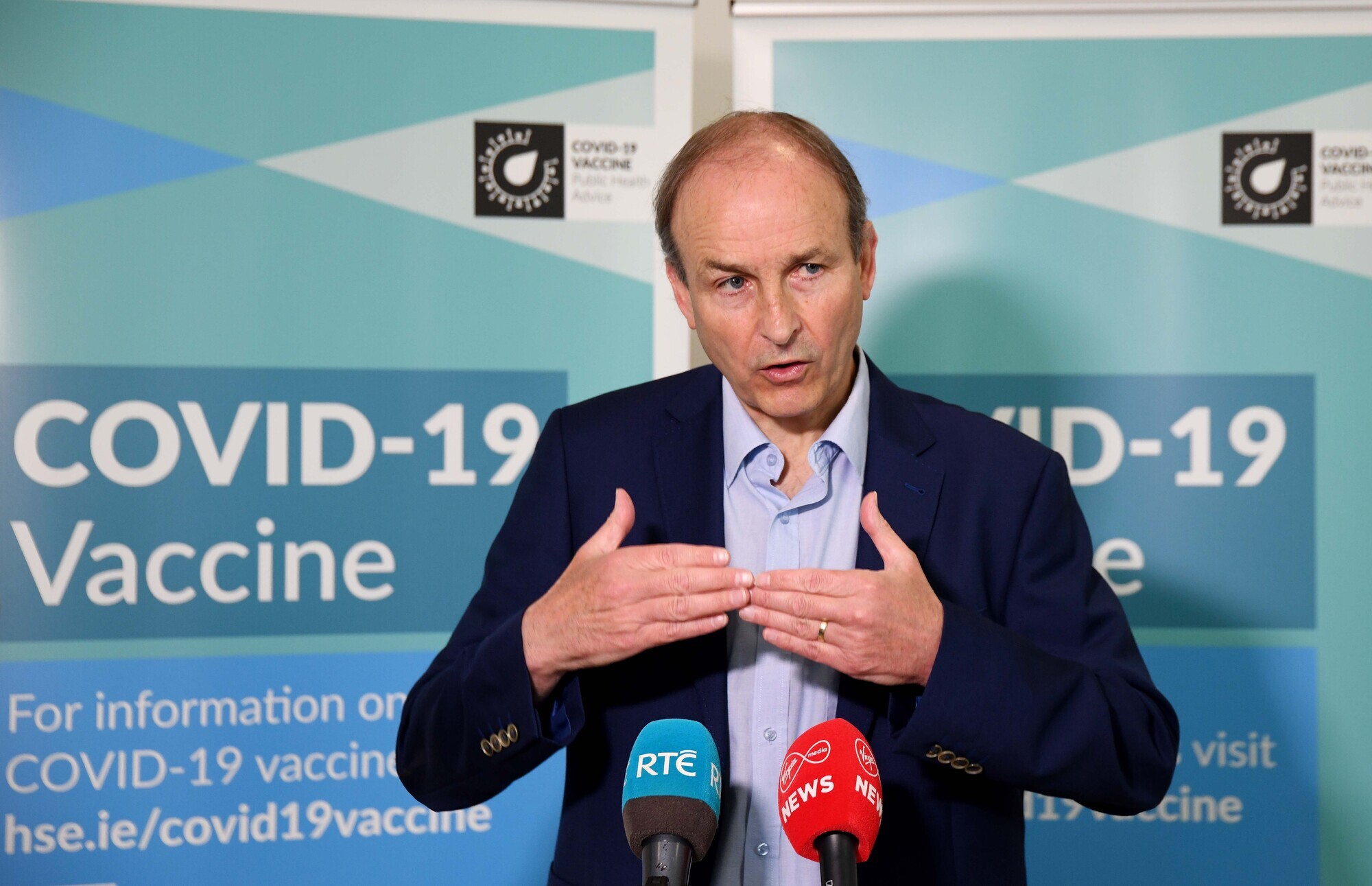
Taoiseach Micheál Martin said that the country "wants every vaccine used" and he hopes that the plan to lower the age limit is approved this week. Picture: Denis Minihane
Younger people should be given Johnson & Johnson Covid-19 vaccines to ensure that no jabs go to waste or are held in reserve, Taoiseach Micheál Martin has said.
Speaking in Cork where he received his first dose of the AstraZeneca vaccine, Mr Martin said that he is hopeful that a HSE proposal to lower the ages of those who can receive the Johnson & Johnson jab will be approved this week.
“I think it would ensure the maximum utilisation of all vaccines that we have, that none would go to waste and also that we would protect people faster and get as many people protected as we possibly can from the virus, so I hope it works out, and it’s something that I would support," said Mr Martin.
His comments come ahead of advice this week from the National Immunisation Advisory Committee (NIAC) that could see the age restrictions on the Johnson & Johnson vaccine, currently set at 50, lowered to between 40 and 45.
NIAC is also monitoring the latest data on the AstraZeneca vaccine, which is also limited to use in those over 50 years. NIAC will take into account the decision by German authorities on Friday to offer that vaccine to all adults.
Any loosening of age would be welcomed by the Government and would help Ireland hit the target of offering or giving a first-dose vaccine to every adult by the end of June.
Ireland is due to receive 600,000 Johnson & Johnson vaccines by the end of June, but concerns have been raised that there may be more doses by then than people eligible to receive it, leading to stockpiles amassing while younger people wait for mRNA vaccines such as the Pfizer and Moderna doses.
Mr Martin said that the country "wants every vaccine used" and he hopes that the plan to lower the age limit is approved this week.
However, Mr Martin said that while he understood the difficulties which have faced younger people, the age-based rollout was appropriate and was unlikely to change.
The Taoiseach also confirmed that Ireland will sign up to the EU's digital green certificate system, making European travel this summer a possibility.
"Certainly, by the latter part of the summer, possibilities may open up, but we have got to track the virus, keep on top of it and keep the pressure on it."
Mr Martin's comments come as the country enters a new wave of reopenings, with non-essential retail, personal services, religious services, and inter-county travel all returning today.
Within the Government, there is optimism that "this is the beginning of the end" as 12,000 businesses reopen their doors — with a new focus on ventilation.
Tánaiste and Enterprise Minister Leo Varadkar said the country's Work Safely Protocol is being updated to include revised advice on ventilation and workplace antigen testing.
"This has been the longest lockdown since the pandemic began, I am determined to do all we can to ensure that it is the last," said Mr Varadkar.
The Tanáiste also said that financial supports will remain in place at least until the end of June and that new supports for those most affected by the lockdown will be announced at the end of May.
Businesses opening today will receive a double Covid restriction support scheme payment for each of the next two weeks to help with the cost of re-opening.
CONNECT WITH US TODAY



Be the first to know the latest news and updates