Covid detection system for Ireland's wastewater
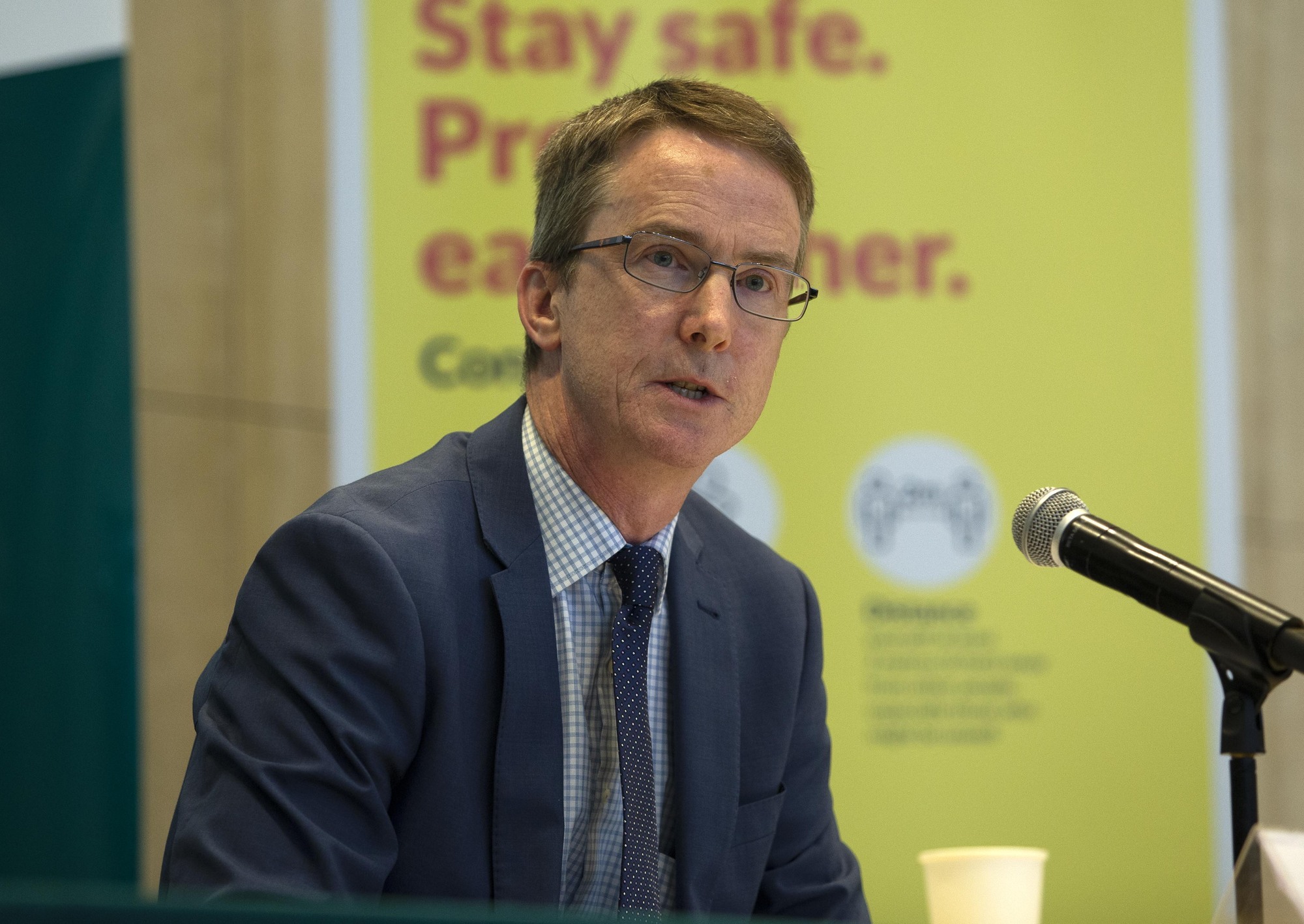
Dr John Cuddihy, director of the Health Protection Surveillance Centre said monitoring wastewater for evidence of Covid-19 is an internationally recognised tool in many governments’ efforts to assess the rate of infection across the population, both as a whole and within individual communities. Picture: Colin Keegan, Collins Dublin
An "early warning system" for Covid-19 outbreaks is to begin in early May when a new national programme begins to check for the virus in Ireland's wastewater.
The Wastewater Surveillance Programme will measure the level of Covid-19 in 68 wastewater catchment areas across the country to monitor the prevalence of Covid-19 in communities.
Eight sampling locations are set for Cork: the city, Ballincollig, Clonakilty, Cork Lower Harbour, Fermoy, Mallow, Midleton and Youghal.
A specialised team developed the programme with input from the Health Protection Surveillance Centre (HPSC), Health Service Executive (HSE), Health Intelligence Unit (HIU), the National Virus Reference Laboratory (NVRL), UCD School of Biomolecular and Biomedical Science, and Irish Water.
Dr John Cuddihy, director of the HPSC, said monitoring wastewater for evidence of Covid-19 is an internationally recognised tool in many governments’ efforts to assess the rate of infection across the population, both as a whole and within individual communities.
It captures both symptomatic and asymptomatic people, he said.
"As such, it helps evaluate how effective specific public health measures are, and can be an important early warning sign of increasing SARS-CoV-2 activity in the community. It can also help inform those locations in which increased and enhanced SARS-CoV-2 testing and preventative measures might be of benefit.”
Ireland has more than 1,100 public wastewater catchment areas where wastewater is collected and conveyed for treatment.
Out of these, 68 wastewater catchment areas were jointly determined by the HSE, Irish Water, and UCD following analysis which considered area coverage and population density. At least two catchment areas per county are included in the programme, which is to cover 84% of the population connected to a public wastewater treatment plant.
Results will be shared with the HPSC, which will then communicate them to key organisations including the HSE Public Health Departments, the Irish Epidemiological Modelling Advisory Group (IEMAG), and the National Public Health Emergency Team (Nphet).
The findings will inform testing strategy and preventive public health measures. When results are available, they will also be posted on the HPSC’s website at regular intervals.
Professor Wim Meijer, UCD School of Biomolecular and Biomedical Science, lead investigator said: “The pilot study, funded by SFI and the Ireland Wales Programme 2014-2020 through the European Regional Development Fund, involving three wastewater treatment plants showed a very close correlation between the presence of the SARS-CoV-2 genetic material and the daily number of new Covid-19 cases.
"This demonstrates the usefulness of wastewater surveillance as a SARS-CoV-2 early warning system.”

CONNECT WITH US TODAY



Be the first to know the latest news and updates