Government to discuss scrapping 5km limit as concern mounts over high case numbers
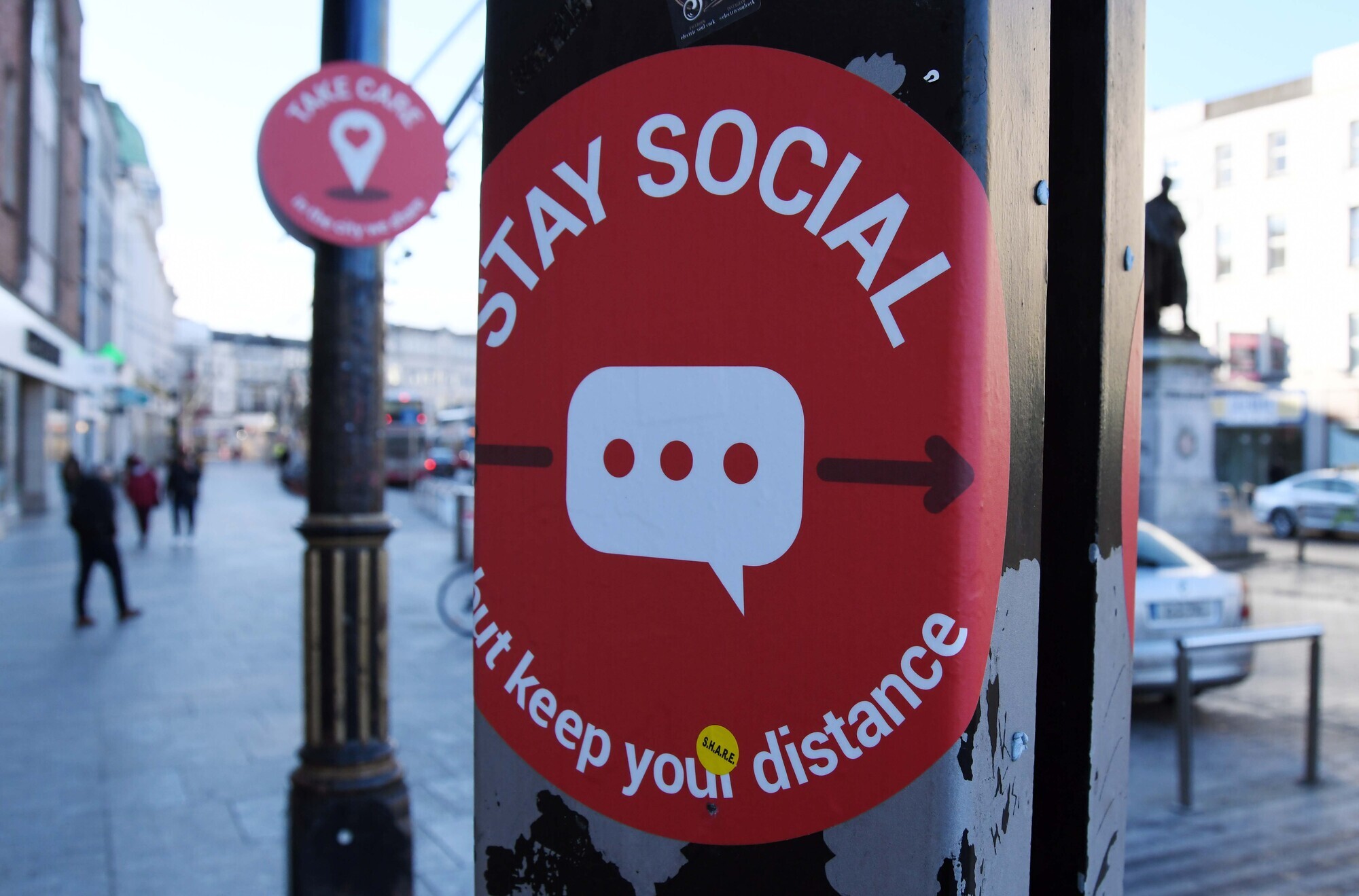
Any lifting of restrictions will be "heavily caveated" on case numbers and based on Nphet advice after the public health experts meet on Monday. Picture: Denis Minihane
The Government will discuss scrapping the 5km travel limit at next Tuesday’s Cabinet meeting.
Changes to Level 5 restrictions will be announced after the meeting and will take effect on Monday, April 5, according to Government sources.
Removal of the 5km limit and a return to children's outdoor sport are the preferred changes, but any lifting of restrictions will be "heavily caveated" on case numbers and based on Nphet advice after the public health experts meet on Monday.
Dr Ronan Glynn, the deputy chief medical officer, said he would engage in “no speculation” at this stage as to the outcome of that meeting.
However, concern is mounting at the stubbornly high case numbers reported across the country in recent days. Yesterday, 606 new cases of Covid-19 were reported, along with three deaths.
Tánaiste Leo Varadkar said it was "very hard to see" Covid-19 cases dropping to the low levels seen last year. In fact, he said, it was hard to see cases dipping below 500 cases a day.
Mr Varadkar told Social Democrats co-leader Róisín Shortall in the Dáil that lower figures may not be possible due to the more virulent B117 strain.
"It perhaps demonstrates that getting down to low figures like 10, 50, or even 100 per day is not a prospect in the way it was last year because the virus has mutated and is more transmissible and deadly than the original wild strain," he said.
"Despite the enormous efforts of the Irish people doing all the right things, we have got stuck around 500 or 600 cases per day and it is hard to see how we will get much lower than that."
Mr Varadkar also confirmed that despite what Taoiseach Micheál Martin said two weeks ago, there would be no six-week or "medium-term" plan for lifting restrictions.
"We will give as much clarity and hope as we can but we'll also need to be honest, we're not out of the woods yet," Mr Varadkar said.
"The next couple of weeks are worrying, the situation is deteriorating here, we'll give as much clarity as we can.
"I don't want to give people assurances for six weeks’ time we have to withdraw in three weeks’ time, that's not fair."
Despite the case numbers, Higher Education Minister Simon Harris said he expects April to see a “slight easing of some restrictions".
“I think it has to,” he said. “I don’t want to overly speculate but that 5km is driving people absolutely bonkers at this stage.
“The 5km in an urban community is very different — you might not get to the end of a field in a rural community.
“I think we need to look at how we can help people live with low-risk activities and doing things outdoors we know is safer than doing things indoors.”
Mr Harris noted that the virus tends to “tear up our best-made plans”, but said he believes the Government must set out as clear a roadmap for reopening as is possible.
“Let’s be honest, we are not going to be in a position to do a huge amount more in April, we have to be truthful on that,” he said.
“But I would like to see us begin to spell out what the months of May, June, and July might look like as we begin to see the vaccine programme really ramp up.”
Health Minister Stephen Donnelly confirmed that when Ireland has vaccinated the most vulnerable, we can expect to see "significantly less illness and death" which will allow people to return to more normal lives.
Meanwhile, Covid-19 tests were carried out on 1,600 people today at five walk-in centres, the first day these were in operation.
Dr Miriam Owens, a HSE public health specialist, said most people attending appeared to be between the ages of 20 and 45, which she welcomed.
She urged anyone living within 5km of the centres in Dublin and Offaly, to attend for testing.
CONNECT WITH US TODAY



Be the first to know the latest news and updates