Huge challenge to boost Irish organic farming output
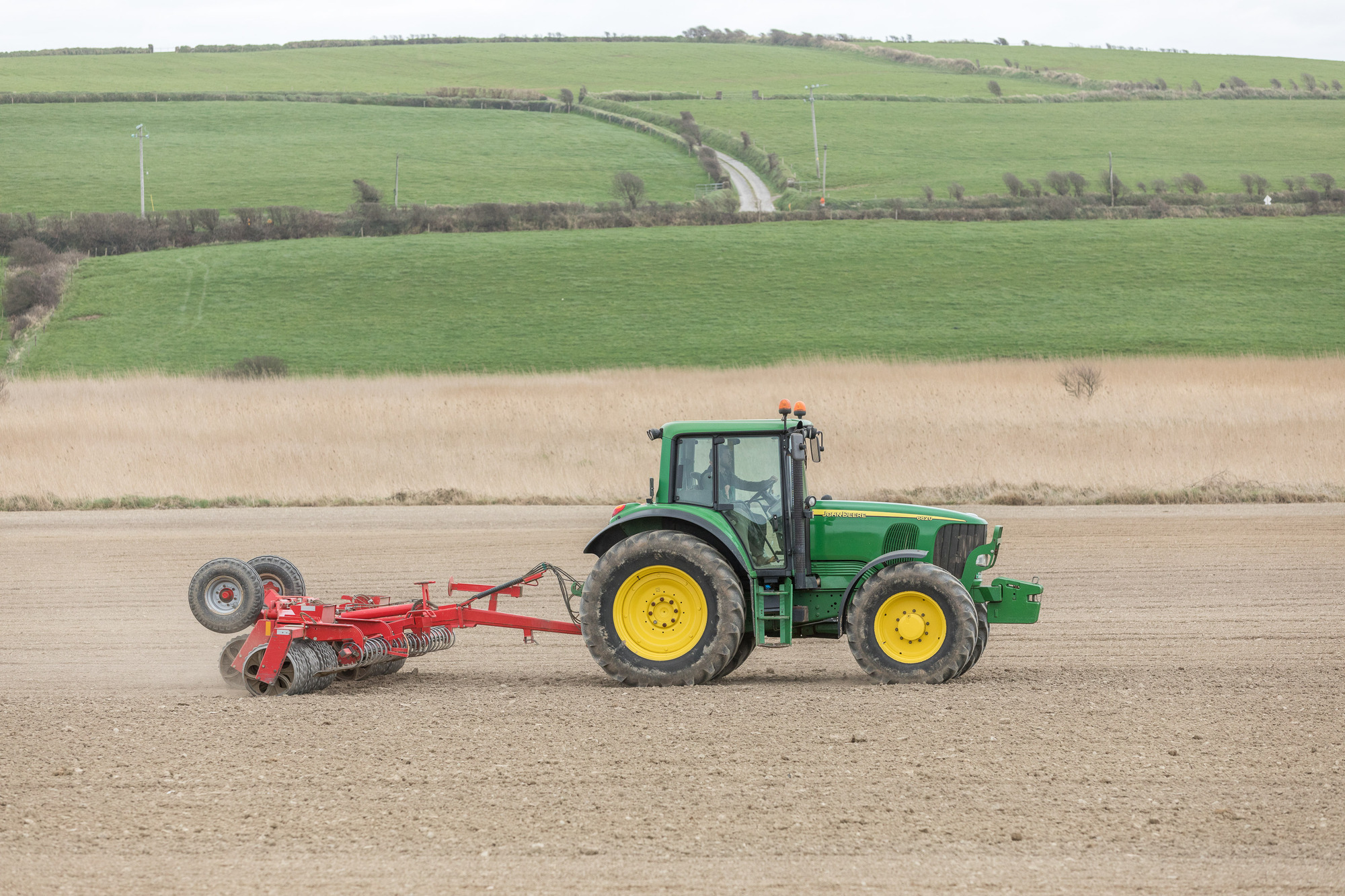
Ireland lags far most EU member states in use of agricultural land for organic farming. File picture: David Creedon / Anzenberger
Brussels has revealed ambitious plans for EU member states to use a quarter of agricultural land for organic farming by 2030 – leaving Ireland a major challenge to boost its paltry 1.6% set aside for the practice.
Just 8.5% of the EU’s total agricultural area is used for organic farming, despite a major push in the last decade.
Retail sales for organic farmed produce has doubled in value in the last 10 years, the European Commission said, from about €18bn in 2010 to more than €41bn in 2019, while the area under organic farming has increased by almost 66% to 13.8 million hectares in the same period.
Ireland lags far most of its EU member state counterparts – only Malta utilises less agricultural land for organic purposes. Ireland uses 1.6%, with the tiny Mediterranean island using just 0.5%.
This is compared to the likes of Austria on more than 25%, Estonia at more than 22%, and Sweden at more than 20%.
While many nutritional scientists remain sceptical about the health benefits of organic produce for humans, the commission said farming in an organic method provides a boon to biodiversity, animal health and air quality.
"Organic production comes with a number of important benefits: organic fields have around 30% more biodiversity, organically farmed animals enjoy a higher degree of animal welfare and take less antibiotics, organic farmers have higher incomes and are more resilient, and consumers know exactly what they are getting thanks to the EU organic logo," the commission said in its announcement.
It said it was encouraging member states to develop national organic action plans to increase their national share of organic farming.
The commission said it would look to a major promotional push towards organic consumption, as well as encouraging sustainable practices and production over the next nine years.
There will also be an effort to improve animal welfare, ensuring the availability of organic seeds, reducing the sector's carbon footprint, and minimising the use of plastics, water and energy.
Executive vice-president for the European Green Deal Frans Timmermans said: “Agriculture is one of the main drivers of biodiversity loss, and biodiversity loss is a major threat to agriculture.
"We urgently need to restore balance in our relationship with nature. This is not something farmers face alone, it involves the whole food chain."

CONNECT WITH US TODAY



Be the first to know the latest news and updates