Over 110,000 passengers came through Dublin Airport in January
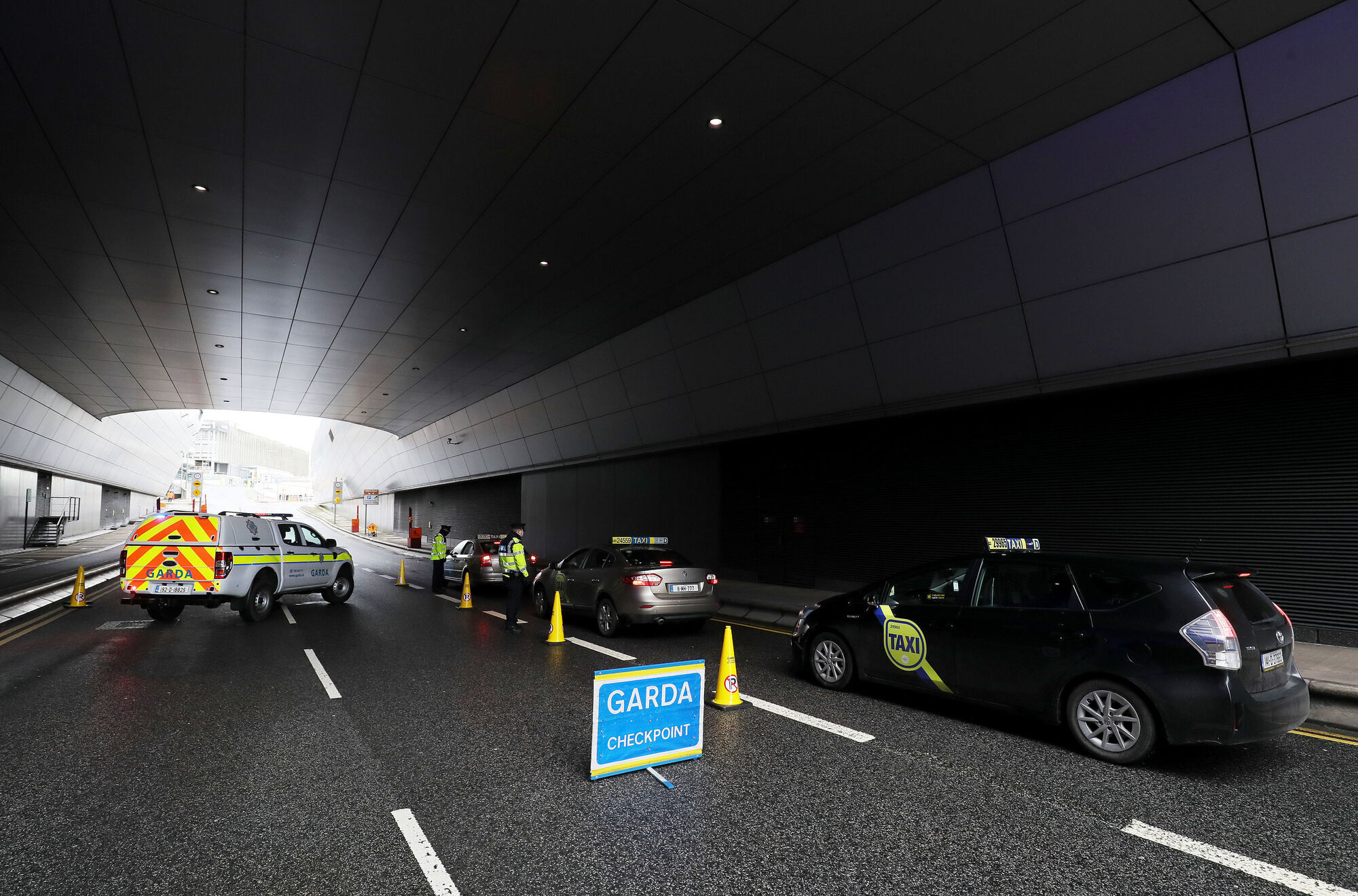
A Garda checkpoint at Dublin Airport . Picture: Brian Lawless/PA
New figures have revealed that 110,930 passengers came through Dublin Airport in January — 60% of which was non-essential travel.
According to statistics from the Department of Transport, Dublin Airport accounted for the bulk of air travel into the country, with Cork and Shannon airports reporting fewer than 2,000 and 1,000 passengers respectively.
The most popular flights were recorded as arriving from Poland, France, the UK, and the Netherlands.
It is assumed that a large portion of these arrivals were residents returning to Ireland after visiting family over the Christmas period.
The current passenger locator form allows passengers to indicate whether they are travelling for an essential purpose, as defined by the EU recommendation 2020/1475.
In January, the proportion of passengers who completed a passenger locator form and declared an essential purpose for travel was just over 39%. The remaining passengers did not declare an essential purpose for travel.
Since January 16, all arrivals must have a valid PCR test, regardless of whether they are travelling for an essential purpose or not.
Almost 64,000 people arrived in Dublin in the first 16 days of the month before a PCR test was required.
Travel has come under intense scrutiny since the festive period as the country battled the highest rate of Covid-19 infection in the world.
Under new regulations signed by the health minister this week, all persons arriving into Ireland must now quarantine for 14 days.
If a second negative PCR test is provided after five days of quarantine, the home quarantine can be ended early.
"There is limited exemption from quarantine for essential reasons, but only for such period as strictly necessary, this is not a general exemption," said a Department of Transport spokesperson.
"Those exempted are expected to follow quarantine at all other times. Exemptions include workers for repair and maintenance of critical infrastructure. There are penal provisions if arrivals do not fulfil the requirement to quarantine."
If those quarantining are found not to be at home or “can’t present themselves” to gardaí, they could face a fine of up to €2,500 or six months in prison — however, gardaí will not be allowed to enter a person's home.
Many health experts and Opposition leaders say the restrictions were "too little, too late" as the country faces down the highest rate of hospitalisation since the beginning of the pandemic.
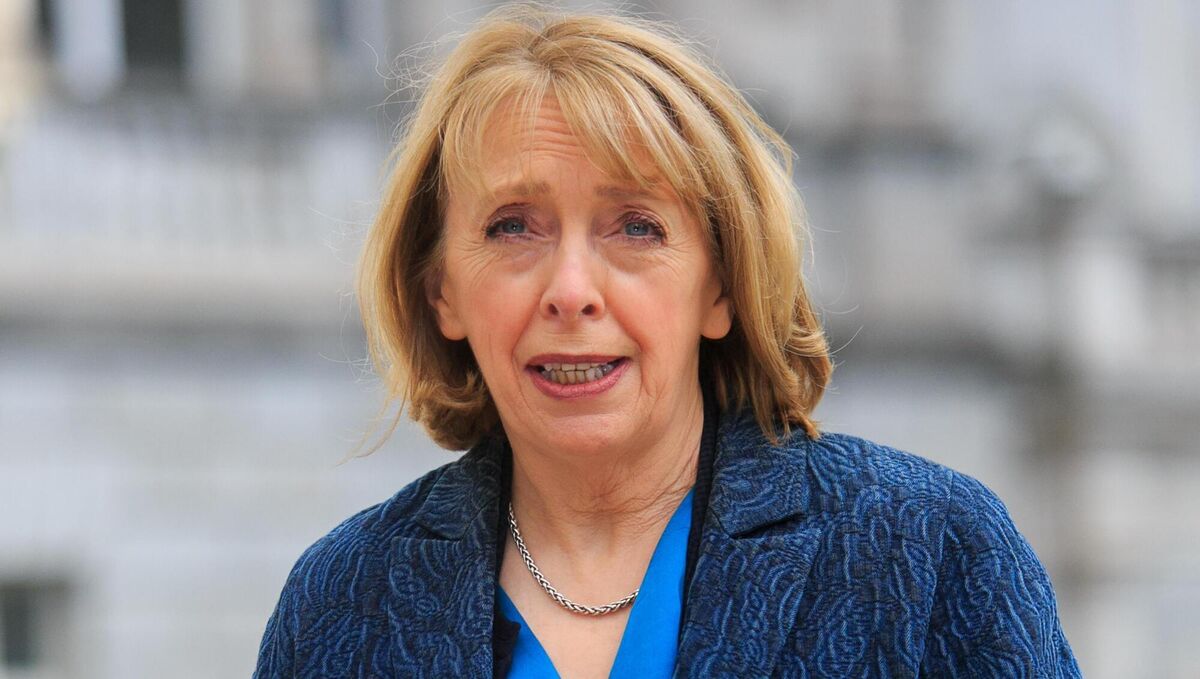
Social Democrats co-leader Róisín Shortall says the issue of travel has been neglected by the Government for months.
"In terms of the Government's response, at no point have we had a proper system in place to monitor or control the importation of the virus, and various things have been used and not enforced," she said.
"Whether that's self-isolation, or restricting your movements, there's been no oversight of that, and we know from the figures we've got every single month last year, the situation is that a very small percentage of people coming here actually get any contact, a phone call, and only about half of those people are answering the calls. Less than 10% have been monitored, and that's just simply not good enough.
"The whole question of travel has to be about restrictions, driving down the level of the virus to get very low. It has to be about proper testing and tracing, but critically, it has to be about travel controls and we saw Christmas week, what happened there.
"It's especially important with the threat now with the new variants, and during Christmas week people were advised to isolate in their rooms in their own homes — we know that they didn't do that.
"We know what happened as a result of that, and now at this stage the Government keeps saying they can't police people in their own homes."
CONNECT WITH US TODAY



Be the first to know the latest news and updates