Zero Covid still not realistic says Nphet as dramatic case number decline slows
Zero Covid still not realistic says Nphet as dramatic case number decline slows

A further 10 people died from Covid-19 during January and 1,062 new cases were confirmed today. Picture: Sasko Lazarov / RollingNews.ie

It is too soon to let our guard down was the warning from the National Public Health Emergency Team (Nphet) as new data shows the dramatic fall in Covid-19 cases is now slowing.

And in a softening of their tone on Zero Covid, the public health experts said their approach shares many ideas with this campaign but they still say it is not realistic for Ireland.

A further 10 people died from Covid-19 during January and 1,062 new cases were confirmed today. There have now been 3,317 deaths from the virus and a total of 197,553 cases.

As of 2pm this afternoon, 1,436 patients are in hospital with Covid-19 and 207 people have been admitted to ICU. 34 people were admitted to hospital in the last 24 hours. 

Dublin reported the most cases at 335 today followed by 137 in Cork. Wexford confirmed 73 cases while Galway recorded 58. 54 cases in Kildare were confirmed and the remaining 405 cases are spread across all other counties. 

The positivity rate over the last seven days now stands at 6.6% after 137,066 tests were completed. 

A further breakdown of case data released by the Department of Health shows: 

  • 506 cases are men and 546 cases are women; 
  • 57% of cases are under 45;
  • The median age of confirmed cases is 41.

Among the hardest-hit counties is Waterford with a 14-day rate of infection at 690.3 per 100,000 population. The national average is 478.7.

That average is slowly declining, which is reflected in lower incidence rates in other parts of Munster. Limerick's 14-day rate is now 458.7 and although this is still quite high, it has dropped from 1837.4 two weeks previously.

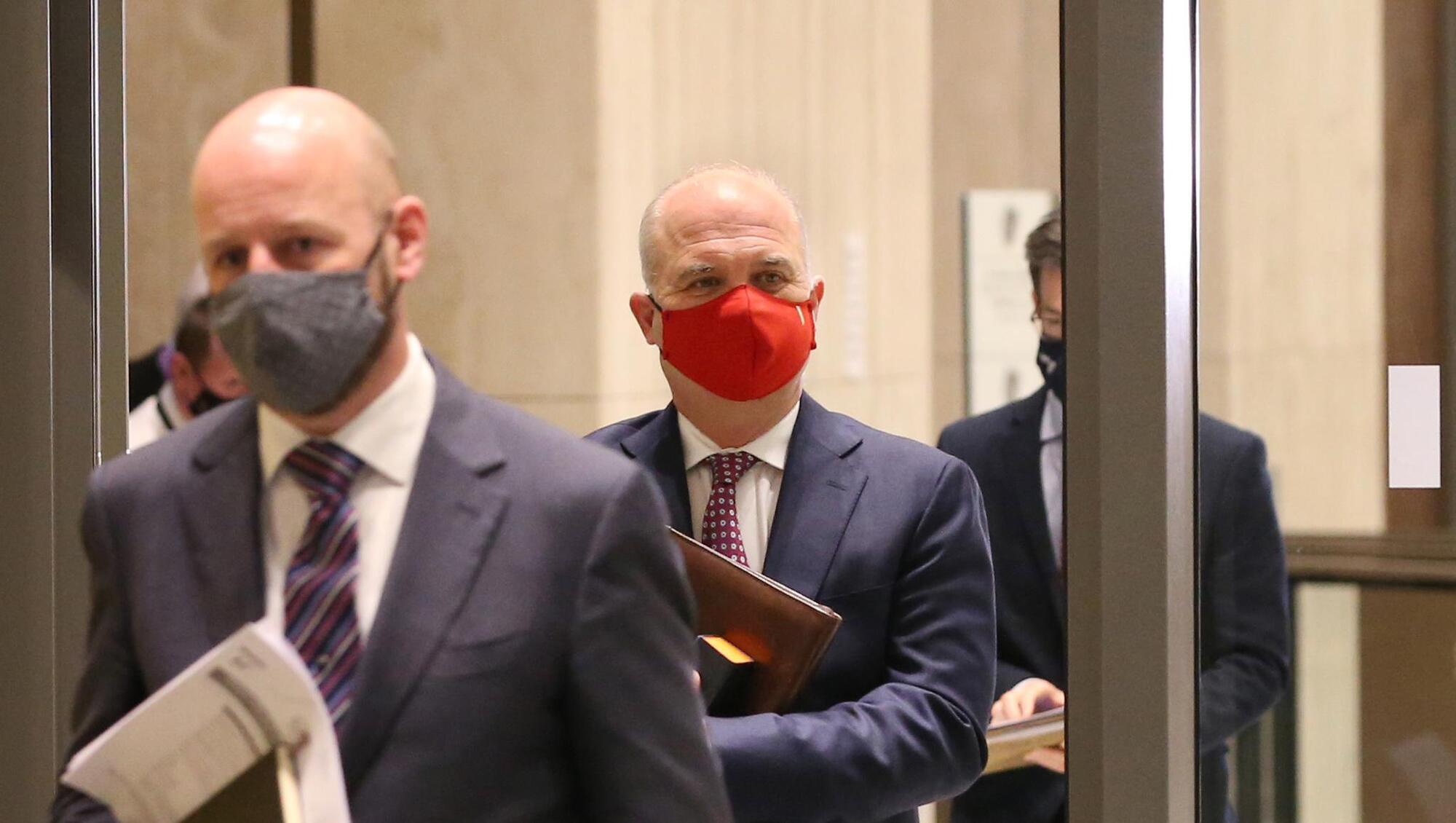
The National Public Health Emergency Team (Nphet) confirmed the cases this evening at the Department of Health. Picture Stephen Collins / Photos Dublin

Chief Medical Officer (CMO) Dr Tony Holohan doubled down on Nphet's rejection of extreme travel restrictions to bring back normal life within months.

A new Zero Covid campaign was launched today, but while he avowed great professional respect for the medics concerned, Dr Holohan said: “We don’t have the features in our public health system to have that level of confidence to say to people honestly you can go back to normal life.” 

Many people book typically book summer holidays this month but Dr Holohan said Nphet advice remains around local travel only.

He said: “I don’t think we are headed to a summer where millions of people from Europe can expect to be heading to beaches that are other than their own localities.” 

Irish people going on holidays now are not following public health advice, he said and strongly rejected criticism of Nphet from head of Ryanair Michael O’Leary.

Advice will be available shortly on the AstraZeneca vaccine, he said.

"People need to take real care"

Commenting on this evening's latest case data, the CMO, said while progress has been good and the Covid situation has improved, he is concerned this change is slowing down when infections are still high. 

"While we have experienced very significant improvement in incidence over recent weeks, I am concerned that it appears to be slowing down at much too high a level of infection. 

"People need to take real care in any setting in which they come into contact with others," said Dr Holohan.

The CMO urged retail and other workplaces to review their Covid health protocols for staff and customers. 

He also highlighted the UK variant as an ongoing cause of concern. 

“In particular, workplaces and retail settings need to review their existing protocols and ensure that their staff and customers are protected as much as possible.

“Given the prevalence of the B117 variant and how infectious it is, it is extremely important that people take all preventative measures possible, including staying home,” said the CMO. 

Reduce transmission

Chair of the Epidemiological Modelling Group, Professor Philip Nolan who last week described Zero Covid as a “false promise” said public health advice aims to reduce transmission.

“I think we can do more than we are currently doing to minimise the importation of disease,” he said.

“We need to be straight (with people) we do not think it is practical to return to the lives we had in January 2020 until we have very high levels of vaccine protection.” 

Asked why the cases are declining slowly when mobility data shows people staying at home, Prof Nolan and deputy chief medical officer Ronan Glynn said this could be down to increased interaction at work and the UK variant.

Dr Glynn said: “Workplaces are coming through consistently, maybe people letting their guard down a little … every time we now drop our guard, it is likely to have greater consequences than a few months ago.” 

Depression and long Covid

Anxiety and depression are now known to be symptoms of long Covid, said psychiatrist and HSE lead on integrated care Dr Siobhán Ní Bhriain.

She said mental health teams are seeing people with more serious illness now than during previous lockdowns.

People also seem reluctant to come for treatment, only going when they are already quite ill. 

She said: “People are seeing that across the board.” She could not comment directly on reports of people suing hospitals because of hospital-acquired Covid infections, but said staff are doing their best to maintain infection-control.

A new Nphet sub-group on ventilation meets this week under Professor Mark Fergusson, their findings will feed into Nphet guidance.

Vaccinations

150,500 people have received their first vaccination jab according to the HSE's Covid-19 Hub while 49,300 people have been administered the second dose. 

It puts the total number of vaccines administered in Ireland by the end of January at 199,800.

The latest vaccination figures come as Ireland is set to receive nearly 100,000 more vaccines from Oxford AstraZeneca following a new agreement between the manufacturer and the European Union (EU).

This article was edited to clarify the case numbers for Limerick versus the national average.

More in this section

Lunchtime News

Newsletter

Keep up with stories of the day with our lunchtime news wrap and important breaking news alerts.

Cookie Policy Privacy Policy Brand Safety FAQ Help Contact Us Terms and Conditions

© Examiner Echo Group Limited