Planets to align for first time in centuries in ‘Christmas star’ effect
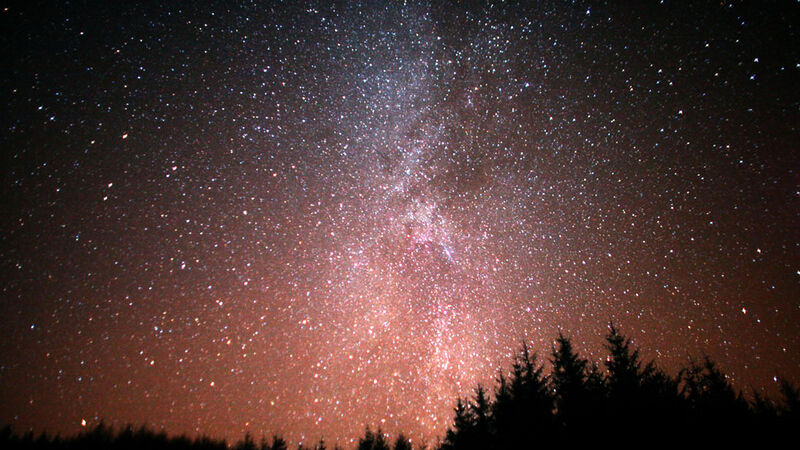
Stargazers could spot a bright light in the sky days before Christmas, similar to that which is said to have led the three wise men to the nativity scene, according to an astronomer.
Saturn and Jupiter will come the closest they have done in hundreds of years, creating what the researcher described as a “spectacular event in the sky” on Monday – which also happens to be the winter solstice.
While conjunctions – where objects appear very close to each other in the sky – are not rare, this will be an “exceptionally close” one – the closest since 1623, Professor Michael Burton said.

The two biggest planets in the solar system will be just 0.1 degrees apart, one-fifth the diameter of the full moon, and appear together as the brightest object in the sky, the director of the longest-running astronomical observatory in the British Isles said.
Prof Burton said: “When that happened it was in the daytime skies so people would not have seen it because it would have been too light.
“The last one which actually would have been well placed to be seen was 1226, so we’re going back 800 years to the last one which would have been up in the dark sky to be seen.”
The astronomer, of Armagh Planetarium and Observatory in Northern Ireland, said a conjunction is one possibility for what has become known as the Christmas Star from the story of Jesus’ birth.
He said: “Certainly one of the possibilities might have been two of the planets coming together.
“The whole question of what might the Christmas star have been is a very interesting question in its own right.
“Whether it was a conjunction, whether it was a comet, whether it was a supernova. No-one actually knows what it was.”
He said the brightness in the sky expected on December 21 is “one possibility for what was seen back 2,000 years ago.”
The advice to keen stargazers is to look to the south west as soon as possible after sunset, with the best time between 4.30pm and 6pm, and while a telescope or binoculars will help, the phenomenon will be visible to the naked eye – weather permitting.
“We have to cross our fingers that there will be clear skies,” said Prof Burton.
Astronomy Ireland advised people hoping to catch a glimpse of the event to "look for high ground with a clear view of the horizon, look to the south west and you should see them clearly."
Met Éireann is predicting that Monday night "will be cold and mainly dry with clear spells and frost developing. There may be a little rain or sleet in the south".


CONNECT WITH US TODAY



Be the first to know the latest news and updates