Sufferers of rare genetic condition forced to travel to UK for treatment despite pandemic
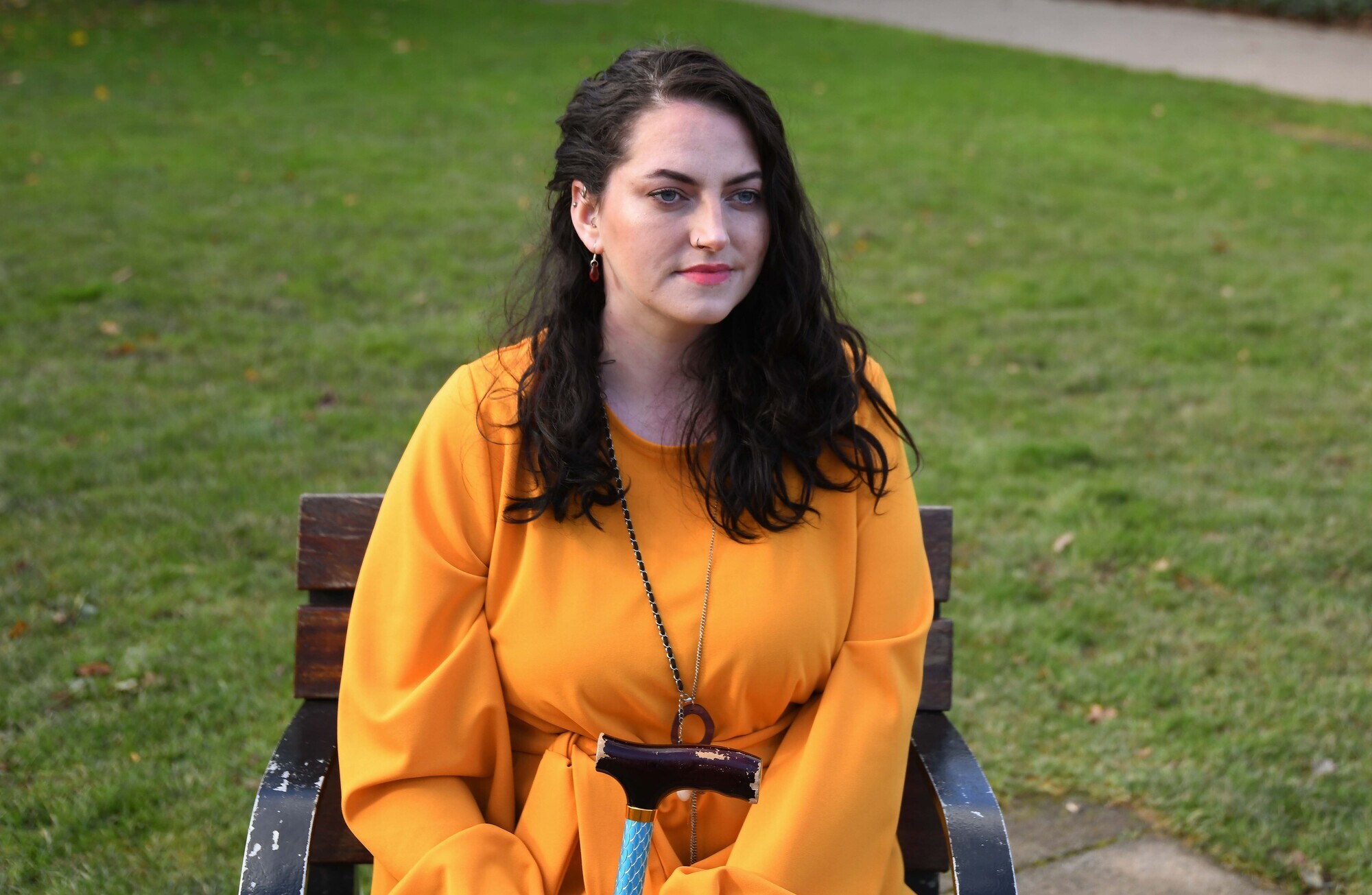
Evie Nevin: 'There's no consultant dedicated to helping people with EDS in Ireland.' Picture: Denis Minihane

Evie Nevin: 'There's no consultant dedicated to helping people with EDS in Ireland.' Picture: Denis Minihane

People suffering from a rare genetic condition are being forced to travel abroad for diagnosis and treatment.

Those with Ehlers-Danlos syndrome (EDS), which affects the body's connective tissue, say there is no specialist in Ireland who can treat them.

People with the syndrome often experience chronic pain, hypermobility, and frequently dislocated joints, and some have to use a cane to help them walk, or a wheelchair.

More diagnosis options and treatments are available in a special hypermobility clinic in London, such as upright MRI scans and specialised physio, but families are forced to pay out of pocket for this and, due to the pandemic, travelling abroad is risky.

Evie Nevin, who lives in Clonakilty, says it took her years to be diagnosed with EDS.

"There's no consultant dedicated to helping people with EDS in Ireland, there's knowledge here and there," says Evie.

Evie, who was adopted at six weeks old, was taken by her parents to their GP for a health check. The GP remarked she was very "floppy" and something "wasn't quite right".

Since she was a small child, Evie suffered problems with her joints and had serious pain, but her health problems got worse as she got older.

"As a child, I used to wake up screaming in the middle of the night with 'growing pains', or so we thought."

When she hit puberty, the elevated levels of progesterone meant her joints got looser, and she had to stop doing many of the hobbies and activities she loved after she felt consistent pain in her knees. She also had insomnia from the pain, as well as chronic fatigue.

As she got older, she went to her GP consistently, who told her she was "stressed, depressed, and anxious" and prescribed anti-depressants.

After she became pregnant at 21, her symptoms began to get worse and she could no longer ignore them.

When her son Alex was born, her condition deteriorated so badly she returned to her GP. 

"I was told I was depressed again and put on medication, but that wasn't working. I was told it was 'all in my head'."

Evie says her physical symptoms were never taken seriously, and points to academic studies that show women who present with pain are more likely to be diagnosed with a mental disorder rather than have their pain investigated and treated.

Eventually, in 2013, she received a diagnosis from a private rheumatologist in Cork. "He said no wonder I was depressed when nobody was listening to me or believing in me."

She went on to get a second opinion from a public rheumatologist, who also agreed she had EDS. 

He said there was nothing he could do to help me.

In 2014, she was pregnant with her second child, Oliva, and by her third month of pregnancy, she was forced to use a wheelchair. Her hips were constantly dislocating.

Evie's two children, Alex and Olivia, also have EDS. Her husband has become her carer.

The family travelled to London and the trio received specialised physio when Olivia was 16 months old. Olivia did not walk until a month after she received this physio.

Evie has had to continually pay for private physio as it will take too long to access the treatment publicly.

She uses her cane as much as she can but sometimes uses her wheelchair when she out of the house for longer periods of time.

"We've essentially been left to rot. Had I been diagnosed earlier, I could have led a much more normal life."

Kitty Colbert, from Dundalk, Co Louth, has EDS and says she has no other option but to pay out of pocket for an upright MRI scan in London.

She spent years battling for an EDS diagnosis and says many Irish consultants have little to no knowledge of the condition, forcing many patients to travel abroad for help.

EDS sufferer Kitty Colbert with her partner Simon and their daughter Winter-Rose.

There is no upright MRI machine in Ireland, and Kitty needs one to see how her chiari malformation has progressed. This is when brain tissue extends into the spinal canal, and it is a common comorbidity of EDS. Usually, chiari does not show up on a normal MRI. 

"It's to do with how our tissue is, our skin internally is quite stretchy also, and this affects how things show up on an MRI," says Kitty.

She was diagnosed with the malformation a few years ago after it showed up on an upright MRI scan taken in the clinic in London, and she was given medication to ease symptoms.

However, since giving birth to her daughter Winter-Rose five months ago, her symptoms have worsened. 

She has since developed a form of epilepsy and suffers from constant headaches. 

"I have been having partial seizures since. I have them in my sleep a lot. I won't know until I have the scan, but it seems like my brain has been pulled down further."

She has been on medication for three months, which is slowly helping her.

Kitty says she had to 'beg' for an EEG brain scan, and went to A&E twice. "I was asked why I was there and told they wouldn't do anything for me."

She was so concerned about her health she paid for a private normal MRI, and her chiari showed up, meaning it had got worse.

She says she needs to go for another upright MRI to see how the malformation has progressed and to potentially get a referral for surgery.

Kitty booked her flights, accommodation, and scan months ago.

"I can't see it going ahead. I booked it a few weeks after I had my daughter. It was an emergency, but December was the earliest appointment the consultant could offer."

Decompression surgery is one treatment option, but even if Kitty gets a referral, she could be put on a waiting list. 

It could be a couple of years before I can get surgery.

Kitty also has mobility issues. She uses smart crutches to help her to walk and a wheelchair sometimes.

She says the treatment abroad scheme does not usually apply to people with EDS.

"You have to prove you need a specific treatment that you can't get here. When politicians have asked parliamentary questions, what comes back is that the treatment for EDS is counselling, psychology, and physiotherapy."

Kitty says while many people with EDS and chronic pain do need counselling, this is not a treatment for the condition itself. She adds that the physio needs to be 'constant and specialised', and hydrotherapy, another treatment which EDS patients have found helpful, is not readily available in Ireland.

She says the treatment abroad scheme only covers public treatment abroad, but the hypermobility unit in London is private.

This forces many families to crowdfund for treatment, which can be especially costly as EDS is a genetic condition with multiple members of the same family unit having it.

The HSE said people with less severe forms of EDS may face delayed diagnosis as GPs rarely encounter a patient with EDS during their career.

"Where patients have severe EDS of the joints or where they have other specialist care needs, they are referred to an appropriate hospital specialist, but most patients with EDS do not need to see multiple specialists," said the HSE.

"The paediatric and adult rheumatologists currently working in Ireland are trained in the diagnosis and management of the various forms of EDS and patients with severe joint symptoms are referred to rheumatology services. Unfortunately, there are long waiting lists for rheumatology services which can add to the delay in diagnosis of EDS."

The HSE said that hypermobility EDS (HM EDS), previously known as type 3, often poses the biggest diagnostic dilemma as there is no genetic test for it.

The HSE also said that the treatment abroad scheme is available to EDS patients whose HSE consultant recommends a treatment that is not available in Ireland.

"In the case of the private hypermobility clinic in London it is our understanding that patients with EDS who are treated in the NHS are not referred to this clinic either," it said.

"Referral to this clinic is not standard practice of care for the paediatric rheumatology community in the UK, and is not endorsed by societies or professional bodies.

"Upright MRI machines can be useful for imaging in the physiological position, or in a position that provokes the patient’s symptoms. These scanners are less useful for many of the more frequently performed types of MRI examinations and there is not a high level of demand for these types of MRI examinations from referring clinicians."

More in this section

Lunchtime News

Newsletter

Get a lunch briefing straight to your inbox at noon daily. Also be the first to know with our occasional Breaking News emails.

Cookie Policy Privacy Policy Brand Safety FAQ Help Contact Us Terms and Conditions

© Examiner Echo Group Limited