Joe Biden makes play for Irish-American vote
Joe Biden makes play for Irish-American vote

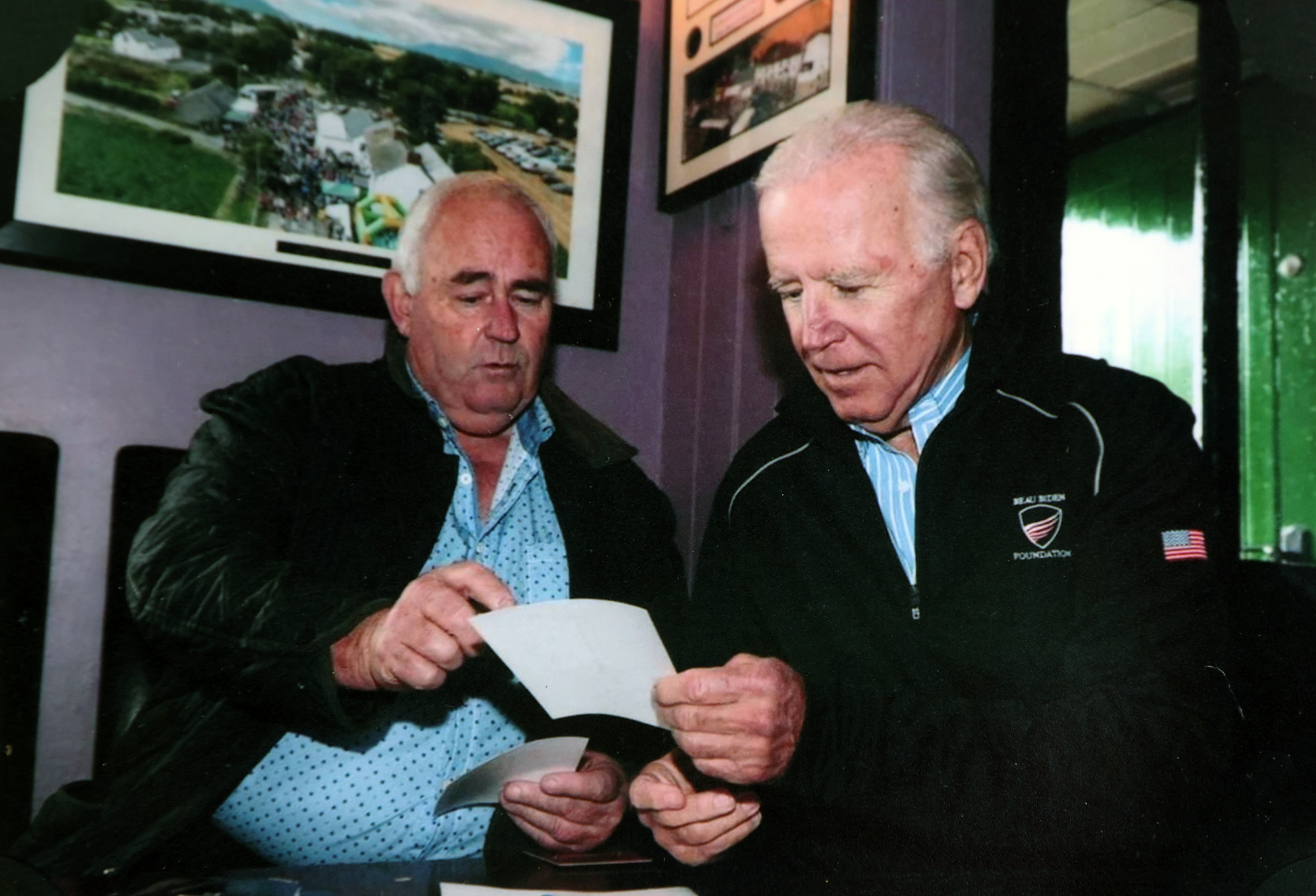
US vice-president Joe Biden looking through photos with Eamon Thorton, during his trip to Ireland. Biden has repeatedly talked up his Irish roots and his campaign will attempt to shore up support among the Irish-American population. Picture: Maxwells

The Good Friday Agreement, Brexit and future Irish reunification will be the subject of a Joe Biden campaign event next week aimed at bolstering his support among Irish-Americans.

While the traditionally strong voting bloc has seen its influence wane during recent US presidential election cycles, Irish-Americans remain a coveted cohort of voters among would-be presidents.

Incumbent Donald Trump has wooed traditional Catholic voters by focusing on pro-life issues, siphoning off a sizeable number of Irish-American voters in the likes of recent Democrat stronghold Pennsylvania, as well as traditional swing states like North Carolina and Missouri.

Those pivotal states all went to the Republican nominee when he shocked the world in 2016, upending Democrat hopes of Hillary Clinton winning the White House, with a sizeable chunk of Irish-Americans switching party allegiance from blue to red along the way.

The campaign of Joe Biden, who has repeatedly talked up his Irish roots, will attempt to shore up support and undecided voters among the Irish-American population, which has helped swing elections for previous Democrat nominees like Jack Kennedy in 1960 and Grover Cleveland in 1884.

The Zoom-hosted online event on October 6 will include speakers such as former US ambassador to the United Nations from 2013 to 2017, Samantha Power.

Professor Brendan O'Leary of the University of Pennsylvania, who is considered a leading expert on the North of Ireland, will also attempt to woo voters towards the Biden camp.

Former deputy undersecretary of defense in the Obama administration, Brendan McKeon, who also served as deputy national security advisor to Vice-President Biden from 2009 to 2012, is also set to take part.

In one of the most pivotal moments of the 1884 election, just days out from the election, a surrogate of Republican nominee James Blaine blasted Grover Cleveland’s Democrats as the party of “rum, romanism and rebellion”, incendiary remarks that enraged Irish-American who saw it as an attack on their Catholic faith and supposed loved of alcohol.

Blaine’s campaign would not recover from the self-inflicted wound, with Irish-Americans turning to Cleveland in their droves, handing the critical swing state of New York to the Democrat, thereby putting him over the top in the electoral college numbers and launching him into the White House.

Cleveland won New York by less than 1,200 votes, with the Irish-American bloc seen by historians as the crucial factor, and Democrats were back in the White House after 24 years in the wilderness.

Jack Kennedy needed his Irish-American block to put him over the top in 1960 as Southern Protestants mistrusted his Catholic faith and intentions, but the reliance of his Democrat Party on Irish-American voters would wane in the 60 years since.

Beginning with a concerted effort by Richard Nixon in 1968, the Republican Party would seek to realign the Irish-American voting bloc with other so-called conservative voting cohorts, such as evangelical Christians.

Ronald Reagan would shore up the support until Barack Obama disrupted the new pattern in 2008 and 2012.

Donald Trump won the majority of voters who identify as Irish Catholic in 2016, and has stacked his White House with influential Irish-American figures such as former chief of staff Mick Mulvaney, and former campaign chairman and advisor Steve Bannon.

More in this section

Lunchtime News

Newsletter

Keep up with stories of the day with our lunchtime news wrap and important breaking news alerts.

Cookie Policy Privacy Policy Brand Safety FAQ Help Contact Us Terms and Conditions

© Examiner Echo Group Limited