'Winter plan' aims to increase health funding 20-fold to treat more patients in the community
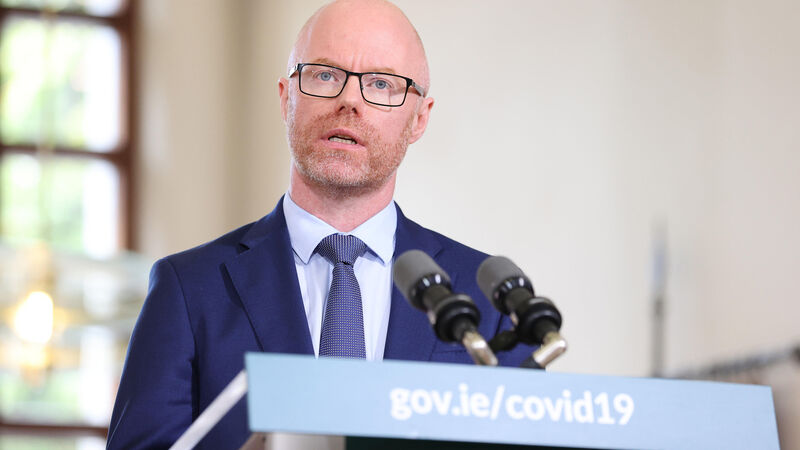
Minister for Health, Stephen Donnelly, announced the €600m winter plan that aims to boost health service capacity. Picture: Julien Behal/PA Wire
A €600m ‘winter plan’ promises to boost the capacity of the health service to deal with “unprecedented” challenges this winter by treating more patients in the community rather than in hospitals, providing more home care packages, and using private hospital capacity.
The record funding – 20 times that allocated last year - was announced at the launch of the government’s ‘Plan for Living with Covid-19' over the next six to nine months.
The funding comes in the wake of dire warnings over the challenges facing the HSE this winter because of reduced capacity within the health service due to Covid-19, the need to have separate Covid and non-Covid services, and growing waiting lists due to the initial lockdown.
Health Minister Stephen Donnelly said the health service faced “unprecedented” challenges this winter as Covid meant that it was taking longer to treat patients and “costing us more to do less”.
The winter plan, he said, was designed along Sláintecare guidelines and aimed to care for people in the community “as much as possible”, to boost hospital capacity, and support patients in the community after hospital discharge.
Measures, he said, will include more home care hours, community specialist teams, access to diagnostics for GPs, community assessment hubs, and additional beds.
Under the €600m plan, which is expected to be published in the coming days, the HSE will deliver a “significant and sustainable level” of additional capacity through increased investment in beds in critical care, acute care, rehabilitation and community care.
The plan also provides for additional inpatient, daycare, and outpatient procedures across the public and private system.
A key element will be opening new community assessment hubs across the country to treat patients in the community and avoid hospital admissions, with a particular focus on treating older people and managing patients with chronic diseases.
The health service will also be expected to adopt a “zero tolerance” approach to overcrowding in any care environment this winter because of the risks associated with Covid-19.
Mr Donnelly said the World Health Organisation this week warned that Europe faced a difficult period in the coming weeks and months but that the winter plan provided a “roadmap” to navigate this “very difficult time”.
The pandemic, he said, had caused “very severe” damage to the healthcare system, which faced the most challenging winter in “living memory”.
“Before Covid arrived, we had the longest waiting lists anywhere in Europe and they are now significantly longer because it takes longer to care for people and a lot of the services were shut down for several months,” Mr Donnelly said.
“The challenges we are facing this winter are unprecedented. The combination of winter and what Covid has done to our healthcare system means that this winter will probably be the most challenging time in healthcare in living memory,” he added.
Separately the government is also stepping up Covid-19 testing capacity to create dedicated testing facilities in every county, available seven days per week.
Building on existing capacity there will be a “dedicated and suitable estate” of over 30 test centres, six pop-up fleets, and contact tracing centres.
The recruitment of additional swabbers and contact tracers will see 3,000 staff employed in Covid-19 testing.


CONNECT WITH US TODAY



Be the first to know the latest news and updates