Coronavirus: 21,000 people referred for testing in two days
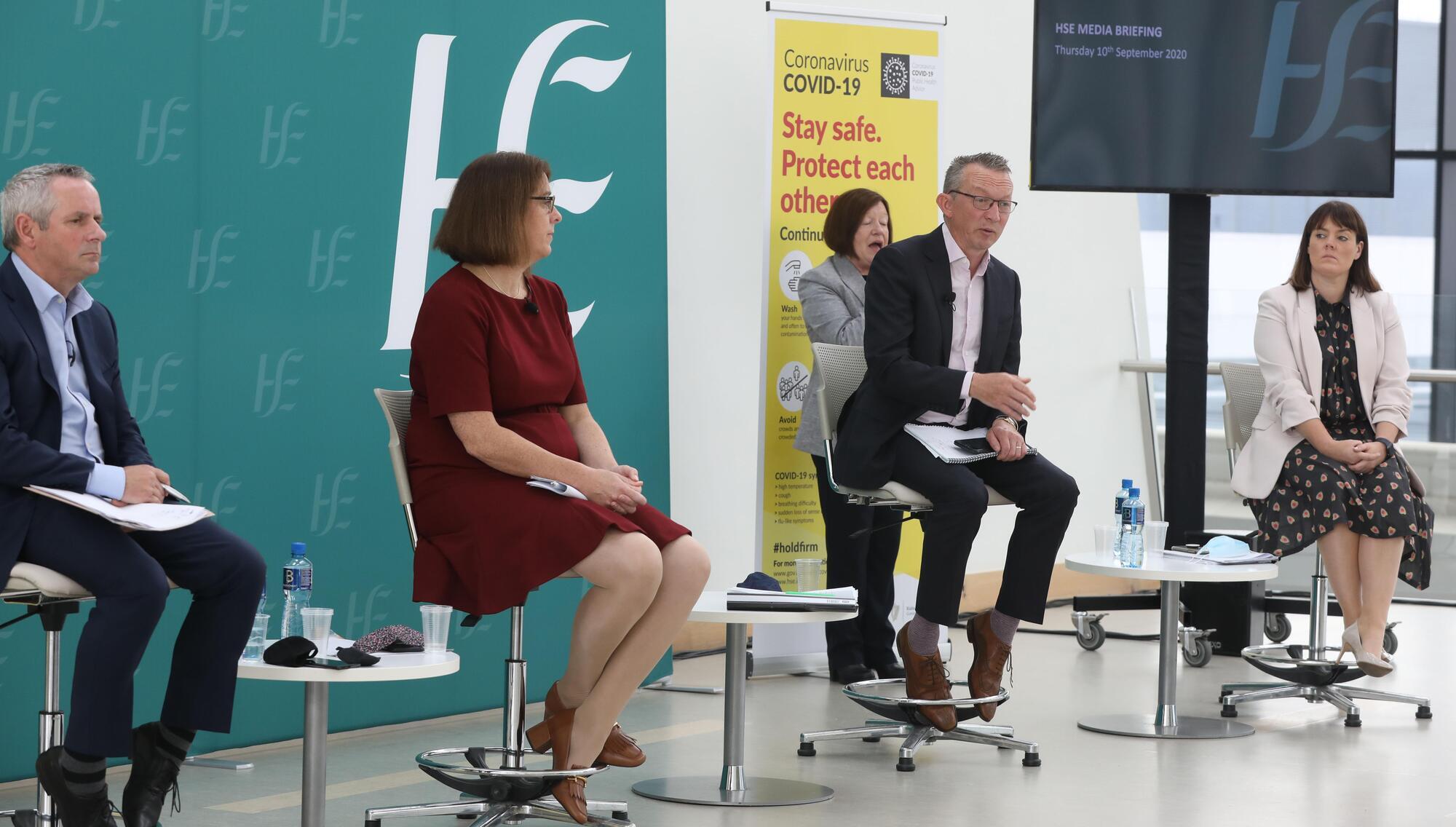
Clinical Chief Officer at the HSE Dr Colm Henry said NPHET would be looking at what additional measures could be put in place “to reduce transmission from household to household”. Photo: Leah Farrell / Photocall Ireland
The referral of 21,000 people for Covid-19 testing on Monday and Tuesday saw a doubling of daily referral rates this week and led the HSE to prioritise people presenting with symptoms and postpone serial testing at meat and food processing facilities.
It comes as the government is considering advice from the National Public Health Emergency Team about potential further restrictions in Dublin.
The restrictions are likely to be focused on gatherings in people's homes with shops and businesses being allowed to stay open, similar to the model employed in Glasgow.
There has been a rise in cases in the capital over the last two week.
The HSE, meanwhile, has defended its decision to pause serial testing at meat and food plants and redirect resources to community testing.
The HSE has seen a 16.5% rise in testing referrals over the past week, with 38,600 swabs coming from the community, 16,700 from hospitals, and 17,000 coming from food processing facilities and healthcare workers.
HSE chief Paul Reid today confirmed that daily referrals had more than doubled this week when 13,000 referrals were made on Monday and a further 8,000 referrals came on Tuesday compared to an average daily referral rate of between 4,000-5,000 in recent weeks.
“Last week we had 28,000 community testing referrals in the week and the week prior there was 25,000 so what we’ve seen this week is 21,000 referrals in a 48-hour period,” he said, adding that many referrals came from school children and the Dublin region.
A simple message. It isn't just about #COVID19 cases that emerge in Meat Plants, Nursing Homes, Direct Provision Centres or Schools. It's more about how cases emerge in the community and then transmit into these locations. So we all need to take care in our communities. @HSELive
— Paul Reid (@paulreiddublin) September 8, 2020
The testing system, he said, had to be “agile” to respond to changing demands and should focus on symptomatic referrals but also confirmed that current capacity - 100,000 tests per week – would be kept under review.
“We have to triage and we have to prioritise symptomatic referrals from our GPs so it’s the right decision to move the resource and use the capacity for symptomatic referrals,” Mr Reid said.
“On our overall lab capacity, that is something we will be looking at into the future,” he added.
The HSE, Mr Reid said, was continuing serial testing in nursing homes, where 57,000 tests have been carried out to date, and would reschedule serial testing at food processing facilities next week.
To date, 40 cases of Covid-19 have been identified out of 15,000 serial tests at food facilities.
Covid-19, however, is spreading in Dublin and Limerick where the 14-day incidence rate is between 60-71 cases per 100,000 population.
There are now 50 people in hospital and six people in intensive care with Covid-19 infections.
Of 59 people hospitalised with Covid-19 in the past fortnight, 16 were under the age of 35.
In response, the HSE has opened three additional pop-up test centres in Limerick, Tallaght, and Carlow/Kilkenny and is also recruiting an additional 700 swabbers and 500 contact tracing staff to boost current staffing levels.
At present 350 swabbers and 180 contact tracing staff are working 12-hour shifts seven days a week.
The virus is being spread mainly through private households and the National Public Health Emergency Team (NPHET) is meeting today to consider the situation and advise the government on possible actions.
Clinical Chief Officer at the HSE Dr Colm Henry said NPHET would be looking at what additional measures could be put in place “to reduce transmission from household to household” in areas where the virus is spreading but that nobody wanted a return to lockdown.
Mr Reid also acknowledged the anxiety and stress the information provided at Covid briefings can cause but said the country needed to move to a place where citizens can “live in confidence and hope” rather than fear.
“This is about awareness, about carrying out our lives differently, but it’s not about fear and shouldn’t be about anxiety," he said.
Meanwhile, the Citywest facility, being leased by the HSE, is currently accommodating 57 people and 93 healthcare workers in Covid-19 isolation facilities.
COVID19 (coronavirus) update from O’Brien Centre for Science, UCD https://t.co/Ey51eG1eCN
— HSE Ireland (@HSELive) September 10, 2020
The HSE also plans to use the centre to reduce outpatient waiting lists.
The briefing heard that hospital emergency admissions were now tracking more closely to last year but that 611,000 people are awaiting outpatient appointments, 77,000 are waiting inpatient or day-case treatment, and endoscopy waiting lists are growing because theatres are operating at half capacity.
Just 40% of disability day services across the country have resumed at a reduced level, with 14,000 people with disabilities waiting for day services in their area to resume.
CONNECT WITH US TODAY



Be the first to know the latest news and updates