Testing 100,000 people a week does not make economic sense, says HSE boss
Testing 100,000 people a week does not make economic sense, says HSE boss

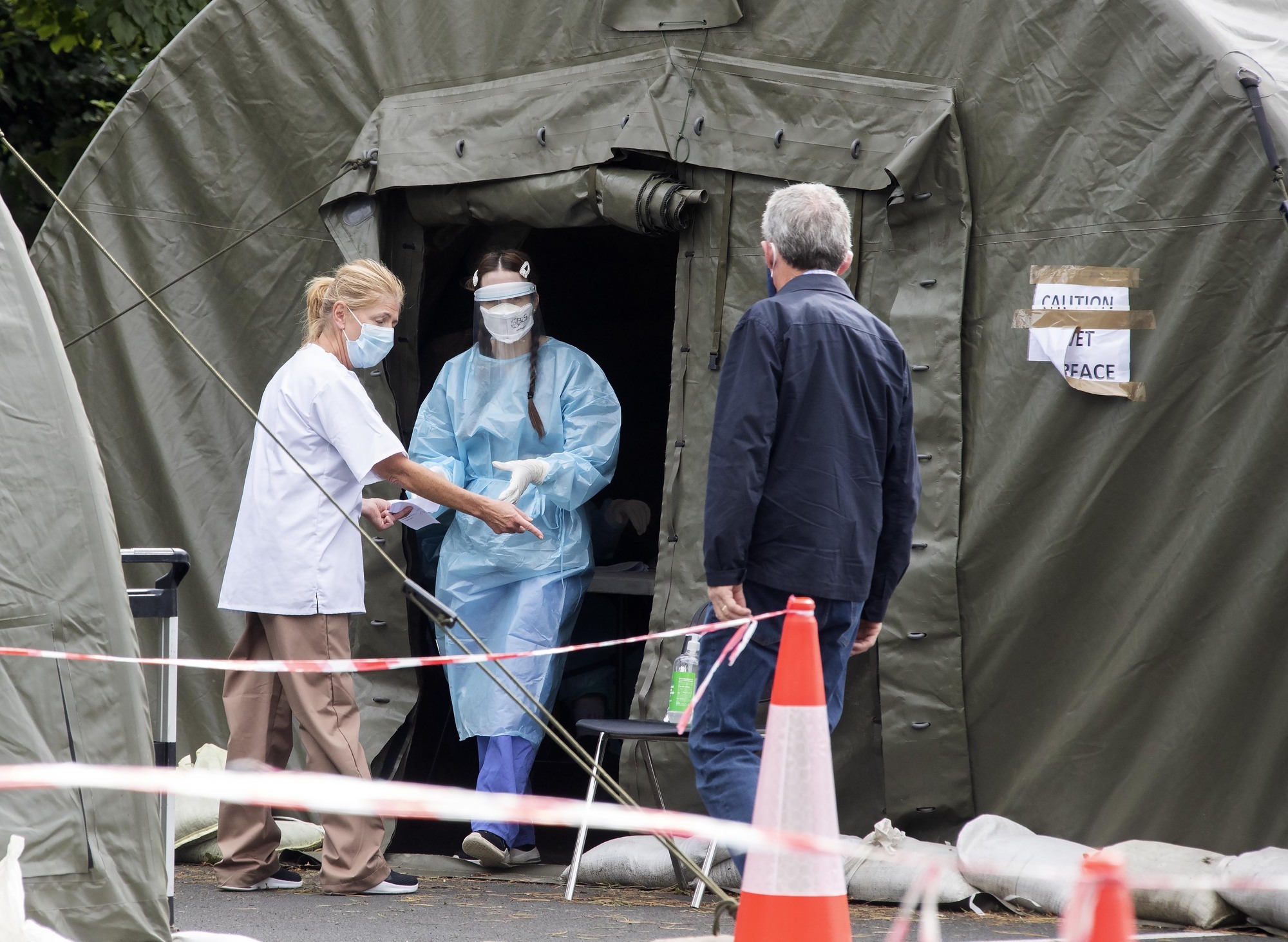
A pop-up Covid-19 testing sentre at the Keadeen Hotel, Newbridge, Co. Kildare. Picture: Colin Keegan

Testing 100,000 people per week does not make economic sense, the head of the HSE has said.

Speaking to the Oireachtas special committee on Covid-19, Paul Reid, chief executive of the HSE, said that the goal both at the height of the Covid pandemic and at the current time was to achieve capacity of 100,000 tests per week, rather than to actually perform that number.

“Serial testing provides people with a lot of reassurance, but it’s a very significant cost,” Mr Reid said.

He pointed to an example of a recent round of serial testing (that is, repeat testing designed to discover the virus in places where it is not obviously present) which saw a positivity rate of just 0.13%.

“We have to scale up and down, and follow the transmission of the virus,” he said. "We have to target our testing depending on where the virus is."

Mr Reid said that 28 testing centres are now operational across the country, against the top figure of 48 which were running at the height of the crisis in late April.

The committee heard that the median time for testing turnaround, from referral to completed contact tracing, is now 2.2 days, down from 3.8 days two weeks ago. The average time, meanwhile, is 2.4 days.

Turnaround time in hospital settings is less than a day.

06/04/2020 The Tallaght Stadium Covid-19 testing centre pictured this afternoon...Picture Colin Keegan, Collins Dublin

Some 8,000 people in direct provision are now also subject to such testing, together with 30,000 staff and residents in nursing homes.

Mr Reid, responding to questioning regarding the alleged substandard nature of childcare for frontline healthcare workers, said: “We’re showing as much flexibility as we can”. He said that was shown by the HSE’s willingness to reassign staff to other functions in order to help in that regard.

HSE’s chief clinical officer, Dr Colm Henry, said that CervicalCheck screening has been operational since the beginning of July. He said that BreastCheck screening has been hampered by the need for mobile screening units to be repurposed for Covid.

Meanwhile, HSE head of testing Niamh O’Beirne said that as many as 85% of proactive close contacts are now showing up for the day-zero test they were being offered. That figure drops to 50% for the day-seven test, she said.

Mr Reid said that the upcoming colour-coded geographical approach to dealing with the virus will see regions in crisis handled in three ways: the establishment of pop-up testing facilities; the mobilisation of National Ambulance Service mobile testing; and the NAS testing directly within specific organisations.

Mr Reid, meanwhile, confirmed that testing in meat plants is being paid for by the State, not private operators.

Separately, Dr Henry clarified that the lower death and hospitalisation rates currently being seen have resulted via changed behaviours in older people and more testing for younger cohorts.

The ongoing controversy surrounding EU Trade Commissioner Phil Hogan was only indirectly referenced, with Dr Henry stating that the advice is “clear” that people entering the country from non-green-list countries must isolate for two weeks, regardless of their receipt of a negative test in the interim.

x

More in this section

Lunchtime News

Newsletter

Keep up with stories of the day with our lunchtime news wrap and important breaking news alerts.

Cookie Policy Privacy Policy Brand Safety FAQ Help Contact Us Terms and Conditions

© Examiner Echo Group Limited