Covid-19 has highlighted the big gaps in gender equality
Women have been hit a heavy blow by the Covid-19 pandemic which has thrown the stubborn gaps in gender equality into sharp relief.
Although all the data has not yet been published, experts predict that women will have suffered more due to the majority of childcare, homeschooling, and housework still falling predominantly on their shoulders — even when their partners are also at home.
Sectors in which many women work — such as hospitality and retail — have been some of the hardest hit with many people losing their jobs.
And part-time jobs — many worked by women — were often the first to be cut.
Professor Anthony McDonnell, Head of the Department of Management and Marketing at Cork University Business School, University College Cork, believes the virus has presented both sizeable set-backs and opportunities for gender equality in the workplace.
“Covid-19 seems to be having an impact in most countries on women more so than men because some of the sectors most hit have been where women take up a lot of employment,” he said.
“And a lot of part-time work— much of which is worked by women — has been hit heavily as well.”
As women earn less than men, their jobs are more susceptible to being lost, whilst also viewed as less valuable within households that have dual earners, he said.
“There’s certainly the danger, based on those factors that women may get hurt,” he said.
However, Prof McDonnell said that “a more subtle and dangerous impact” on female workers has been the lack of childcare which may “derail” many careers.
He said: “Evidence shows that women still do more of the caring responsibilities, more of the housework.
“So women are more likely to be hit with the penalty of ongoing caring and many may have had to take a step back [from their careers], particularly if employers are not supportive and flexible.”
Louisa Meehan, president of Network Ireland and owner of Woodview HRM in Wicklow, agrees that the pandemic has had a much stronger impact on women than on men.
She said, mums, even when working full-time, have often been the ones doing the majority of homeschooling, shopping, housework, and childcare.
However, Louisa said the pandemic has not been all frazzled mums dizzy from constantly juggling too many balls.
“There have been benefits too,” she said.
“Like more family time. You become an event organiser with children, but all that stopped. It gave people the opportunity to decompress a little bit.
“That pressure of needing to be somewhere was gone. And I think that’s really good for people’s mental health, for their physical health, for their family.”
Flexible and remote working have been advocated for loudly by many working parents, including Louisa, for years, but she said not to confuse the lockdown situation with working from home under more normal circumstances.
“And there are a lot of people for whom it’s been a challenge,” she said.
However, Louisa said the Covid-19 crisis has forced “huge benefits in organisational learning” which should persist in businesses post-coronavirus.
“So many jobs which would have previously been considered to be impossible to do from home, actually you can, with the right support, structures and technology.
"You need to build up trust between employer and employee because you can’t micromanage people.
"You need to trust that the work is getting done, particularly in a job where people need to be creative, it’s about the output and being able to focus in on that.
“People are incredibly slow to change. The greatest driver for change is when you have no choice. And we’ve had no choice but to change almost everything we do by the pandemic.
"Some of it we don’t enjoy but some of it’s really good and we can take it with us after this is all over.”
One thing that has changed during the pandemic, but which will remain long after it passes, is the reduction in the number of meetings people attend in person.
And balancing the need for face-to-face communication and remote working post-Covid-19 will be a challenge that could bring great rewards, creating a better, more efficient workforce and a more stable society.
Building strong, supportive communities is another positive which Lousia hopes will be preserved after the crisis.
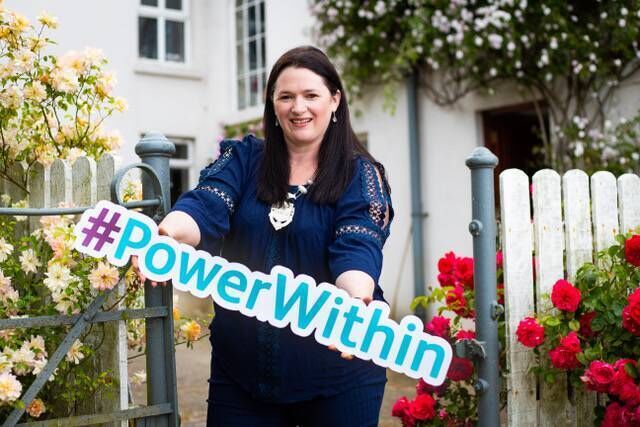
“Because you’re all at home, you’re more aware of your neighbours," she said.
“A lady who lives beside me was cocooning. When her family couldn’t get to her we were there.
"I kept a really close eye on her, bringing her her shopping, and the kids watered her plants. We got on well before but now we’re much closer.”
And being involved in the community has a huge benefit to the collective but also to the individual, Louisa said.
Running her own business from home allowed her the flexibility to campaign for a local Educate Together school and to later sit on its board of management.
“Had I still been working my corporate job in Dublin I wouldn’t have had the time or mental capacity to take that on.
“I wouldn’t have got involved. I’d have dropped my kid to a creche and collected them from school.
“Being involved in the community is a huge privilege and it’s something that should be encouraged. And more flexible work allows that.
"Our communities are better when we’re working together, when you know who lives beside you. That human connection builds a happier, healthier society.”
Louisa said she has taken most of the childcare duties throughout the pandemic and has fit her work in around her family.
“His job is a critical role so he’s working 10 hours a day, he pops in for lunch and pops out. So I have been juggling it all around the kids.
"But when he’s working from home if I have to take a really important call, then he’s around. So I’ve been lucky but it’s still been difficult.
“Even though I work for myself and by myself, I’m very sociable and I usually meet people all the time so it’s been really hard to only see my family [through lockdown].
“I have a husband and two boys and there’s a need for female connection. I definitely have wobbly days when I’m not so happy because I miss that.
"I thrive more when I have that connection. But in the last few weeks I’ve been feeling a lot better in myself and getting more done because I’ve been able to engage more and see more people again.
"So things are busier and easier at the same time.”
A tip for getting more balance in life is to look at all the balls you’re juggling.
Decide which ones are glass and will shatter if you drop them and focus on them, she said.
She said: “There’s this myth that women can do everything. What I’ve learned is that you can have enough of everything but you can’t do everything.
“This image of the perfect mum who has a full-time job, is immaculately dressed at all times, does the home school, has these perfect children who are really well-behaved all of the time, that person doesn’t exist.
"Life is messy. And I think that we don’t show that side of ourselves enough because social media especially has this picture-perfect idea of what life is like.
“As women, I think we need to be more real. Because nobody’s life is perfect and life is really messy.
“But it’s enough if you’re happy, you’re fulfilled, your kids are thriving. You have to know what your priorities are and for me personally, my children are my priority.
“I’m not ashamed about that. But I build in time for me, time for my work and I have been successful at what I do because I have made time and structured time for all of them.
"But none of them are perfect.”
CONNECT WITH US TODAY



Be the first to know the latest news and updates