Dublin City Council hopeful €22m white-water rafting facility can go ahead
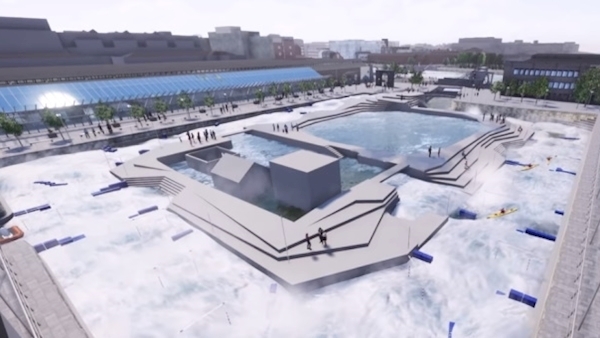
The head of Dublin City Council (DCC) says while all capital projects have stopped during the pandemic, he hopes they can get back on track including the white-water rafting facility.
The controversial €22 million facility at the IFSC was given the go-ahead last year.
"I think it will be important when we get beyond the current phase that there are construction projects so we are hoping that our full capital programme will be implemented," said Mr Keegan.
"If there is to be a tourism sector in future and I hope there is as it is a very important part of the city's economy, investing in infrastructure will be important."
Mr Keegan said the white-water rafting facility will be "ready and waiting to be implemented".
Meanwhile, Owen Keegan says they are still considering plans to restrict cars in the capital to allow for better social distancing as the city reopens.
But he says nothing is definite as of yet.
"It is very clear there are some routes where there isn't available space or very limited available space," said Mr Keegan.
"We are looking at more radical measures on certain routes and we have given a commitment to prepare a paper setting out the options on these particular routes and that could include College Green and Dame Street.
"We will have to consider if we can go ahead and implement those."
Opening up the space outside pubs to customers may not work, but Mr Keegan says they are considering it for restaurants as restrictions are eased.
Mr Keegan defended recent measures taken as part of the ‘temporary mobility plan’ to ensure the city is ready to reopen once Covid-19 restrictions are lifted.
Speaking on RTÉ radio’s Today programme, Mr Keegan said that the measures taken to date had been for the benefit of the public.
However, Mr Keegan was adamant that this did not mean the end of driving in the city. There will still be access to the city for cars, it will just be restricted, he said.
DCC will publish a consultation document on their plans next week, he added, which will form a basis for public discussion and will involve the National Transport Authority.
Mr Keegan also denied an allegation by Noel Smyth, the chairman of Dublin City Centre Traders Alliance that the work on the Liffey cycle lane was an “illegal act”.
In recent weeks the council has begun installing a segregated cycle path on the north quays of the Liffey. The path, first planned more than 12 years ago, will eventually run from the Phoenix Park in the west to the 3Arena in the east.
“The city council doesn’t knowingly commit illegal acts,” he said.
Some businesses just resent any changes.
The businesses should be welcoming the fact that some customers are accessing the city via these routes, he added.
“We are dealing with an emergency situation. Residents want wider footpaths now,” the council was responding to the public demand.
As a public body the council reacted to the requirements of the time when there were minimum levels of traffic.
“For people wedded to their cars this is a major adjustment.”
There will always be losers when it comes to changes, he said. He was confident that we council was taking the proper measures to ensure the safety of pedestrians.
Mr Keegan also acknowledged that the city council’s finances are under pressure as one third of its income is from commercial rates.
Recently announced government assistance for businesses will help in the form of grants for rates.
“That will make a difference. Such measures are very welcome.”
DCC incurred additional costs during the Covid crisis in providing extra facilities for the homeless, ambulance services and they will be looking for some contribution from central government to make up for the loss, he said.