Appeal Court President would deprecate 'disturbing' practice of researching jurors after trial
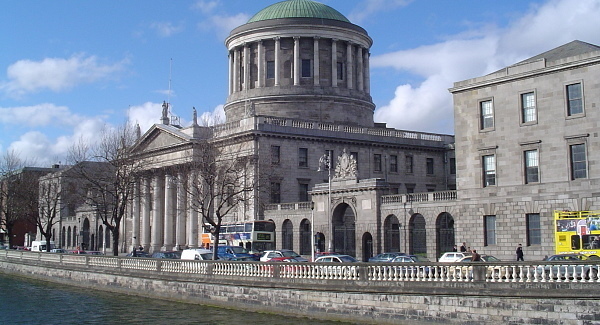
The President of the Court of Appeal has said that he has never heard of research being carried out on jurors post trial and, should it represent an emerging practice, he would deprecate it.
Mr Justice George Birmingham made the remarks today in a case where lawyers for a 53-year-old man convicted of sexually assaulting a teenage girl said there was “grave concern” over the impartiality of the jury who convicted him.
In February 2019 the man, who cannot be identified to protect the anonymity of the complainant, was convicted by a circuit criminal court jury of one count of sexual assault against the girl.
He was sentenced to three-and-a-half years with the final year suspended by Judge Patrick Meghen on May 17, 2019.
The trial court heard that the then 13-year-old girl was on a sleepover at her friend’s house on August 19, 2015, when the man sexually assaulted her in the early hours of the morning while she was sharing a double bed with her friend.
In a remote hearing where lawyers and judges were joined by video-link, counsel for the appellant, Ms Roisin Lacey SC, told the Court of Appeal that following conviction but before the sentence hearing, information was brought to the attention of the defendant’s solicitor in relation to the composition of the jury.
Ms Lacey told the court that the complainant’s father held a senior position in a large commercial enterprise and that her client was a long-standing employee of the same company.
Counsel said that the complainant’s family also had a “very significant presence” in a small town in the south-east of the country, with her father having been born and raised in the town while an aunt still resided there. Both of them, counsel said, were witnesses in the trial and the firm employing both the accused and the girl’s father had a facility in the same town.
In relation to one juror, Ms Lacey said that while they had given an address in the same town concerned, further inquiries revealed they also worked at a bar on the same street where the complainant’s aunt lives.
Ms Lacey submitted it was “inconceivable” that, given the close proximity to where the juror was working and the girl’s aunt was living, they were not aware of the allegation in the case. She told the court that her client’s legal team were unaware of the connection between the complainant’s family and the town in question.
Counsel said that, from the objective point of view of somebody looking at the jury, they would have concerns about its composition.
Ms Lacey said the investigation also discovered that the foreman of the jury worked at an engineering firm that had a prominent relationship with the company where the complainant’s father worked. Counsel said the foreman had been endorsed on the networking site LinkedIn by a member of that company and a video online showed the two firms working together.
She told the court that another member of the jury worked in a sector in which the company employing the complainant’s father had a vested economic interest.
Ms Lacey told the court that, from an objective point of view, there was a “very real and gave concern” of a lack of impartiality on behalf of the jury that could have affected the verdict, which would have impinged on the accused’s fair trial rights.
She submitted that the verdict was unsafe due to the reasonable apprehension of objective bias on behalf of the jury.
Counsel said that when matters were brought to the attention of the trial judge, he erred in finding there was no jurisdiction to set aside the verdict and in refusing to set aside the verdict on the grounds of bias.
Counsel for the Director of Public Prosecutions, Mr Michael Delaney SC, told the court there was no reason to suspect that the first juror made a connection between the complainant and her aunt and it did not follow that the same juror knew the girl’s father.
He said it was unknown whether the juror lived in the town at the same time as the girl’s father or what the age difference between them was.
Mr Delaney said that with regard to the jury foreman, the company that employed the girl’s father was such a large enterprise that there was no reason to suppose he and the foreman were ever brought into contact.
Counsel said the court was being invited to make a leap in logic in relation to the matters canvassed.
He said the trial judge gave the required direction for the jurors to communicate any connection they may have with the parties in the case. Counsel said the appellant was now asking the court to assume that the jurors, having made a connection to the complainant’s father, effectively ignored this direction and kept the information to themselves.
Mr Delaney said a more reasonable assumption for an informed observer to make is that the jurors said nothing because they did not make any such connection.
Mr Justice Birmingham said that there were some aspects of the matter that were curious and “one might say disturbing”.
He said that after “well upwards of 40 years” attending court as both an advocate and a judge, he had never heard of people engaging in researching jurors post trial and if it was an emerging practice, he would deprecate it.
In reply, Ms Lacey said the investigation revealed information that gave real cause for concern and that once it was in the possession of the instructing solicitor, it would have been wrong of them not to act upon it.
Mr Justice Birmingham, who sat with Ms Justice Isobel Kennedy and Ms Justice Una Ni Raifeartaigh, said the court would reserve judgement and return one as soon as possible.

CONNECT WITH US TODAY



Be the first to know the latest news and updates