Most people facing extradition now on bail; Ian Bailey hearing expected to proceed
The countries that are most active in the issuing of European Arrest Warrants (EAWs) are no longer accepting suspected criminals surrendered from Ireland due to travel restrictions designed to stem the coronavirus outbreak, the High Court has heard.
Poland and Lithuania have shut their borders to almost all incoming travel in recent days with the effect that EAWs are in “suspension”. Other countries have adopted similar measures but official confirmation is awaited from Latvia and the United Kingdom, among others, the High Court has heard in recent days.
Mr Justice Paul Coffey, who is in charge of several international extradition cases, said today that he was adjourning all unheard matters to May 18 next, and all part-heard matters to July 6. The Minister for Justice was given liberty to apply for an earlier date in each case “should there be a change”.
Mr Justice Coffey said neither Poland nor Lithuania were “accepting surrender” at present and the EAW mechanism was effectively “in suspension” until then.
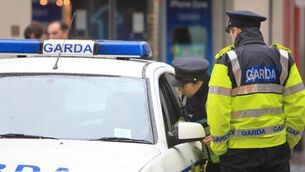
He said anyone on bail did not have to sign-on at garda stations “for obvious reasons” but they must carry a mobile phone, keep it charged and be available to answer a call from the gardaí at all times. He said phone numbers should be provided to gardaí within 24 hours of bail being taken up.
It's understood that most people facing extradition are now on bail with conditions attached.
Other business continues as an outgoing extradition warrant was endorsed by Mr Justice Coffey for execution in a foreign jurisdiction on Friday morning. Details in respect of the warrant cannot be published until it is executed, as is usual, for legal reasons.
On Thursday, the court was told that a requirement for people on bail to sign-on at Garda stations was being relaxed across the justice system due to the coronavirus outbreak.

Conditions attached to bail routinely involve a requirement that people present themselves to their local Garda station sometimes daily, twice daily or two to three times a week. It ensures the person's whereabouts is known.
However, in recent days the requirement that persons present themselves to Garda stations is being relaxed across the courts on an informal basis. Other bail conditions such as a requirement that the person keeps a mobile phone switched on at all times - so that gardaí can check up on them - are being tightened.
For example, failure to answer the phone to gardaí could result in the forfeiture of any bail monies.
Det Sgt Jim Kirwan, who heads up the Garda's extradition unit, told the High Court on Thursday that gardaí are happy for anyone on bail not to sign-on at Garda stations, provided they supply a mobile phone number and are contactable on that number.
Mr Justice Donald Binchy, the High Court judge in charge of international extradition cases, told a number of people on Thursday that they no longer had to sign on at their local Garda stations but all other terms and conditions of their bail applied.
He said international extradition orders were now "almost unimplementable" and he would not be making any surrender orders until the "skies are free again".
The outbreak of the coronavirus has placed many court cases in doubt. On Monday, The President of the High Court issued a general practice direction that only urgent business be dealt with at present to minimise the number of people attending court.
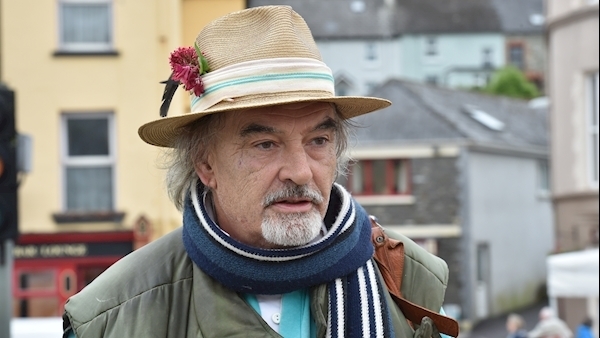
However, a hearing into Ian Bailey’s proposed extradition to France, where he is facing a 25-year prison sentence for the murder of filmmaker Sophie Toscan du Plantier, is still expected to take place in early May.
The High Court fixed May 5 as the start-date for the three-day hearing last month, which is being retained by Mr Justice Binchy, given that three days had already been set aside.
The case was previously listed for mention on March 30 to ascertain whether the hearing will proceed. It will now be mentioned on April 20 to ascertain whether the hearing will proceed.
French authorities are seeking Mr Bailey’s surrender in relation to the death of Ms du Plantier, whose badly beaten body was found outside her holiday home in Schull in December 1996. It is the third time French authorities have sought Mr Bailer’s surrender.
The 63-year-old Englishman, with an address at The Prairie, Liscaha, Schull, west Cork, was convicted of the Frenchwoman’s murder in his absence in a Paris court in May 2019. The three-judge Cour d’Assises in Paris accordingly imposed a 25-year prison sentence on him in his absence.
Mr Bailey denies any involvement in the mother-of-one’s death. He did not attend the French court and had no legal representation in the proceedings, which he has described as a “farce”.
The High Court previously fixed May 5 as the start-date for the three-day hearing, which has been retained. Mr Bailey was not present in court for Thursday’s list management procedure.
His senior counsel, Ronan Munro SC, previously told the judge that they will be opposing surrender on grounds related to “fundamental rights” and that the authorities’ previous two extradition attempts were “relevant” to their points of objection to the present attempt.
The court has also heard that Mr Bailey swore an affidavit setting out certain factual matters, particularly in relation to his health.

CONNECT WITH US TODAY



Be the first to know the latest news and updates