Prison officers' colour coding system necessary to prevent gangs meeting - Deputy General Secretary
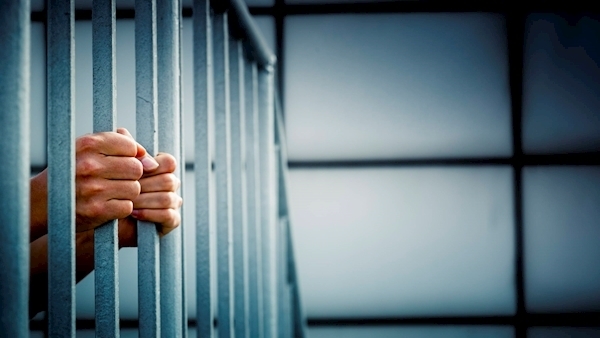
The deputy general secretary of the Irish Prison Officers Association, Jim Mitchell has told of how prison officers have to operate a colour coding system to identify different factions.
This is necessary to ensure the different gangs do not meet during recreation, at meal times or during visits, he explained to RTE radio’s Today with Séan O’Rourke show.
Dealing with gangs is the main safety issue faced by prison officers, who often have to put themselves in the middle “to stop them killing each other”, he said.
The colour coding is required to keep track of affiliations, this is done through monitoring both within the prison and in the outside world, added Mr Mitchell.
“If affiliations are changed that will determine who gets out of cells, who can meet each other. If there is a change we need to know so we can control any violence.”
Mr Mitchell pointed out that last year there were 110 assaults on prison staff. “We are facing two assaults per week in our place of work, no other workplace has such a level of attrition.”
He was responding to comments by the new Inspector of Prisons Patricia Gilheaney, in a new report from her office. Ms Gilheaney, who was appointed to the post of Inspector of Prisons in May 2018, was visiting a prison shortly after taking up the role when she encountered an officer “who refused the Inspector entry into a prison.”
“He appeared to be intoxicated, i.e. strong smell of alcohol and difficulty in reading the inspector’s photo identification card,” the inspector’s 2018 annual report states.
Mr Mitchell said he had no reason to question the veracity of the comment by Ms Gilheaney. Her response – to contact management verbally and in writing – was correct.
Management of the prison in question subsequently dealt with the complaint as a disciplinary issue under the code of conduct. He said he had not been aware of the incident, the individual involved or the prison.
Mr Mitchell rejected a suggestion that alcohol was a major issue in the prison service as a means of dealing with stress.
It was an issue in the past, but it is not a problem now, there are a huge amount of supports available to us.
But he did point out that the IPOA has sought to have stress included as an injury incurred on duty.
In relation to the growing problem of contraband in prisons, he said it was a case of supply and demand and that with the level of supervision it is more difficult to get contraband into prison so that the small amount that gets through increases in value.
The IPOA should have a role in developing technical responses to the use of technology, such as drones, he added.