Relatives of missing persons urged to give DNA to help identify bodies
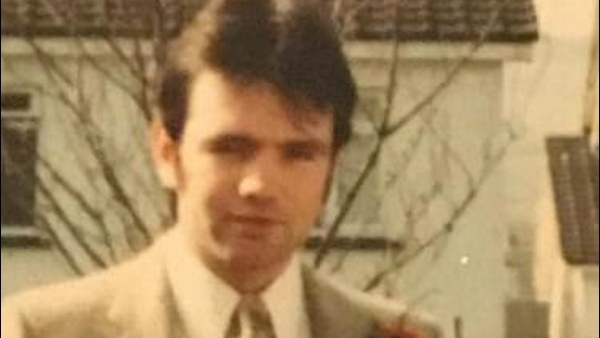
The brother of an Irishman missing for 36 years has backed a Welsh police appeal for relatives of missing people to provide DNA samples. Seán Whooley was only able to have the body of his younger brother Conor identified because their mother provided a DNA sample.
Although the identification process took two years, the Wicklow family got the news they had been waiting decades for a few weeks ago. On Monday, they were able to visit Conor’s grave for the first time.
“This event would never have happened if North Wales Police did not have a DNA sample to match one they already had of Conor,” Seán told the Irish Examiner.
“For the past 36 years we have been desperate to find out what happened to him. Not knowing how he ended up was a weight on all of us. But it’s a weight that had become blurred over the years.
“We did expect a knock at the door, four, five, six years on. Time moves on, and it becomes less and less of a possibility that something like that would happen.
“But Conor was always in our thoughts at family events. And before he died in 2015, it had been one last joy his father Jimmy had wanted — which was to find out what happened to his son. Unfortunately, he never did find out.
We now know Conor didn’t die violently, or in some ditch. It is great our mother is alive and well and able to put it to rest at this stage.
He added: “I would urge anybody who is the relative of a missing person to go to their nearest Garda station or get in touch with the Garda Missing Persons Bureau and give DNA.”
Conor vanished from Dublin in August 1983. Although his body was found on a beach in Anglesey, north Wales, the following month, it was not identified as his at the time and he was buried in a grave in the Menai Bridge Cemetery on the north west coastal island.
The 24-year-old, one of seven children, had been living in Dublin when he vanished. Detectives trying to discover the identity of bodies found in Wales as part of Operation Orchid discovered the link after publicity surrounding their search for a missing Norwegian sailor.
In 2013, they had exhumed a body buried at Menai Bridge Cemetery so they could get a DNA sample. It turned out not to be the sailor, but the resulting publicity, however, led to Conor Whooley’s mother Eileeen, 87, providing DNA two years ago.
The discovery was made possible as a result of publicity in Ireland and collaboration between gardaí, Forensic Science Ireland, and North Wales Police.
“Conor, who loved nature and the outdoors, used to go off on his own from time to time, so it was not unusual,” Seán added. “He routinely used to do the coastal walk from the family home in Greystones to Bray, where he had gone to school.
“So, for a few months after he vanished, we half expected him to walk back in the door or just call. We hadn’t even reported him missing. We expected him home for Christmas but he didn’t come home.’’
On being brought to the spot where his brother’s body was found, he said: “He was found in a small cove to the right of the beach by a passerby. It was very poignant. Just to know that that was where he was recovered was a release in itself. That had been our concern over the years.
“We hadn’t known what had happened to him. It was a nice, quiet family moment.”
Today is Missing Persons Day, which is the annual day of commemoration for those who have gone missing and recognises the lasting trauma for their families and friends.
Concerns over what happens to samples
One of the biggest challenges gardaí face in identifying missing people is their relatives. This is because not enough of them have provided DNA samples.
This may be over concerns they have about what happens to samples and whether or not they can be used for any other purpose. But since the establishment of the country’s DNA database in 2015, submitted samples have helped identify a total of 28 people so far.
And where unidentified bodies have washed up on the north Wales coast after entering the water in Ireland, the Department of Justice’s Forensic Science Ireland has been successful in helping identify three of them.
But there are still another eight who need to be identified. They are the subject of investigations as part of the gardaí’s Operation Runabay here — with which Forensic Science Ireland staff are working closely — and North Wales Police’s Operation Orchid. A Department of Justice spokesperson said:
The critical requirement for relatives of missing persons is to come forward and give a non-invasive swab taken from the mouth.
“[This is] so the DNA profile generated from this sample can be compared to the profiles generated from missing persons/ unidentified bodies. “First generation relatives — parents, children and siblings of the deceased — are those which are the most informative.”
They added: “A significant challenge facing the work of Forensic Science Ireland is the constant need to gather DNA profiles from relatives of missing persons. Many people harbour concerns regarding the information contained in a DNA profile and the use to which that information would be put.
“Much time and effort has been spent to allay those fears and establishing trust through engagement with families.”
To date, they have DNA samples from over 350 families and this figure is growing every week.

CONNECT WITH US TODAY



Be the first to know the latest news and updates