House prices climb but increases slowing down
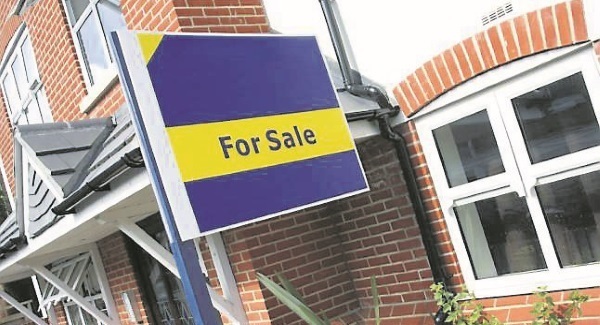
House price inflation is at its lowest level since August 2013.
Prices continue to climb in almost every part of the country but the increases are slowing as supply finally begins to increase.
According to the CSO's Residential Property Price report, prices increased by 1.1% nationally in the year to September. In the 12 months to September 2018, prices had increased by 8.5%.
Much of this decrease in inflation is driven by Dublin. In the capital, residential property prices decreased by 1.3%, with Dun Laoghaire-Rathdown seeing the most significant decline at 6.8%.
Excluding Dublin, prices in the country rose by 3.6% in the year to September, with house prices up by 3.4% and apartments by 4.8%. The region outside of Dublin that saw the largest rise in house prices was the Border at 11.8%, while the smallest rise was recorded in the Mid-East at 0.2%.
Overall, the national index is 16.9% lower than its highest level in 2007. Property prices nationally have also increased by 85.3% from their trough in early 2013.
Some 45,192 household dwelling purchases were filed with Revenue in the year to September. Of these, 14,195 (31.4%) were purchased by first-time buyers, while some 7,186 (15.9%) were acquired by non-occupiers, such as investors or local authorities.
Revenue data shows that there were 1,325 first-time buyer purchases in September 2019, an increase of 15.0% on the 1,152 recorded in September 2018. These purchases were made up of 386 new dwellings and 939 existing dwellings.

The typical, or median, price paid for a dwelling in the year ending September 2019 was €255,000.
Dublin was the county the highest median price (€368,000) in this period.
The highest median prices outside Dublin were in Wicklow (€323,500) and Kildare (€304,999), while the lowest price was €106,250 in Leitrim.
In Cork city, the median price paid was €242,000 and this was marginally higher in the county at €245,000. In Kerry and Waterford, it was €170,000, with Tipperary at €154,625 and Limerick at €197,500.
The cool-off in inflation has been attributed to an increase in the supply of apartments and houses.
In the third quarter of 2019, there were 5,667 new dwellings completed, up 22% from Q3 2018.
There is an 81.1% increase in apartment completions in Q3 2019 compared with the same period in 2018. The data also shows in the first three-quarters of 2019 there were 14,764 new dwelling completions. This is a 18.0% increase on the same period of 2018, 12,510 completions.
The data is primarily informed by the ESB Networks new domestic connections dataset where the date that a property is connected to the grid is determined as its date of completion.
It is accepted that the ESB domestic connections dataset is overestimating new dwellings and the CSO has adjusted for this overcount by using additional information from the ESB and other data sources.
The dataset also does not include student accommodation schemes as they are typically connected as commercial network connections.
In Q3 2019, 1,538 bed spaces were completed in the student accommodation sector which brings the total completed since Q2 2016 to 8,229.
Four-fifths of new dwellings are in urban areas; with 60% of all dwelling completions in Dublin or the mid-east.
There were 9 local authorities with more than 100 new scheme dwellings in Q3 2019. These were Cork City, Cork County, Fingal, Kildare, Louth, Meath, South Dublin, Waterford and Wicklow.