Call for weekly testing of bathing water off Galway beaches
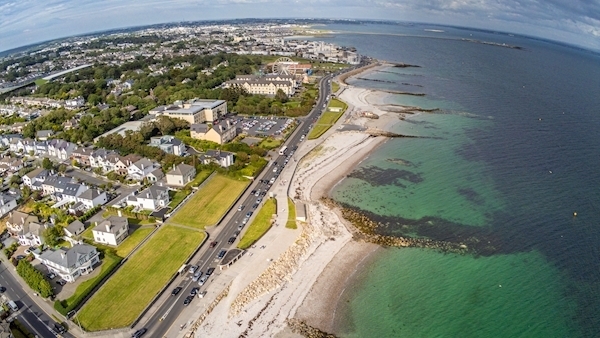
As open water sea swimmers prepare for a Galway Bay crossing this weekend, Irish Water has said there is “no proven link” between a recent serious pollution incident in the city and the quality of bathing water off Galway’s beaches.
However, swimmers have called for more regular and longer-term bathing water quality testing, and more transparency in relation to water quality issues.
Six weeks ago, Galway City Council prohibited swimming off beaches at Silver Strand and Salthill and issued a warning about Grattan Rd beach in Lower Salthill after elevated levels of bacteria were detected.
The prohibitions were lifted in time for the June bank holiday weekend, and the city council initially ruled out several possibilities, including the Mutton island sewage treatment plant, visiting cruise ships, and slurry spreading run-off. It subsequently stated that the elevated levels of bacteria were due to a fault with the test.
On July 5, harbourmaster Captain Brian Sheridan said “the current sewage issue is not as a result of port operational activities, including cruise ships that anchor in the bay”.
Galway Bay is a popular destination for cruise ships, which are covered by the international MARPOL regulations. Vessels from another flag state can only discharge treated sewage at least three nautical miles from the nearest land or untreated sewage at least 12 nautical miles from the nearest land.
Capt Sheridan said he issued Galway Port Company’s own prohibition notices, stating that ships must be at least 12 nautical miles west of the Aran islands.
Capt Sam Field Corbett, who owns the old dock known as the “Mud docks” in the inner harbour, said he believed the source of contamination could be linked to a sewage overflow, which he first reported to Galway City Council in March, and to the Environmental Protection Agency in early May when there was no action.
On May 15, he informed the EPA it appeared the sewage had stopped flowing, but evidence of human waste was still present in what he described as “once a thriving eco-system”.
On June 14, Irish Water announced it was upgrading one of Galway’s Victorian sewerage systems to address “odour and blockage issues” as part of a €2m project with Galway County Council due for completion in October.
Irish Water confirmed that a sewer blockage had caused an overflow at the Mud docks; this was “cleared” and a pipe in Eyre Square repaired. It said RPS consultants were separately conducting survey works across the entire Galway City network.
“There is no proven link to the issue at the Mud docks and any issues arising at the bathing waters in Galway City in late May,” said Irish Water, noting that all data reported to date during the 2019 bathing water season in Galway City had been classified as “excellent” or “good”.
Sea swimmer Brian Coll, who is undertaking the Frances Thornton Memorial Galway Bay Swim in aid of Cancer Care West this weekend with his family, said there needs to be weekly water quality testing from April to October.
“We need to have confidence in the quality of our bathing water,” he said.
Sampling of bathing water only needs to take place once a month between May and September under the 2006 EU Bathing Water Directive, but the EPA says some local authorities test more frequently.
Galway City Council says it tests every second week. Results are posted on the EPA’s website, beaches.ie