House prices continue to increase, but inflation slows
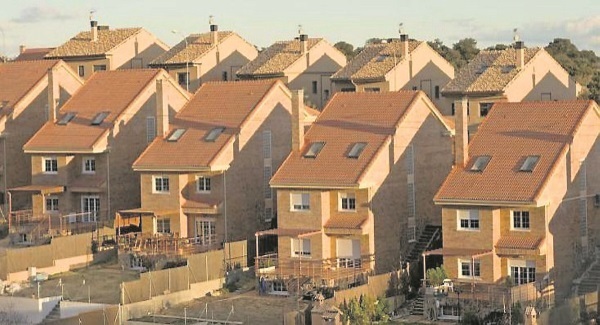
While house prices continue to increase, an upsurge in construction activity has caused inflation to slow to its lowest rate since 2013.
The latest Daft.ie sales report, published today, shows inflation in the second quarter of 2019 was 3.7% higher than a year previously.
Asking prices in Cork, Galway, Limerick and Waterford cities continue to grow, but they fell in Dublin.
The average price nationwide in the second quarter of the year was €263,000, up 0.9% on the first three months of the year. The average price nationwide is now 60% higher than at the market’s lowest point in 2013.
In Dublin, asking prices fell by 0.8% in the second quarter of 2019. Annual inflation is now 1.2%, its lowest level since early 2016.
Inflation has cooled in all of Ireland’s cities. In Cork, it is 4.4% in the last 12 months.
That is in comparison to a rise of 7% in the preceding year. The average asking price for a house in the city is now €286,000, 74% above the market’s lowest point. In each of Waterford, Limerick and Galway cities, inflation is between 6% and 7%.
Buyers in Waterford face average asking prices of €183,805, while those in Limerick are looking at €201,952.
In Galway, prices were up 6.8% to €304,549. Outside the cities, inflation is 3% or lower in Leinster and Connacht-Ulster, but remains above 10% in Munster.
The number of properties available to buy on the market nationwide was above 24,000 in June, up nearly 3% year-on-year.
This marks 13 consecutive months where availability has improved and this is being driven by Dublin and Leinster, where a significant amount of construction activity is concentrated. In Munster, Connacht and Ulster, availability has largely stabilised but not yet improved.
Ronan Lyons, economist at Trinity College Dublin and author of the report, said the slowdown is the result of more properties being available for sale.
“The steady improvement in construction activity is finally converting into housing market outcomes. More properties were put up for sale in May than in any single month since early 2008.
“Unsurprisingly, with much-improved supply, buyers are no longer competing with each other as strongly in the market and inflation has, at least for the moment, largely eased off — especially in the greater Dublin area, where construction activity is concentrated.
“Policymakers must now turn their focus from the level of building to the mix. Construction is focused on family houses, the one segment already over-supplied compared to demographics.
“Other segments, in particular for smaller households, remain chronically undersupplied. As a result, prices for three-bed homes are now falling, especially in the Dublin area, but other prices for other home types are still rising.”