Press Council highlights challenges facing journalism as top judge hails role in avoiding 'unnecessary court litigation'
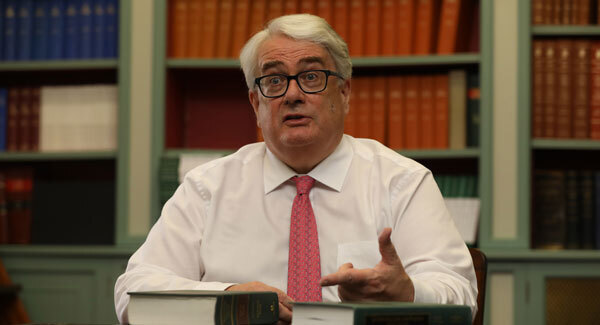
The country’s highest-ranking judge has said the courts must be a ‘backstop’ for resolving civil disputes when all other options have been exhausted.
Chief Justice Frank Clarke said mediation and other “diversion programmes” should be attempted first.
“The courts must always be the backstop,” he said.
“If people have rights, they are entitled under the Constitution and under international rights instruments to go to court and have those rights vindicated, but that doesn’t mean that that has to be the only route by which problems can be resolved.
“A range of areas such as mediation potentially have the capability of diverting people away from unnecessarily having to go to court and often, in some areas at least, provide better solutions.”
Mr Justice Clarke was speaking at the publication of the annual report of the Press Council and Press Ombudsman which investigate complaints by members of the public against print and online newspapers and numerous magazines.
“I see the Press Council and the Press Ombudsman playing an important role in diverting unnecessary court litigation,” he said.
I think it’s a win-win. We all know the cost of litigation.
The Press Ombudsman received 464 complaints last year but 160 of them related to one issue so the number of separate issues was around 300.
Most were resolved at an early stage by assisting the complainants to approach the publication involved, seven went through a formal conciliation process and 30 were decided by the Press Ombudsman. Some were appealed to the Press Council.
But the availability of the complaints mechanisms has not stopped a rise in the number of defamation cases going to court. In 2017 there were 287 defamation cases on hand.
Press Council chairman Sean Donlon expressed frustration at the delays in reforming the defamation laws which, by international standards, set a very high bar for publications trying to defend themselves.
“We have been waiting five or six years for reform of the Defamation Act which within it has a clause requiring its review in 2015,” he said. “Nothing has happened and meanwhile there are huge problems in relation to defamation.”
Mr Justice Clarke said defamation cases could possibly benefit from the kind of pre-trial consultations that were in use in commercial cases and which helped to narrow down the contentious issues, reducing the length of trials and costs.
He said a review of civil procedures currently being completed by Judge Peter Kelly was examining ways of making the courts work more efficiently and that included greater use of pre-trial procedures.
Press Ombudsman Peter Feeney said declining circulation and loss of advertising revenue to social media outlets were affecting the ability of newspapers to do their job.
“We have seen examples in the last year where it was quite evident to us that the journalist assigned to the subject matter didn’t have enough time or resources to go out and check what they were writing about,” he said.
“The way in which some social media organisations take their material from newspapers without paying anything and then compound it by taking the advertising revenue is a huge threat to newspapers.”
In his chairman's note Sean Donlon went on to say newspapers face significant challenges including a drop in advertising revenue, a sharp decline in circulation and the operation of the Defamation Act 2009.
Mr Donlon also said newspaper circulation in Ireland had halved in the last decade and this disruption had brought about a decline in investigative journalism, public interest reporting and coverage of the activities of local authorities and other public bodies.